

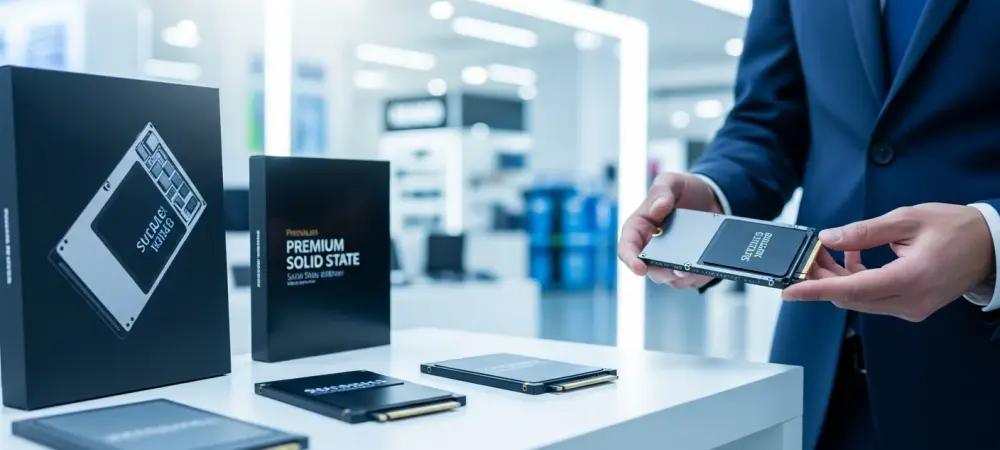
An Unprecedented Surge in the South Korean Storage Market
The South Korean PC hardware market is currently grappling with a sudden and drastic inflation of consumer SSD prices, particularly affecting high-performance models. In a remarkably short period, retail costs for popular storage drives have doubled, creating a significant barrier for local consumers looking to assemble or upgrade their systems. This shift represents a departure from the typical slow-moving trends seen in the semiconductor space, catching many seasoned builders and distributors off guard. As prices climb toward record levels, the ripple effects are being felt across the entire tech sector, from gaming enthusiasts to professional video editors.
This article explores the scale of these price hikes, focusing on the specific models impacted and the resulting disparity between the South Korean market and the rest of the world. By examining the current pricing landscape for brands like Western Digital and Samsung, the analysis aims to shed light on a period of intense market volatility that has left industry experts searching for answers. The sudden nature of this increase suggests that traditional market forces are being amplified by unique regional factors, creating a localized crisis that defies global norms.
Contextualizing Global Storage Fluctuations and Local Shifts
To understand the gravity of the current situation, one must look at the historical behavior of the NAND flash and SSD markets. Historically, storage prices have been cyclical, influenced by oversupply or strategic production cuts by major manufacturers. However, the current trend in South Korea deviates from standard global fluctuations. While the industry has seen gradual price increases due to a shift toward high-density enterprise storage and AI-driven demand, the localized “price explosion” in South Korea is an anomaly that suggests a break in the standard supply chain logic.
Understanding this background is essential because it highlights that the current crisis is not merely a reflection of global supply chain issues, but a specific regional disruption that threatens to reshape the local PC building ecosystem. Factors such as local distribution bottlenecks and currency fluctuations have often influenced Korean electronics prices, but the scale of the current doubling of costs is without modern precedent. This shift forces a re-evaluation of how inventory is managed and sold within the peninsula.
The Massive Inflation of High-Performance Hardware
Western Digital SN850X: The $3,000 Storage Tier
The most startling evidence of this price surge is found within the Western Digital (WD) ecosystem, specifically the high-performance SN850X series. The entry-level 1 TB model, once a staple for mid-range builds at roughly $200 (300,000 Won), has effectively doubled to $400 (600,000 Won). This trajectory becomes even more extreme as capacity increases; the 8 TB variant of the SN850X has reached a staggering $3,000 (4.5 million Won). To put this into perspective, the cost of this single storage component now rivals the anticipated price of next-generation flagship graphics cards.
Other models are not immune to these shifts, with the 2 TB WD SN8100 now commanding approximately $834, signaling a broad and aggressive upward adjustment across the brand’s portfolio. Such pricing structures suggest that high-capacity NVMe drives are moving out of the consumer category and into the realm of specialized industrial hardware. For the average user, these costs represent a prohibitive barrier that makes high-speed, high-capacity storage almost entirely inaccessible.
Samsung’s Premium NVMe Models Follow Suit
Samsung, a domestic giant in South Korea, is also seeing its high-end NVMe offerings reach prohibitive price points. Despite the inherent difficulty in tracking Samsung’s internal pricing—largely due to its complex distributor-based sales model—market data reveals a clear and painful trend for consumers. The 990 PRO 1 TB has climbed to $313 (470,000 Won), nearly doubling its previous retail value. This increase is particularly notable given Samsung’s dominance in the domestic market, where local production usually provides some insulation against global price volatility.
Meanwhile, the ultra-high-capacity Samsung 9100 PRO 8 TB has been spotted at $2,670. While these figures are slightly lower than Western Digital’s peak pricing, they remain far beyond the reach of the average user, effectively turning essential high-speed storage into a luxury commodity reserved for enterprise-level budgets. The convergence of prices between international brands and domestic manufacturers indicates that the problem is systemic across the South Korean retail landscape.
Regional Price Disparity and Consumer Impact
A critical layer of this issue is the massive disparity between South Korea and international markets like North America. In the United States, the same 1 TB WD SN850X typically retails between $200 and $250, showcasing a localized inflation rate in Korea that far exceeds global averages. This gap suggests that South Korean enthusiasts are bearing a disproportionate burden, seeing their purchasing power diminish almost overnight. The disparity creates an environment where local hardware prices are no longer competitive on a global scale.
The complexity of local distribution networks and potential inventory bottlenecks have created a “perfect storm” where the cost of building a high-end PC in Seoul is now significantly higher than in New York or London. This has forced many consumers to rethink their hardware priorities, with some opting to import components from overseas despite the risks associated with warranties and shipping. Consequently, the local retail sector is seeing a decline in transaction volume as buyers wait for a potential correction.
Future Projections and Industry Instability
Looking ahead, the future of the South Korean storage market remains clouded by uncertainty. If these price points persist, there may be a shift in consumer behavior, with users opting for slower SATA drives or lower-capacity NVMe sticks as a temporary workaround. Industry analysts are watching closely to see if other manufacturers will follow the lead of WD and Samsung or if a market correction is on the horizon. The ongoing demand for high-speed NAND from the artificial intelligence sector further complicates the recovery of the consumer market.
Furthermore, as high-performance computing technology continues to demand massive amounts of high-speed storage, the pressure on consumer-grade high-capacity drives is unlikely to ease soon. The industry consensus suggests a period of prolonged instability, where price predictability becomes a thing of the past. As we move from 2026 toward 2028, the market must find a new equilibrium between enterprise demand and consumer affordability to prevent a permanent contraction in the enthusiast hardware space.
Strategies for Consumers Navigating Volatile Prices
For consumers and professionals currently facing these prices, a strategic approach was necessary to navigate the market effectively. It was recommended to prioritize essential storage needs over “future-proofing” with high-capacity 8 TB drives, which carried the highest inflation premiums. Buyers also monitored international retailers, as personal imports became a more cost-effective alternative when the local price gap remained wide. This tactical shift helped some users mitigate the impact of the localized inflation.
For businesses, the focus shifted toward optimizing existing storage arrays and delaying non-critical upgrades until market volatility subsided. Keeping a close eye on regional distributor news was vital for identifying the first signs of price stabilization. This period taught consumers the value of flexibility, as the traditional “buy now” mentality was replaced by a more cautious, data-driven approach to hardware acquisition.
The Long-Term Implications of Market Volatility
The skyrocketing SSD prices in South Korea served as a stark reminder of how quickly regional market dynamics shifted. While storage is an essential component of modern computing, the price doubling of high-end models from Samsung and Western Digital pushed the market into a state of crisis. This situation underscored the importance of supply chain resilience and the impact of regional distribution on consumer accessibility. The ability of the market to return to sustainable pricing remained a key indicator of its long-term health.
Moving forward, stakeholders in the South Korean tech industry should consider diversifying their sourcing channels to prevent similar localized spikes. Manufacturers may need to implement more transparent pricing tiers to maintain consumer trust during periods of high demand. As the market eventually stabilized, the lessons learned from this volatility provided a blueprint for more robust inventory management. Professionals and enthusiasts now look toward more integrated global pricing models to ensure that regional consumers are not left behind in the race for high-speed hardware.