

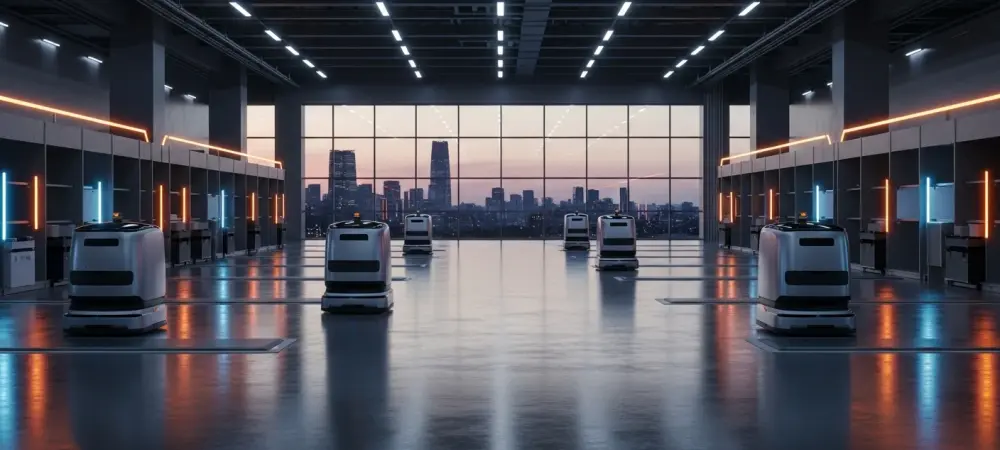
The rhythmic hum of automated sorters and the silent glide of autonomous delivery carts have replaced the once-frenetic chatter of human warehouse crews across the outskirts of Tokyo. Japan is currently losing approximately 2,000 working-age citizens every single day, creating a labor vacuum that would paralyze most modern economies. While other nations debate the ethics of job displacement, Japan has embraced a radical alternative: a total national pivot toward Physical AI. This is not a speculative tech trend but a survival mandate, as the country faces a projected shortfall of 15 million workers over the next two decades. By necessity, Japan is transforming from a traditional manufacturing hub into a living laboratory for the world’s most advanced autonomous systems.
A Nation Redefining the Future Through Necessity
The transition toward automation in Japan is driven by a unique confluence of aging demographics and a cultural legacy of craftsmanship. Unlike Western markets where AI is often viewed through the lens of cost-cutting, Japan treats robotics as a fundamental replacement for a disappearing workforce. This shift is most visible in the 2040 workforce crisis, where staggering labor shortages in logistics, infrastructure maintenance, and manufacturing have accelerated the adoption of autonomous tech. Without these systems, the basic functionality of Japanese society would be at risk.
The country is defining a new category known as Physical AI, moving beyond chatbots and generative text to the seamless integration of intelligence into machinery that perceives, navigates, and interacts with the tangible world. This evolution relies on high societal alignment; Japan’s acceptance of robotics provides a frictionless environment for large-scale deployment compared to regions focused on labor protection. Here, the robot is not a competitor for a job, but a vital partner in maintaining national stability.
Strategic Pillars of Japan’s Industrial Survival
To maintain its status as a global economic power, the Japanese government and private sector have launched a coordinated multi-front strategy aimed at capturing 30% of the global physical AI market. Central to this effort are global infrastructure partnerships, such as Microsoft’s $10 billion investment in local AI infrastructure and cybersecurity. This massive capital injection ensures Japan’s data sovereignty and provides the computing power necessary to run complex neural networks that control physical machinery in real-time.
A hybrid ecosystem has emerged where established giants like Toyota and SoftBank collaborate with agile startups to bridge the gap between heavy hardware and sophisticated software. The focus is rapidly moving from individual robot performance to orchestration platforms that manage entire fleets of diverse machines through digital twins. This shift to orchestration allows a single operator to oversee dozens of autonomous units. Furthermore, a new startup engine is revving, with innovators like Mujin and WHILL solving complex logistics and mobility challenges through advanced autonomous software layers that can be retrofitted onto existing hardware.
Expert Perspectives on the Automation Frontier
Leading industrial analysts and government officials view Japan’s current trajectory as a blueprint for other aging societies facing similar demographic shifts. There is a clear software value shift occurring; research indicates that the primary economic value in robotics has migrated from the hardware “body” to the software “brain.” As sensors and motors become commodities, the intelligence that directs them becomes the true asset. This realization has redirected investment toward developers who can create adaptable, self-learning algorithms.
Infrastructure resilience has become another critical focal point for experts. AI-driven inspection of bridges, tunnels, and power lines is preventing a collapse of national services as the human maintenance workforce reaches retirement age. The Ministry of Economy, Trade and Industry (METI) has highlighted the success of public-private partnerships in streamlining the path from pilot programs to real-world utility. By reducing bureaucratic hurdles, the government has allowed technology to move from the laboratory to the street in record time, proving that collaborative innovation is the only way to meet the scale of the labor crisis.
Implementing the Japanese Model: Strategies for Global Integration
For businesses and policymakers looking to replicate Japan’s success in AI integration, several specific frameworks have emerged as critical to long-term success. The first step was to prioritize purpose-driven automation. Instead of automating for the sake of novelty, successful firms identified specific labor gaps to ensure high ROI and internal buy-in. This targeted approach turned technological adoption into a practical solution rather than a corporate experiment, allowing for a more natural integration into daily operations. Another cornerstone of this model was the heavy investment in interoperability. Organizations utilized software platforms that allowed hardware from different manufacturers to communicate and work in tandem across a single supply chain. To mitigate risk, they leveraged digital twins—virtual replicas of physical environments—to test AI behaviors before deploying expensive machinery in the field. Finally, focusing on localized data infrastructure ensured that sensitive industrial data remained protected while maximizing processing speeds for real-time AI response. These steps provided a concrete roadmap for any nation or industry ready to embrace an autonomous future.