

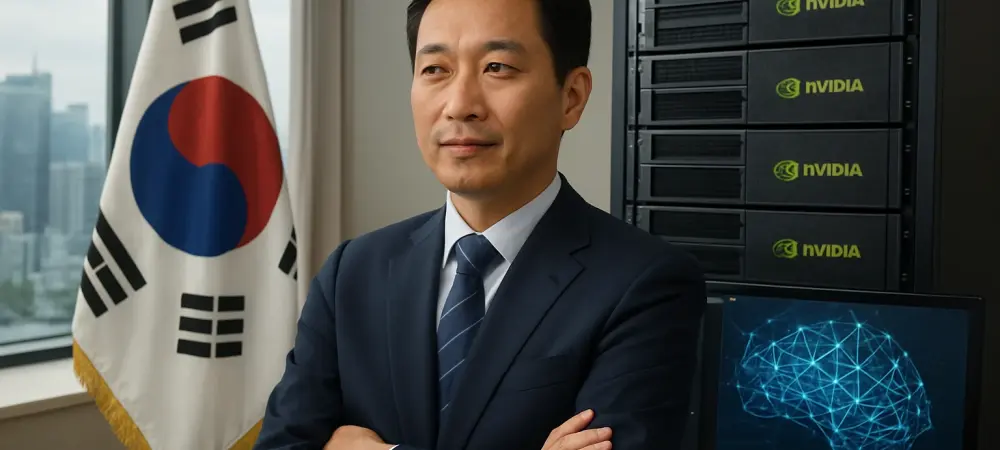
In a world where artificial intelligence is rapidly reshaping industries and economies, South Korea has positioned itself at the forefront of this technological revolution with a groundbreaking partnership that promises to redefine its global standing. Announced during the APEC Summit held within its borders, the nation has secured a monumental deal with Nvidia, a titan in the US tech sector, to acquire over 260,000 accelerator chips, predominantly GPUs. This ambitious move, driven by the Ministry of Science and ICT (MSIT) alongside industry giants like Samsung Electronics, SK Group, Hyundai Motor Group, and Naver Cloud, signals a clear intent to transform South Korea into an AI powerhouse. The scale of this initiative is staggering, as it aims to multiply the country’s current GPU count by nearly five times, addressing a critical need for enhanced computing power. This strategic investment not only highlights a commitment to innovation but also underscores the urgency of staying competitive in a fiercely contested global landscape.
Building a Robust AI Infrastructure
The magnitude of South Korea’s investment in AI infrastructure through this partnership cannot be overstated, as it represents a transformative leap for the nation’s technological capabilities. Local estimates suggest the deal’s value hovers between $7.8 billion and $10.4 billion, a figure derived from the pricing of Nvidia’s cutting-edge Blackwell B200 GPUs, which range from $30,000 to $40,000 per unit. This financial commitment, while undisclosed in exact terms, reflects a profound dedication to bolstering the backbone of AI development within the country. Beyond the numbers, the initiative involves deploying 50,000 of these advanced GPUs to key facilities such as the National AI Computing Center and platforms managed by Naver Cloud, NHN Cloud, and Kakao Corp. These resources will be made accessible to a wide array of users, including research institutes, startups, and AI-focused enterprises, fostering an ecosystem ripe for innovation. This approach ensures that the benefits of enhanced computing power ripple across various sectors, laying a solid foundation for future advancements.
Driving Sovereign AI and Global Competitiveness
Reflecting on the strides made, South Korea’s collaboration with Nvidia marks a historic moment in its journey toward technological sovereignty and industrial growth. The emphasis on sovereign AI, as articulated by MSIT Deputy Minister Bae Kyung-hoon, underscores the recognition of AI as a pivotal element of national progress rather than a mere technological trend. By integrating Nvidia’s state-of-the-art technology into its framework, the country not only amplifies its existing strengths in manufacturing but also paves the way for independent AI model development tailored to its unique challenges. This partnership, supported by both governmental vision and corporate synergy, demonstrates a unified resolve to secure a leading edge in AI-driven industries. Looking ahead, the focus should shift to leveraging these resources to nurture groundbreaking applications and solutions, ensuring that access to cutting-edge tools translates into tangible outcomes. The path forward involves continuous collaboration and strategic planning to maintain momentum and solidify South Korea’s standing on the global stage.