

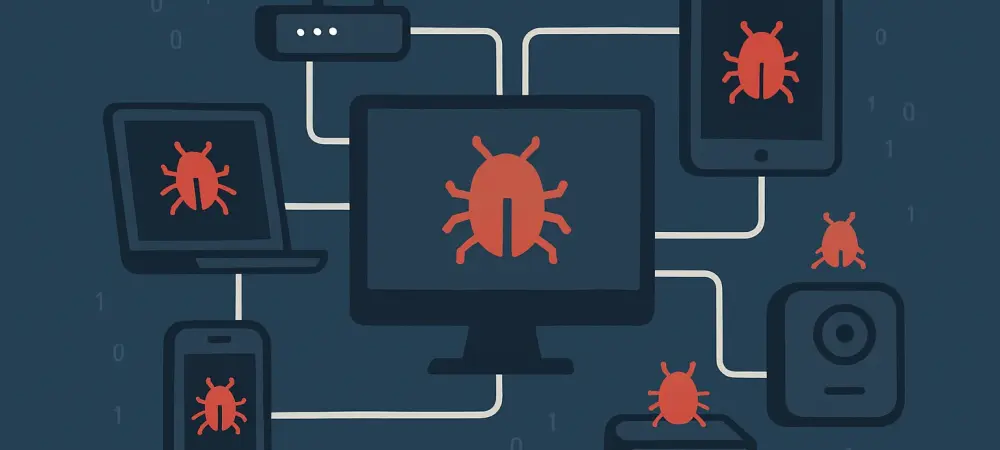
In an era where connectivity defines daily life, a chilling cyberthreat has emerged, targeting the very devices that keep homes, offices, and enterprises linked to the digital world. This advanced botnet operation, utilizing a Loader-as-a-Service model, has cast a wide net over internet-connected devices, from Small Office/Home Office (SOHO) routers to Internet of Things (IoT) gadgets and critical enterprise applications. Cybercriminals behind this scheme exploit vulnerabilities with surgical precision, transforming everyday technology into tools for malicious intent. By weaponizing command injection flaws in web interfaces, attackers deploy destructive payloads like Mirai, RondoDoX, and Morte, crafting a resilient infrastructure that adapts to takedown attempts. This growing menace underscores a stark reality: as the world becomes more interconnected, the risks of exploitation multiply. Understanding the mechanics of this threat is essential to safeguarding the digital ecosystem against such sophisticated attacks.
Unveiling the Attack Mechanics
The intricacies of this botnet operation reveal a calculated approach to exploitation that begins with targeting unsanitized input fields in network management interfaces. Areas such as NTP settings, syslog configurations, and hostname fields become entry points for attackers who inject shell commands to enable remote code execution. Using minimalistic one-line droppers, often simple wget commands, malicious scripts are downloaded onto compromised devices. To ensure success, fallback protocols like TFTP and FTP are employed, guaranteeing payload delivery even if primary methods fail. This redundancy, paired with hosting payloads across multiple IP addresses, creates a distribution network that is incredibly difficult to disrupt. The systematic nature of these attacks highlights how cybercriminals have refined their tactics to exploit even the smallest oversight in device security, turning routine configurations into gateways for chaos across global networks.
Beyond the initial breach, the botnet’s methodology unfolds through distinct phases that showcase its operational depth. Attackers start with automated authentication probes, often using default credentials like admin:admin to gain access to vulnerable systems. Once inside, a fetch-and-execute chain installs malware tailored to various device architectures, leveraging tools like BusyBox for cross-platform compatibility. The range of targets is staggering, encompassing Oracle WebLogic servers, embedded Linux devices, and specific router interfaces. Known vulnerabilities, such as CVE-2019-17574 in WordPress Popup Maker and CVE-2012-1823 in PHP-CGI, are exploited with precision. Post-compromise, detailed device fingerprinting collects critical data like MAC addresses and firmware versions, determining whether a device will be repurposed for cryptocurrency mining, Distributed Denial of Service (DDoS) attacks, or sold as access credentials on dark markets.
Resilience and Adaptability in Focus
One of the most alarming aspects of this botnet is its adaptability, which allows it to thrive across diverse technological landscapes. With multi-architecture payload support, the malware remains effective regardless of the device type, from outdated routers to modern IoT systems. A distributed command-and-control (C2) infrastructure, spanning numerous IP addresses, further ensures continuity even when individual servers are shut down. This decentralized approach minimizes the impact of defensive measures, allowing the botnet to maintain control over compromised systems for extended periods. Insights from advanced threat detection platforms have revealed operational data spanning months, exposing the intricate attack vectors and persistence of this campaign. Such resilience signals a shift in cybercrime, where attackers prioritize long-term dominance over quick, disruptive strikes, posing a significant challenge to global cybersecurity efforts.
Equally concerning is the botnet’s ability to evolve by blending old vulnerabilities with cutting-edge exploitation techniques. This hybrid strategy maximizes impact, as attackers systematically progress through phases of probing, infiltration, payload deployment, and device repurposing. The operation demonstrates a high level of organization, with intent to retain control over infected systems for varied malicious purposes. Whether orchestrating large-scale DDoS attacks or silently mining cryptocurrency, the botnet’s versatility makes it a formidable adversary. The sophistication of these tactics serves as a stark reminder that cybercriminals are not merely opportunistic but are building enduring networks designed to withstand countermeasures. As this threat continues to adapt, it becomes clear that static defenses are no longer sufficient to protect the sprawling array of connected devices in use today.
Charting a Path Forward
Looking back, the scale and ingenuity of this botnet operation exposed a critical vulnerability in the global digital infrastructure. It capitalized on command injection flaws and a Loader-as-a-Service model to create a versatile, enduring malicious network that targeted everything from household routers to enterprise systems. The operation’s stealth, adaptability, and phased attack strategy left little room for error on the part of defenders, as even minor oversights were turned into catastrophic breaches. Reflecting on the campaign, the systematic exploitation of default credentials and outdated vulnerabilities painted a sobering picture of the cybersecurity landscape, where persistent threats outpaced reactive solutions.
Moving ahead, combating such sophisticated threats demands a proactive stance rooted in robust security practices. Prioritizing input sanitization across all device interfaces can close off common entry points, while enforcing strong, unique authentication protocols will deter automated probes. Regular firmware updates and vulnerability patching must become standard to address known exploits before they are weaponized. Beyond technical measures, fostering collaboration between industry stakeholders and threat intelligence platforms can enhance early detection of botnet activities. By investing in comprehensive monitoring and sharing actionable insights, the cybersecurity community can disrupt these resilient networks before they scale, ensuring that the interconnected world remains a space of innovation rather than exploitation.