

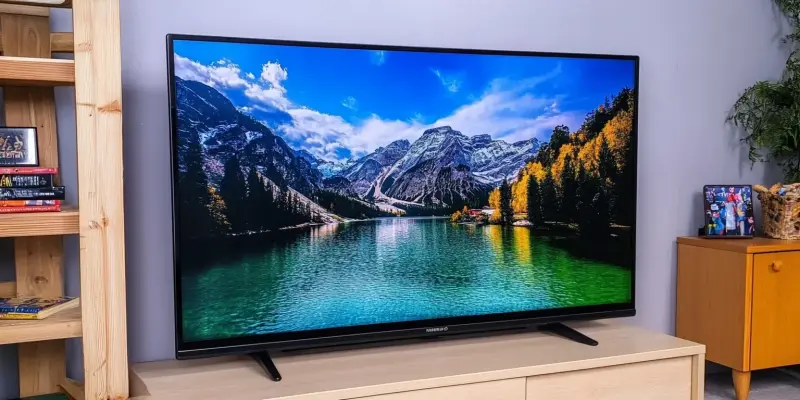
In an exciting advancement, Sony has introduced an innovation that enhances the performance of mini-LED TVs through its novel RGB LED Backlight Technology. This technological breakthrough aims to overcome the existing limitations of mini-LED and OLED displays by significantly improving color accuracy and brightness. By replacing traditional blue LEDs with RGB LEDs, Sony has engineered a system that emits precise colors, thereby eliminating the need for color filters or quantum dots. This enhancement promises to deliver richer colors and an overall brighter picture, presenting a potential rival to the acclaimed OLED technology, especially in HDR performance and color accuracy.
A New Contender in Display Technologies
Currently, mini-LED LCD and OLED are the two dominant screen technologies used in mid to high-end TVs. While mini-LED LCDs shine with robust HDR highlights and minimal blooming effects, OLEDs are celebrated for their superior contrast and nuanced HDR capability thanks to individual LED control for each pixel. However, OLEDs often fall short in achieving the same brightness levels as mini-LEDs. Sony’s RGB LED technology aims to bridge this gap by enhancing color production and exceptional brightness, demonstrated to exceed 4,000 nits—a level typically seen in professional reference monitors. This breakthrough could potentially shift the balance, allowing mini-LEDs to offer the best of both worlds.
One of the standout features of Sony’s new RGB LED tech is its ability to display red tones more vividly than its predecessors. Coupled with competitive blues and greens that rival OLED performance, this RGB system promises a balanced and rich color spectrum. Additionally, broader support for wider viewing angles—an area where mini-LEDs have traditionally struggled—ensures color consistency from various positions, eliminating saturation loss or green tint at extreme angles. This advancement enhances the overall viewing experience, making it more enjoyable regardless of where the viewer is situated.
Industry-Wide Implications
Sony has made an exciting leap forward with its new RGB LED Backlight Technology, significantly enhancing the performance of mini-LED TVs. This cutting-edge innovation tackles the existing issues found in mini-LED and OLED displays by offering improvements in both color accuracy and brightness. Instead of relying on traditional blue LEDs, Sony’s system uses RGB LEDs, which emit specific colors directly. As a result, there’s no longer a need for color filters or quantum dots, leading to more precise color reproduction. This advancement brings richer colors and a brighter picture overall, positioning it as a potential competitor to the highly regarded OLED technology, particularly when it comes to HDR performance and color precision. With these enhancements, Sony’s mini-LED TVs could rival and even outperform OLED screens in key areas, providing a superior viewing experience. This breakthrough exemplifies Sony’s commitment to pushing the boundaries of what’s possible in television technology, and it may set a new standard for display quality.