

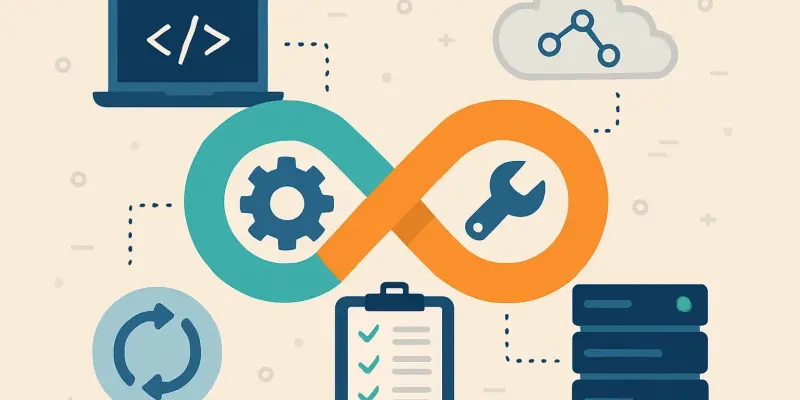
In the evolving landscape of software development, small teams are increasingly recognizing the potential of DevOps practices to streamline operations, promote innovation, and enhance efficiency. Many perceive DevOps as a framework best suited for large enterprises, given its traditional complexity and resource demands. However, recent developments have shown that small teams, with their agility and focus, can adopt DevOps principles effectively without overwhelming costs or administrative burdens. This goes beyond merely implementing tools; it involves a cultural transformation that aligns with the core practices of DevOps, centering on collaboration, automation, and continuous improvement. This article explores how small development teams can harness DevOps principles to achieve remarkable results, overcoming the misconception that DevOps is an exclusive domain of large organizations.
Implementing DevOps in Small Teams
Embracing Automation for Efficiency
For many small teams, the journey toward DevOps begins with automation, a cornerstone of the methodology that significantly enhances productivity and consistency. Automation helps manage routine tasks such as testing, deployment, and configuration management, allowing developers to focus more on innovation and less on repetitive chores. Utilizing simple tools and platforms like GitHub Actions, Jenkins, or basic shell scripts can automate these processes without necessitating a large-scale investment. This enables teams to maintain high-quality standards while freeing up valuable time to devote to pressing projects or new development opportunities, improving speed and efficiency in their workflows.
Delving deeper into automation, small teams should prioritize automating their continuous integration and continuous deployment (CI/CD) pipelines. By streamlining the build, test, and deployment phases of development, teams can not only deliver updates more rapidly but also ensure that code changes are systematically validated to avoid introducing errors. This continuous quality assurance aligns with the core DevOps philosophy of integrating operations with development for seamless software delivery. Additionally, automation extends beyond code deployment. Automating infrastructure provisioning and monitoring helps small teams maintain a robust and responsive production environment, enhancing their capacity to quickly respond to issues and deploy fixes without unnecessary delay.
Fostering a Collaborative Culture
A critical aspect of successfully implementing DevOps in small teams involves nurturing a collaborative culture. At its essence, DevOps highlights the breakdown of silos between development and operations, fostering an environment where shared ownership and open communication drive projects forward. This culture shift can be facilitated using modern collaboration tools like Slack, Microsoft Teams, or JIRA, which integrate various aspects of DevOps workflows into a central platform. Such tools encourage a more transparent and cooperative working environment, where every team member stays informed and involved, and where information is accessible and actionable.
Effective collaboration also stems from embracing version control systems such as Git, which are indispensable not only for code management but for documentation and configuration files as well. Version control provides a historical view of changes, allowing teams to track developments, troubleshoot efficiently, and revert to previous states if necessary. This promotes accountability and ensures a cohesive effort across all team members. Open feedback mechanisms are integral in this cooperative ecosystem, enabling team members to provide input and receive constructive criticism for process improvement and quality consistency. Through these collaborative strategies, teams can foster a sense of collective responsibility and shared goals, aligning with DevOps’ overarching principle of unified team dynamics in achieving operational excellence.
Achieving Continuous Improvement
Gradual Integration of DevOps Principles
Continuous improvement forms the backbone of a successful DevOps strategy in small teams. Instead of attempting to implement all DevOps practices at once, which can overwhelm resources and personnel, small teams benefit most from a phased and thoughtful approach. Introducing DevOps initiatives gradually encourages adapting to new processes, allowing for feedback and catered adjustments that align with specific team needs and capabilities. Setting realistic milestones and celebrating minor achievements offer motivation and visual progress, solidifying a culture of quality and performance enhancement over time.
Importantly, this incremental approach allows small teams to fine-tune their processes in real-time, incorporate lessons learned, and address issues before they scale. This also aids in gauging the effectiveness of new practices and tools, permitting teams to identify what’s working and what needs refinement. Practical steps such as holding regular retrospectives can help teams assess their progress, invite new ideas, and align on improvement areas, reinforcing the foundation of continuous process enhancement. As a result, these measures collectively support an enduring DevOps culture that sustains high performance and adaptability in an ever-changing technological landscape.
Focusing on Feedback and Adaptation
Relentless feedback is a critical element of continuous improvement within the DevOps framework, especially in the context of small teams. By formalizing feedback as a regular practice, it not only helps in the identification of bottlenecks and improvement areas but also fosters a culture that values transparency and accountability. Encouraging open dialogue among team members enables problems to be addressed early and collectively, reducing friction and boosting problem-solving efficiency. A structured feedback mechanism reinforces the continuous improvement ethos by ensuring that constructive insights lead to tangible enhancements in the team’s project execution and outcomes.
Adaptation is another crucial facet accompanying feedback within the DevOps cycle. As small teams integrate new technologies or practices, the ability to pivot based on feedback becomes vital to maintain smooth operations and continuity. Encouraging an agile mindset where change is embraced rather than resisted allows teams to refine their methods swiftly, staying aligned with their objectives. In this adaptive cycle, issues such as underperforming tools, outdated procedures, or underutilized resources can be promptly identified and addressed, ensuring the team evolves with emerging industry standards. Therefore, the blend of robust feedback loops and a willingness to adapt is vital in cementing a sustainable and efficient DevOps environment within small team settings.
Conclusion: DevOps for Small Teams
For numerous small teams, embarking on the DevOps journey typically starts with automation, a foundational element of the approach that greatly boosts productivity and consistency. Automation manages routine functions like testing, deployment, and configuration, allowing developers to concentrate on innovation rather than repetitive tasks. Tools such as GitHub Actions, Jenkins, or simple shell scripts can automate these processes without requiring significant investments, enabling teams to uphold high-quality standards while freeing up valuable time for demanding projects or new development opportunities, thereby enhancing workflow speed and efficiency.
When delving deeper, it’s crucial for small teams to focus on automating their continuous integration and continuous deployment (CI/CD) pipelines. Streamlining the build, test, and deployment phases accelerates updates and ensures code changes are consistently validated, minimizing errors. This aligns with the fundamental DevOps philosophy of merging operations with development. Beyond code, automating infrastructure provisioning and monitoring fortifies a strong production environment, improving a team’s ability to swiftly address issues and deploy fixes efficiently.