

Dominic Jainy stands at the forefront of modern infrastructure protection, bringing a sophisticated perspective to the intersection of traditional IT security and the physical systems that keep our world running. With deep expertise in how emerging technologies like artificial intelligence and blockchain interface with hardware, he has become a leading voice on the hidden vulnerabilities within data centers—specifically the Operational Technology (OT) that manages power and cooling. In this conversation, we explore the critical “blind spots” that many organizations overlook, moving beyond the server racks to examine the building management systems and legacy infrastructure that truly underpin digital resilience. We discuss the inherent dangers of applying aggressive IT-style security protocols to sensitive hardware, the strategic necessity of passive monitoring through TAP and SPAN connections, and the cultural shift required to align facility management with cybersecurity objectives.
Data center security usually focuses on servers and cloud platforms, yet cooling and building management systems are vital for uptime. How does overlooking these operational systems impact overall resilience, and what specific risks arise when these sensitive systems are left on shared networks?
When we focus exclusively on the “white space” of the data center—the rows of blinking servers and high-speed switches—we are essentially protecting the brain while ignoring the heart and lungs. Cooling infrastructure and building management platforms are the life support systems of the facility; if they fail, the most advanced server in the world will shut down within minutes due to thermal overload. Overlooking these systems creates a massive resilience gap because an attacker doesn’t need to crack a 256-bit encryption key on a database if they can simply manipulate a cooling pump or a power distribution unit. The risk becomes even more acute when these sensitive systems sit on shared networks, as it creates a path for lateral movement where a breach in a low-security office environment can migrate into the critical physical infrastructure. Without clear visibility into these connections, organizations are effectively protecting the front of the house while leaving the back door wide open to any intruder who understands how industrial protocols work.
Active scanning is routine in office networks, but it can cause instability in live operational environments. What are the technical consequences of using aggressive IT-style probing on aging infrastructure, and how should teams determine which systems are too sensitive for conventional inspection?
In a standard IT environment, we are used to aggressive pinging and automated vulnerability scanners that map out every port and service, but in the OT world, this approach is like taking a sledgehammer to a glass sculpture. Many data centers still rely on aging infrastructure and proprietary protocols that were designed decades ago, long before modern cybersecurity was a concern. When you hit these fragile, legacy devices with IT-style probing, you risk overwhelming their limited processing power, which can lead to system crashes, unintended reboots, or “zombie” states where a cooling controller simply stops responding to temperature changes. To determine which systems are too sensitive, teams must conduct a thorough audit of their “digital stack” to identify any hardware that lacks the robust network stack found in modern servers. Any system that manages life-critical or uptime-critical tasks, such as a main breaker or a chiller plant, should be flagged as “too sensitive” for active scanning to avoid the very disruption that the security team is trying to prevent.
Passive monitoring allows for traffic observation without straining fragile systems. How should organizations implement TAP or SPAN connections during the design phase to improve oversight, and what are the specific steps for logically grouping systems to contain potential issues before they spread?
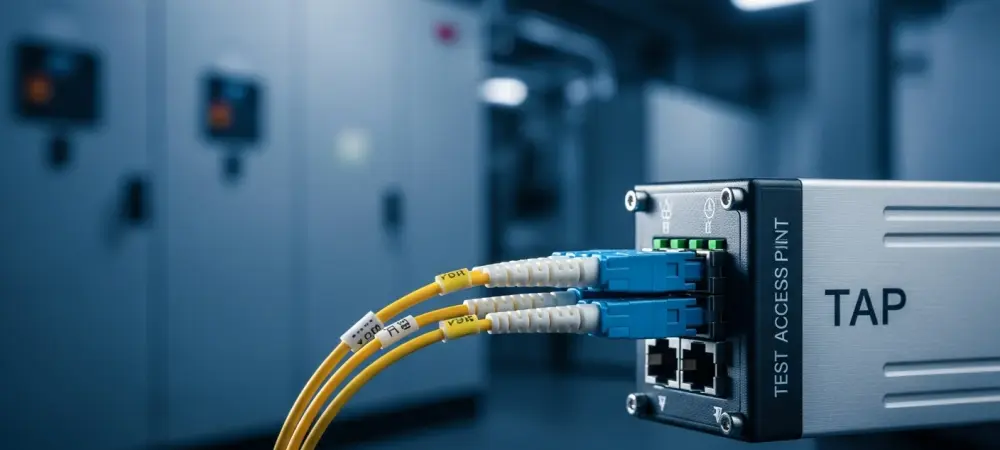
Passive monitoring is the gold standard for OT security because it allows us to listen to the network heartbeat without ever interfering with the pulse of the machinery. By implementing TAP (Test Access Point) or SPAN (Switched Port Analyzer) connections during the initial design phase, engineers can ensure that security tools receive a mirror image of all data traffic without adding a single millisecond of latency to the actual control signals. This design-first approach means you aren’t trying to “bolt on” security after the facility is already live and humming, which is often when mistakes happen. Once the hardware is in place, the next step is logical grouping—segmenting the network so that the cooling systems, fire suppression, and power management each sit in their own isolated zones. By doing this, you create a “containment” strategy where an unusual behavior in the building management system can be identified and isolated before it has any chance of spreading to the wider enterprise network or the internet.
Operational technology must meet unique safety and reliability requirements that differ from standard IT needs. How can security teams balance the demand for deep visibility with the risk of service disruption, and what metrics help prove that a monitoring approach isn’t compromising system performance?
Balancing deep visibility with system safety is one of the most delicate acts in cybersecurity, as organizations must adhere to the NIST Guide to Operational Technology Security, which prioritizes performance and reliability above all else. To achieve this balance, security teams should shift away from “interrogation” and toward “observation,” using tools that can decode proprietary OT protocols in real-time without sending a single packet back into the stream. We prove this approach is working by tracking specific performance metrics, such as network jitter, packet loss, and CPU utilization on the OT controllers themselves; if these numbers remain flat while the security dashboard is populating with data, we know the monitoring is truly non-intrusive. Furthermore, tracking the “time to detection” for unusual communication patterns provides a concrete metric of resilience that doesn’t come at the cost of a single second of downtime. Ultimately, the goal is to create a transparent security layer that provides 100% visibility into the operational estate while remaining completely invisible to the physical processes it protects.
Resilience often focuses on the “white space” where data is stored, but the underlying infrastructure is just as critical. How can data centers bridge the cultural gap between IT security and facility management teams, and what long-term benefits does this integrated visibility provide for operational continuity?
The cultural gap between the IT teams in the “white space” and the facility managers in the “gray space” is often a matter of different languages: one speaks in terms of firewalls and patches, while the other speaks in terms of flow rates and voltage. Bridging this gap requires a unified strategy where security is no longer treated as a separate IT function, but as a core component of facility maintenance and operational excellence. When these teams collaborate, they move away from a reactive “break-fix” mentality toward an integrated visibility model that benefits the entire organization by identifying potential failures before they become catastrophes. Long-term, this synergy leads to a much more resilient operation where the digital and physical layers are monitored as one cohesive organism, reducing the risk of avoidable disruption and ensuring that the infrastructure supporting the data is just as secure as the data itself. By aligning the ambitions of the business with the technical realities of the facility, organizations can move forward with maximum momentum and a significantly reduced risk profile.
What is your forecast for data center operational security?
I predict that the next three to five years will see a total convergence where OT security is no longer viewed as a niche specialty, but as the foundational layer of all data center resilience strategies. We are moving toward a “secure-by-design” era where autonomous, AI-driven passive monitoring will be built into every chiller, generator, and UPS system from the factory floor, providing real-time threat intelligence without human intervention. As the NCSC and other global bodies tighten their design principles, the “blind spots” we see today will vanish, replaced by a holistic view where the health of a cooling pump is monitored with the same intensity as a primary database. Organizations that fail to adopt this integrated, passive-first approach will find themselves increasingly vulnerable to both sophisticated cyberattacks and simple operational failures, while those who embrace visibility across the entire digital and physical stack will set the new standard for global uptime and reliability.