

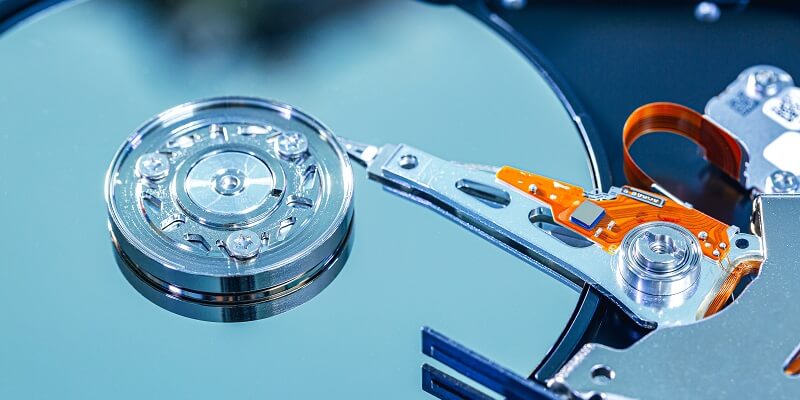
During Seagate’s Q2 earnings call, the storage giant announced that it had reached a milestone in the shipment of heat-assisted recording (HAMR) hard drives to hyperscale customers, marking a significant step towards a capacity revolution in the storage industry.
Previous shipments for validation and testing
Seagate had previously sent out a limited number of HAMR drives to various customers for validation and testing purposes. However, these shipments did not have a significant impact on the company’s balance sheets at the time.
New HAMR drive details
Seagate’s first HAMR drive, which is now available, boasts an impressive capacity of 32TB. The drive utilizes the company’s mature 10-platter design, indicating a seamless integration of HAMR technology into its existing infrastructure and manufacturing processes.
Future capacity expansion
With the successful introduction of the 32TB HAMR drive, Seagate is well-positioned to push the boundaries of capacity even further. The company plans to increase the capacity to 36TB and subsequently to 40TB using the same HAMR technology. Looking ahead, Seagate predicts the potential for 50TB and 100TB HAMR drives by the year 2025, promising vast storage capacities that were previously unimaginable.
Advantages of using a mature design
Seagate’s adoption of HAMR technology with its mature 10-platter design confers several advantages. By leveraging their existing infrastructure, Seagate can navigate the transition to HAMR more smoothly than starting from scratch. Although new internals are required for HAMR drives, Seagate’s experience in their well-established designs gives them an edge in bringing HAMR to market.
Planned volume ramp and timeline
During the earnings call, Seagate disclosed its plans to commence the “volume ramp” of HAMR drives in early 2024. This timeline suggests that the technology will be ready for broader adoption within the next few years, allowing more customers to take advantage of the increased capacities offered by HAMR drives.
Comparison with other high-capacity drives
Seagate’s 32TB HAMR drive currently stands as the highest capacity drive available in the market. While Western Digital offers a 26TB drive, Seagate’s use of HAMR technology makes direct comparison with parallel magnetic recording (PMR) and shingled magnetic recording (SMR) drives difficult, necessitating an asterisk when discussing capacities.
Offering PMR and SMR drives
Despite the focus on HAMR technology and its potential, Seagate recognizes that there are customers who prefer legacy technologies. As a result, the company plans to continue offering PMR and SMR drives, ensuring they cater to the needs of these customers who require the familiar technology.
Addressing lower capacity demands
Seagate understands that not all customers require the cutting-edge capacities offered by HAMR drives. To accommodate those seeking capacities in the “mid to upper” 20TB range, the company is actively working on developing solutions that strike a balance between capacity and affordability, ensuring they cater to a wider range of storage demands.
Seagate’s shipment of HAMR drives to hyperscale customers marks a significant milestone in the company’s mission to revolutionize storage capacities. The successful integration of HAMR technology into Seagate’s mature design demonstrates their commitment to driving innovation within the industry. As Seagate prepares for the volume ramp-up of HAMR drives in early 2024, the possibilities of even higher capacities in the near future beckon, promising unprecedented storage capabilities and fueling anticipation for what lies beyond.