

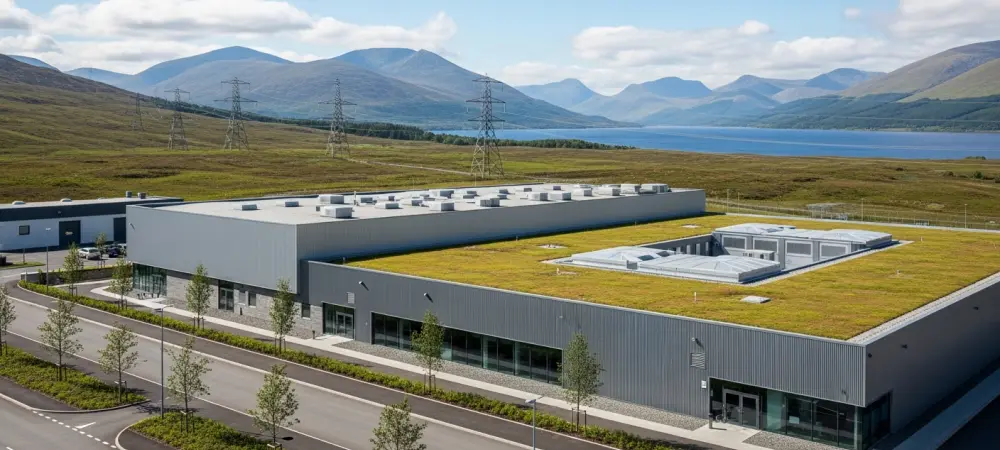
The rapid industrialization of the Scottish countryside through massive, high-capacity data centers is currently sparking a nationwide debate over the long-term sustainability of the country’s digital ambitions. As dozens of these sprawling facilities navigate the complex planning permissions from the Lowlands to the Highlands, the sheer scale of the proposed “hyperscale” developments has caught many local communities by surprise. While the government promotes this as a necessary step toward global technological leadership, the reality on the ground is far more contentious. This aggressive expansion represents a fundamental shift in how Scotland utilizes its natural resources, moving away from traditional industries toward a data-driven economy that requires immense land and power. The tension is palpable as environmentalists and local residents demand greater transparency regarding the ultimate purpose of these projects. Without a clear national framework, the push for artificial intelligence is quickly becoming a flashpoint for broader anxieties about corporate encroachment on public interests and the natural environment.
Global Finance and Domestic Political Influence
Global capital flows into the Scottish technology sector are increasingly dominated by high-stakes financiers and private equity firms based in the United States. Organizations like the Carlyle Group, along with various sovereign wealth funds, have identified the region as a primary target for AI-related infrastructure, despite lingering concerns over their historical involvement in previous banking crises. These entities are not merely providing funding; they are reshaping the Scottish economic landscape by asserting foreign control over critical digital infrastructure. This influx of capital often prioritizes short-term profitability and rapid scaling over the long-term ecological health of the host communities. Consequently, many analysts worry that the reliance on such volatile international investment could leave the nation vulnerable to global market fluctuations. As these multi-billion-pound projects move forward, the lack of local accountability remains a significant point of contention for those who fear that Scotland is being used as a low-cost testing ground for unproven technologies.
Parallel to the financial influence from abroad is a complex network of domestic political and social connections that facilitate these developments within Scotland. Prominent figures who have held influential positions within the UK government are now appearing as key advisers or chairmen for the very firms leading the data center charge. Furthermore, the involvement of individuals associated with major cultural institutions, such as Celtic Football Club, highlights a strategic effort to utilize existing social capital to smooth the path for controversial infrastructure projects. This intersection of political power and corporate interest often allows developers to bypass traditional public consultation processes, leading to a perception that these projects are being forced through behind closed doors. By leveraging these high-profile connections, proponents of the AI expansion can navigate bureaucratic hurdles with relative ease. This creates a growing sense of unease among the electorate, who see the blurring lines between public service and private enterprise as a threat to democratic oversight in the planning and development sectors.
Environmental Costs and Infrastructure Vulnerabilities
Beyond the political sphere, the physical demand these facilities place on the national power grid is reaching a critical threshold that threatens energy security. A single “hyperscale” data center can consume as much electricity as two entire mid-sized cities, a requirement that places an immense burden on the existing electrical infrastructure. Campaigners have correctly pointed out that if every proposed facility currently in the planning stage were to reach completion, the total energy demand would likely exceed the country’s current production capacity. This imbalance could lead to a significant increase in energy costs for domestic consumers and potential instability across the grid during peak usage periods. While the Scottish Government emphasizes the role of renewable energy in powering these sites, the sheer volume of electricity required often necessitates a reliance on more traditional, carbon-intensive sources in the short term. The challenge lies in reconciling the nation’s ambitious net-zero targets with the voracious appetite of the AI industry, which shows no signs of slowing its expansion across the rural landscape.
In tandem with the electrical requirements, the massive volume of water necessary for cooling these high-density computational hubs is raising alarms about regional resource management. Large-scale servers generate extraordinary amounts of heat, necessitating constant cooling through water-intensive systems that can drain local aquifers and impact river ecosystems. In regions where water scarcity was previously unheard of, the introduction of these massive facilities is creating new pressures on local supply networks that serve both agriculture and residential areas. Environmental advocacy groups are calling for stricter regulations on how these centers manage their waste heat and water discharge, fearing that thermal pollution could harm local biodiversity. The potential for ecological degradation is not just a theoretical concern; it is a lived reality for communities seeing their local water tables fluctuate near established sites. As the climate becomes more unpredictable, the decision to prioritize industrial cooling over human and agricultural needs is being questioned by those who advocate for a more balanced approach to resource allocation in the modern digital age.
Territorial Disputes and the Workforce Paradigm
The aesthetic and cultural impact of these industrial developments is equally significant, as many sites are strategically positioned near historic landmarks and protected rural landscapes. Protests have already surfaced in areas where proposed data centers would loom over ancient castles and heritage estates, fundamentally altering the visual character of the Scottish countryside. These locations are often chosen for their proximity to existing fiber routes or power substations, yet the choice frequently ignores the cultural and historical value of the land being occupied. Local residents argue that the encroachment of massive concrete structures into pristine environments destroys the very qualities that define the region’s identity and tourism appeal. The loss of biodiversity in these areas is also a major concern, as the construction of expansive campuses inevitably displaces wildlife and fragments natural habitats. While developers often promise to mitigate these effects through landscaping, critics maintain that the industrialization of rural Scotland is an irreversible process that sacrifices long-term cultural heritage for the sake of short-term technological advancement.
Economic justifications for the expansion often center on the promise of job creation and regional rejuvenation, yet the reality of AI-driven industrialization may be quite different. Data centers are notoriously low-intensity employers once the initial construction phase is completed, as the operations are heavily automated and managed remotely. Many industry experts suggest that the very technology these centers are built to support—artificial intelligence—is likely to eliminate more traditional clerical and administrative roles than the number of specialized technical positions the facilities will create locally. This creates a paradox where the public is asked to bear the environmental and infrastructural costs of projects that offer minimal long-term employment benefits to the surrounding community. Furthermore, the high-paying technical roles that do exist are frequently filled by specialists brought in from elsewhere, rather than being drawn from the local labor pool. This leaves many residents feeling that the economic benefits largely bypasses their towns, while the permanent physical and environmental scars of the facilities remain a constant reminder of the trade-off.
Strategic Recommendations and Future Infrastructure Resilience
To address these challenges, the implementation of more robust community-led oversight committees and localized energy audits became the necessary standard for any new proposals. Policymakers recognized that the previous model of rapid expansion without rigorous environmental safeguards was unsustainable, leading to the development of stricter cooling technology requirements and mandatory heat-recycling programs. By shifting the focus toward “circular” data centers that provide excess heat to local municipal heating networks, some projects began to offer a more tangible benefit to the public. Additionally, the introduction of transparency laws regarding foreign investment and political lobbying helped to rebuild some of the trust that was lost during the early stages of the AI boom. Moving forward, the focus must remain on ensuring that technological progress does not come at the expense of national resource security or cultural integrity. It was ultimately determined that for Scotland to thrive as a digital leader, the industry had to prove its worth through ecological responsibility and a demonstrated commitment to the social well-being of the people it serves.