

As a distribution business expands, the very systems that once supported its initial success, such as disjointed software and manual spreadsheets, inevitably begin to falter under the increased complexity and volume. This operational friction quickly manifests in a series of costly symptoms: inaccurate shipments erode customer trust, fulfillment delays create bottlenecks that stifle growth, and frequent stockouts lead to lost revenue opportunities. This critical juncture forces a choice between succumbing to the chaos of an inefficient warehouse or embracing a technological transformation. An integrated platform like Microsoft Dynamics 365 Business Central offers a pathway forward, designed not just to manage warehouse operations but to optimize them, turning a potential liability into a powerful engine for scalable growth by unifying systems, automating critical processes, and delivering the real-time data necessary for informed, strategic decision-making.
Achieve Total Control with a Single Source of Truth
Eliminate Inventory Guesswork
The foundation of any efficient warehouse is accurate inventory data, yet for many scaling businesses, this remains an elusive goal. When operational records fail to align with the physical reality on the shelves, a cascade of negative consequences is set in motion. Sales teams may inadvertently sell items that are out of stock, leading to backorders and customer dissatisfaction. Conversely, procurement may over-order goods based on faulty data, tying up valuable capital in excess inventory that increases carrying costs and risks obsolescence. This pervasive uncertainty, often referred to as “inventory guesswork,” forces teams to operate without confidence, relying on manual counts and approximations that are both time-consuming and inherently unreliable. This lack of a definitive data source creates friction between departments and fundamentally limits a company’s ability to promise orders accurately and manage its assets effectively, acting as a constant drag on profitability and growth potential. To counteract this operational ambiguity, Business Central establishes a single, unimpeachable source of truth for the entire inventory ecosystem, providing a foundation of data integrity that permeates the entire organization. The system delivers an immediate and precise view of stock levels across all physical and virtual locations, offering real-time insights into what is on-hand, what has been reserved for open orders, and what is currently in transit from suppliers. This complete, 360-degree visibility ensures that every department—from sales and customer service to procurement and the warehouse floor—is operating from the same accurate information. As a result, order promising becomes a confident and reliable process, replenishment strategies can be optimized to prevent both stockouts and overstocking, and the costly inefficiencies born from data discrepancies are systematically eliminated. This transparent environment fosters greater collaboration and empowers teams to make faster, smarter decisions backed by data they can trust implicitly.
Gain Granular Tracking and Accountability
Simply knowing the total quantity of an item is often insufficient for modern distribution, which demands a much deeper level of control and traceability. Without the ability to track goods at a more granular level, businesses face significant operational risks and inefficiencies. For industries dealing with perishable goods, the inability to monitor expiration dates can lead to waste and financial loss. In other sectors, the lack of specific item tracking makes managing product recalls a logistical nightmare, potentially damaging brand reputation and incurring substantial costs. Furthermore, when items are only tracked at the warehouse level, employees can spend an inordinate amount of time physically locating products for picking, a delay that directly impacts order fulfillment speed. This absence of detailed accountability not only slows down operations but also creates blind spots where process breakdowns can occur without a clear digital trail to identify the root cause.
Business Central addresses these challenges by implementing powerful, granular tracking capabilities that provide precise control over every item in the warehouse. Through the automated application of serial and lot numbers upon receipt, the system creates a complete digital audit trail that documents an item’s entire lifecycle, from its arrival to its final shipment. This detailed history is invaluable for ensuring quality control, simplifying recall management, and adhering to strict regulatory compliance standards. The platform enhances this precision with bin-level management, a feature that tracks inventory down to its specific location on a particular shelf or rack within the warehouse. By directing employees to the exact bin, this functionality dramatically reduces search times and optimizes the picking process. This combination of lot tracking and bin management transforms the warehouse from a collection of generalized quantities into a highly organized, fully accountable environment where every item’s location and history are known and accessible in real-time.
Boost Efficiency Through Intelligent Automation
Revolutionize Picking and Packing
In a warehouse environment that relies on manual processes, inefficiency and error are almost guaranteed. The traditional method of using paper-based pick lists is a primary source of these problems, as it often leads employees on circuitous, illogical routes through the facility, wasting valuable time and energy. This lack of system guidance also increases the likelihood of human error, such as picking the wrong item, the incorrect quantity, or products from the wrong lot, mistakes that can be incredibly costly to rectify once they reach the customer. Communication breakdowns further compound these issues, as last-minute order changes or priority updates may not be relayed effectively to the warehouse floor. These cumulative inefficiencies create significant bottlenecks in the picking and packing stages, which are often the most labor-intensive parts of the fulfillment process, directly slowing down the entire operation and limiting its overall capacity.
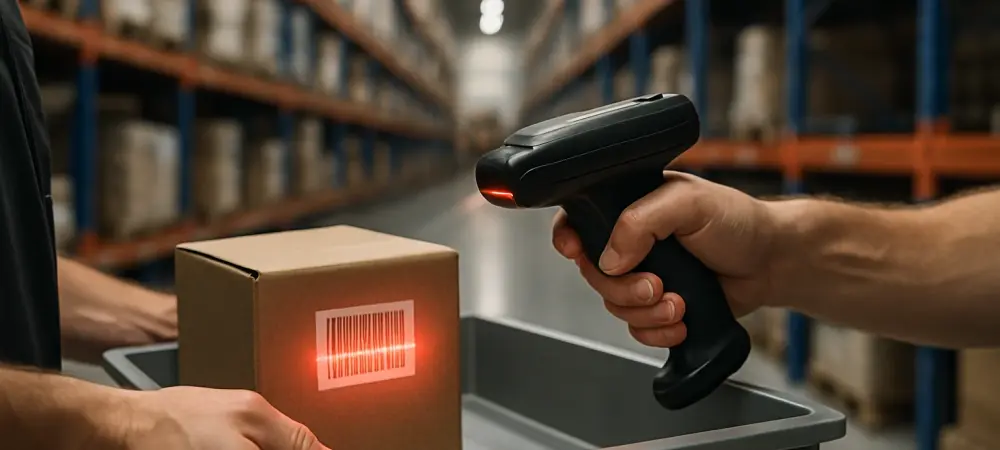
Business Central directly confronts these manual limitations by embedding intelligent automation into the core of the warehouse workflow, transforming picking and packing from a potential bottleneck into a streamlined, high-efficiency process. The system’s “directed pick and put-away” functionality leverages advanced algorithms to calculate and assign the most efficient paths for both storing incoming goods and retrieving items for outgoing orders, minimizing employee travel time and maximizing productivity. Beyond simple path optimization, it supports sophisticated picking strategies such as zone picking, where workers remain in a designated area, and batch picking, which allows for the simultaneous fulfillment of multiple orders. This strategic flexibility enables distributors to tailor their workflow to their specific order profiles and warehouse layouts. Furthermore, seamless integration with mobile scanners and handheld devices replaces outdated paper lists with real-time, on-screen instructions, a change that can reduce picking errors by a remarkable 40% to 60% and accelerate the entire order-to-shipment cycle.
Connect Your Entire Operation
As distributors grow and expand their footprint to include multiple warehouse locations, they often face the significant challenge of information silos. When each facility operates on a separate or disconnected system, it becomes exceedingly difficult to maintain a holistic view of the company’s total inventory. This fragmentation leads to a host of strategic problems, including the accumulation of redundant stock in some locations while others face shortages, creating an imbalanced and inefficient distribution network. Executing inter-company transfers to correct these imbalances becomes a complex and slow manual process, delaying order fulfillment and frustrating customers. This lack of a unified operational view prevents the business from leveraging its full inventory to fulfill orders from the most logical or cost-effective location, ultimately hindering its ability to operate as a cohesive, agile enterprise and limiting its potential for further scalable growth.
Business Central was designed to break down these operational silos and create a single, unified command center for the entire distribution network. It provides a centralized dashboard that offers real-time visibility and management capabilities across all physical locations, allowing for strategic oversight of inventory, processes, and personnel from one interface. The system automates and simplifies the process of transferring stock between warehouses, enabling the business to dynamically balance inventory levels and ensure that products are always positioned to meet demand efficiently. Crucially, Business Central distinguishes itself from a standalone Warehouse Management System (WMS) by functioning as a comprehensive Enterprise Resource Planning (ERP) solution. This means its warehouse module is natively integrated with all other business functions, including finance, sales, and purchasing. An incoming sales order automatically allocates inventory, a low stock level can trigger an automated purchase order, and shipping data flows seamlessly into accounting for invoicing, creating a truly connected and automated digital enterprise.
From Cost Center to Competitive Advantage
The strategic adoption of an integrated system fundamentally redefined the role of the warehouse within the business. The journey from disconnected, manual processes to a unified, automated environment was driven by the successful implementation of technology configured to address specific operational pain points. Key features such as real-time inventory visibility, directed put-away and pick, and multi-warehouse management were instrumental in this transformation. These tools provided the foundation for a significant leap in performance, leading to quantifiable gains across the board. The implementation of scanner-integrated workflows drastically reduced picking errors, while automated processes accelerated order fulfillment speeds. This shift was more than just a software upgrade; it was a foundational change that turned the warehouse from a cost center into a scalable, high-performance asset that provided a distinct competitive advantage. The expertise of an implementation partner proved crucial in this transition, ensuring that the system’s capabilities were fully leveraged to meet the unique demands of the business and deliver a tangible return on investment.