

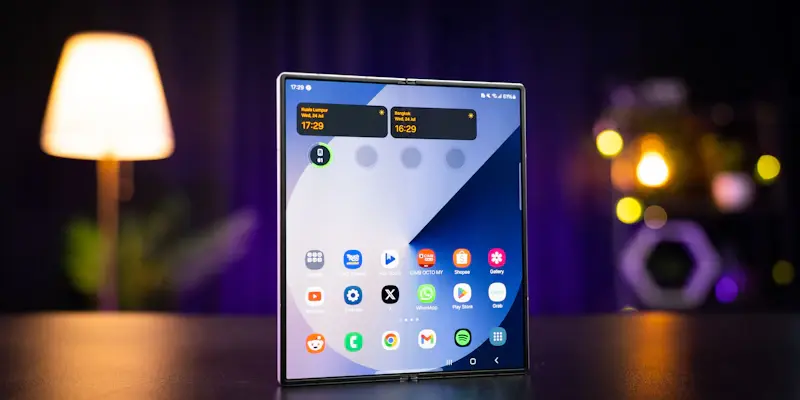
Samsung is making waves in the tech world once again with the impending launch of its first tri-foldable smartphone, expected to be known as the Galaxy G Fold. This groundbreaking device is set to redefine the standards in the foldable smartphone market, diverging from Samsung’s usual lineup and showcasing significant innovation.
New Product Launch
The Galaxy G Fold, possibly called the Galaxy G Fold1, is believed to be launching either later this year or by early 2026. This new device represents a landmark in Samsung’s product line, featured in a series that could mark a departure from the existing Galaxy Z series. The addition of the “G” designation suggests a fresh start for the company’s foldable smartphones, indicating a move towards more innovative advances in design and functionality.
Design and Form Factor
Unlike other foldable devices such as Huawei’s Mate XT, which opens in an S-shaped design, Samsung’s Galaxy G Fold employs a unique Flex G design. This innovative form factor allows the device’s two side panels to fold inward, thus protecting the AMOLED screen. This shift in the folding mechanism is significant for users concerned about potential damage to foldable displays during everyday use. Furthermore, this inward-folding design enhances the device’s portability, though it might result in a slightly thicker profile.
Innovations in Display
Samsung’s Galaxy G Fold will debut with a 9.96-inch AMOLED panel, slightly taller than the screen on the current Galaxy S25 Ultra. This display innovation provides users with an enhanced viewing experience, capitalizing on increased screen real estate without sacrificing the device’s compactness when folded. By integrating this larger, advanced AMOLED display, Samsung aims to deliver superior visual performance suited for various applications, from multimedia consumption to productivity tasks.
Protection and Portability
The inward-folding mechanism of the Galaxy G Fold is particularly advantageous for screen protection during transport. This design choice is pivotal as it addresses one of the primary concerns consumers have with foldable smartphones: screen durability. While the thicker form factor might be a consideration, the benefits of increased screen longevity and protection far outweigh this minor inconvenience. Samsung’s focus on protection ensures that the Galaxy G Fold appeals to users looking for durable, cutting-edge smartphones.
Series Introduction
Introducing the Galaxy G Fold under a new series name is a strategic move by Samsung. The “G” designation signifies a notable shift from the Galaxy Z series, suggesting a new line of foldable devices that prioritize innovation and advancement in technology. This approach indicates a new chapter in Samsung’s foldable journey, aimed at staying ahead of competitors and reclaiming its leadership in the foldable smartphone arena.
Innovation Response
Samsung’s decision to launch the Galaxy G Fold is a direct response to the growing competition in the foldable market, particularly from Huawei. By introducing a device with a novel foldable design, Samsung aims to reassert its strong position in the market. This move underscores Samsung’s dedication to not only keeping up with industry trends but setting them, ensuring that its products remain at the forefront of technological innovation.
Enhanced Durability
Durability is a key focus for the Galaxy G Fold, thanks to its inward-folding mechanism, which protects the screen when the device is closed. This feature addresses the fragility concerns that have plagued earlier foldable models, providing a more robust solution for consumers. Samsung’s emphasis on durability ensures that the Galaxy G Fold stands out as a reliable and long-lasting option for those interested in foldable technology.
Market Differentiation
Samsung is making waves in the tech world with the anticipated launch of its first tri-foldable smartphone, likely to be called the Galaxy G Fold. Known for pushing the envelope in innovation, this forthcoming device is set to elevate the standards of the foldable smartphone market. Unlike its previous models, which typically feature single or dual-fold designs, this new tri-fold concept is a significant departure, promising a revolutionary user experience.
This smartphone is expected to be a game-changer, featuring a design that allows it to fold twice, creating a more compact and versatile device. Once unfolded, it is likely to offer a larger display area, making it ideal for multitasking, gaming, and media consumption. The enhanced flexibility and portability could appeal to a wide range of users, from business professionals to tech enthusiasts.
Samsung has been a pioneer in the foldable smartphone arena, and with the Galaxy G Fold, it is poised to set new benchmarks. This anticipated launch signifies Samsung’s commitment to innovation and its goal to stay ahead in a highly competitive market. As the tech world eagerly awaits this groundbreaking device, it is clear that Samsung’s Galaxy G Fold will make a significant impact, redefining what consumers can expect from their smartphones.