

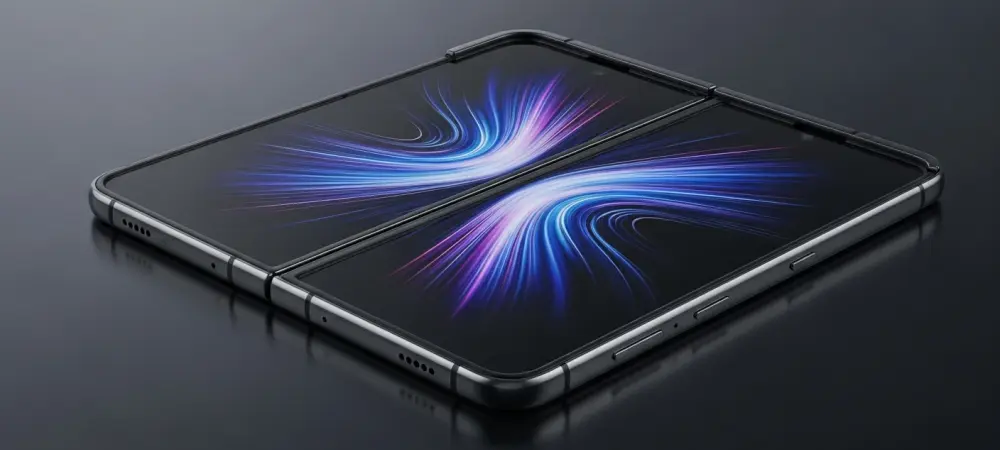
The shift from standard foldable displays to complex tri-fold architectures marks the most radical departure from traditional smartphone ergonomics since the original touchscreen revolution. This evolution signifies more than a mere engineering flex; it represents a fundamental pivot toward hyper-productivity where the boundary between mobile telephony and workstation computing effectively vanishes. Samsung’s second attempt at this form factor addresses the inherent fragility and usability gaps of its predecessor.
The Evolution of Multi-Foldable Technology
This technology operates on a dual-hinge mechanism that allows a single device to transition through three distinct screen states. By utilizing advanced polymers and ultra-thin glass, manufacturers moved beyond simple bifold designs to a zig-zag configuration that maximizes surface area without doubling the device’s thickness.
The emergence of tri-folds reflects a broader trend where hardware must adapt to software capable of running desktop-class applications. Unlike earlier iterations that felt like experimental prototypes, current models leverage refined hinge geometry to ensure that the screen remains flat under various stress levels. This transition indicates that the industry is maturing past the novelty phase into functional necessity.
Technical Specifications and Refined Hardware Features
Integrated S-Pen System and Ergonomic Stylus Storage
One of the most requested refinements involves the inclusion of a dedicated internal silo for the S-Pen. By engineering a specialized compartment within the right hinge assembly, the design eliminates the need for bulky external cases. This implementation ensures the stylus is always accessible, regardless of whether the device is folded or fully extended.
The placement of the stylus between the right and middle flaps allows for an ergonomic grip that mimics traditional stationery. This integration fundamentally changes the digital ink experience by providing a stable housing that protects the delicate tip. Users find that the transition from note-taking to navigating the interface is now seamless and intuitive.
Triple-Panel Display Architecture and Internal Powerhouse
At the heart of the system lies a massive 10-inch Dynamic AMOLED 2X internal display, paired with a 6.5-inch cover screen for quick interactions. Under the hood, the Snapdragon 8 Elite for Galaxy chipset provides the necessary computational overhead to manage three concurrent application windows. This powerhouse ensures that high-fidelity rendering remains fluid across all three panels.
The 16GB of RAM is essential for maintaining the state of background processes during rapid folding transitions. Meanwhile, the 5,600mAh battery is distributed across the three segments to maintain a balanced center of gravity. This architecture provides the structural integrity needed to support such an expansive canvas while maintaining high-performance standards.
Emerging Trends in Design and Functional Aesthetics
The latest aesthetic shifts emphasize a move toward softer color palettes, such as the new purple finish, which helps mask the industrial nature of the dual hinges. Designers are also refining sensor placement, moving the hole-punch camera to the right flap to ensure it remains unobtrusive. These choices reflect a growing understanding that premium hardware must look as sophisticated as it performs.
Moreover, there is a distinct trend toward reducing the visible crease where the panels meet. Through improved tension management in the hinge systems, the display surface appears more uniform than in previous years. This focus on functional aesthetics ensures that the device remains a tool for professional expression rather than just a technical marvel.
Productivity and Real-World Implementation
The tri-folding design finds its greatest utility in sectors like financial trading and creative direction, where screen real estate is a direct proxy for efficiency. Professionals can now view complex spreadsheets alongside live video feeds, a task previously relegated to multi-monitor setups. The ability to collapse this power into a pocketable form factor changes the nature of remote work.
In creative fields, the expanded canvas allows for detailed photo editing and timeline management. The extra width provided by the third panel enables a desktop-like layout for software tools, making mobile editing a viable alternative. This implementation proves that the device is a serious contender for replacing tablets in the professional workflow.
Addressing Technical Obstacles and Market Sustainability
Despite these advancements, the technology faces hurdles regarding long-term durability and the cost of repair. The complexity of managing two separate hinge points increases the potential for mechanical failure or debris ingress. Manufacturers are attempting to mitigate this by implementing ultra-fine brushes within the hinge gaps to sweep away dust.
Market sustainability also hinges on consumer willingness to pay a premium for such sophisticated hardware. While the utility is undeniable, the price point remains a barrier for mass adoption. Continuous development in manufacturing efficiency is required to bring these costs down, ensuring that tri-foldable tech does not remain a niche luxury item.
The Future Landscape of Foldable Computing
Looking forward, the trajectory of this technology points toward even more modular designs and the integration of rollable elements. The standard for mobile computing is shifting away from static glass slabs toward dynamic, shape-shifting interfaces that adapt to the user’s environment. This evolution will likely lead to the total convergence of the phone, tablet, and laptop.
Future breakthroughs in battery chemistry and material science will likely result in even thinner profiles without sacrificing rigidity. As software ecosystems become more specialized for these multi-panel layouts, we can expect a new wave of applications that utilize the fold itself as a functional input. This will drastically reduce the amount of hardware one needs to carry.
Final Assessment of the Galaxy Z TriFold 2
The Galaxy Z TriFold 2 successfully bridged the gap between experimental design and practical utility by prioritizing integrated hardware solutions. It moved the needle forward by proving that a triple-screen layout could be durable enough for daily rigors while offering genuine productivity gains. This iteration demonstrated that the shift toward more complex form factors was not only feasible but actually preferable for high-demand users.
The refinement of the S-Pen storage and the stabilization of the internal chipset set a new benchmark for what professional-grade mobile hardware should achieve. Ultimately, this device established a foundation for a future where the constraints of screen size no longer dictate the limits of digital capabilities. It was a significant milestone that signaled the end of the traditional smartphone era.