

The global smartphone landscape has reached a point of saturation where the mere ability to bend a screen is no longer sufficient to captivate a sophisticated consumer base. As the industry prepares for the next wave of hardware, recent leaks surrounding the Samsung Galaxy Z Flip 8 suggest that the engineering focus has shifted toward erasing the last physical vestiges of foldable technology’s mechanical origins. By targeting the long-standing issue of the central display crease, this new iteration aims to provide a visual and tactile experience that finally matches the uniformity of traditional slab devices. This strategic move comes at a time when users are increasingly critical of durability and aesthetic consistency in high-end electronics. The anticipated removal of the hinge indentation represents more than just a minor facelift; it serves as a declaration that foldable technology has matured beyond its experimental phase and is ready to compete on equal footing with the most refined premium smartphones currently available on the market.
Refining the Clamshell Form Factor: The Path to Seamlessness
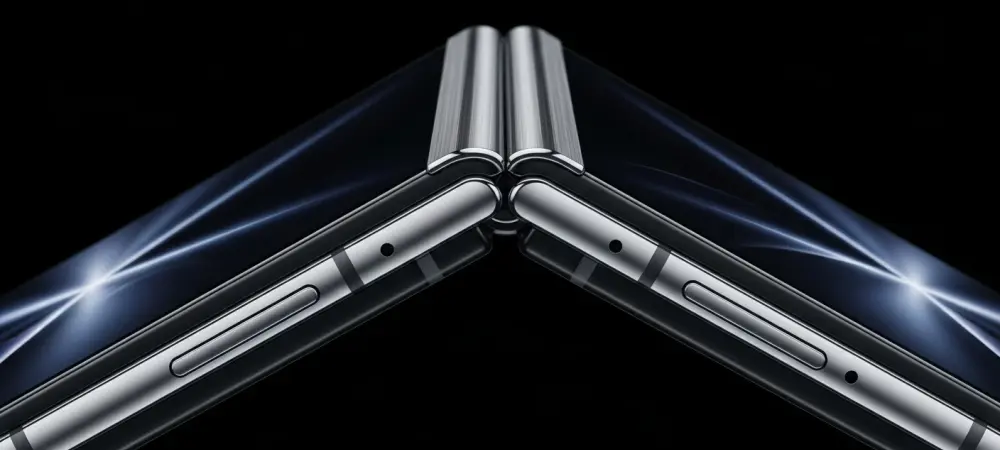
According to detailed schematics leaked by supply chain participants, the upcoming device features a redesigned hinge mechanism that allows the internal panel to fold into a wider teardrop shape. This specific geometry is essential for minimizing the stress on the ultra-thin glass, effectively neutralizing the visible line that has characterized the series since its inception. Beyond the display improvements, the chassis itself has undergone a subtle slimming process, with the folded thickness reportedly reduced by approximately 0.02 inches. This reduction is achieved through the use of high-strength, lightweight alloys that maintain structural integrity while shedding unnecessary bulk. The primary objective seems to be a more pocketable and ergonomic design that does not sacrifice the ruggedness users have come to expect. While these physical changes are incremental when viewed individually, their collective impact aims to create a device that feels significantly more modern and less mechanical than its immediate predecessor in the lineup. The decision to pursue a crease-free display design is largely influenced by the intensifying competition within the high-end mobile sector, particularly as rival manufacturers prepare their own folding entries. Industry analysts suggest that Samsung is pivoting its focus to accommodate the rumored entrance of a potential competitive foldable that might challenge its current market share. By refining the Z Flip 8 now, the company ensures it maintains a competitive edge in design language before the market becomes even more crowded. Interestingly, reports indicate that the company’s most radical innovations for this cycle may be reserved for an entirely new wide-format model, which is expected to debut alongside the clamshell version. This dual-track strategy allows the manufacturer to offer a stable, polished product for the masses while pushing the boundaries of screen real estate with a more experimental flagship. This approach highlights a broader trend where established form factors receive steady, calculated updates rather than risky redesigns.
Hardware Constraints and Market Strategy: A Measured Performance
Under the hood, the transition to the Exynos 2600 processor marks the most significant internal upgrade, promising improved efficiency and better thermal management for the compact device. However, early data indicates that many other core specifications will remain largely unchanged from the previous generation, which may disappoint those seeking a total hardware overhaul. Specifically, the battery capacity and the 25W wired charging speeds are expected to stay consistent with the Galaxy Z Flip 7, reflecting a conservative approach to power management. Similarly, the camera hardware and secondary components like vibration motors and speakers do not appear to be on the list for major revisions. This stagnation suggests that the engineering team prioritized the external folding experience and thermal stability over raw performance metrics. By keeping these components static, the production process can remain streamlined, though it leaves the door open for criticism regarding the lack of advancement in photographic capabilities. Ultimately, the leaked details showed that the strategy for the Z Flip 8 centered on perfecting the existing user interface and physical interaction rather than reinventing the mobile platform. For potential buyers, the focus shifted toward evaluating whether the aesthetic benefits of a crease-free screen outweighed the lack of significant improvements in camera and charging technologies. Future considerations for the industry now involve how to balance these thin-profile designs with the growing power demands of local artificial intelligence processing. Moving forward, manufacturers needed to address the ceiling of battery technology, as current clamshell designs struggled to find additional space for larger cells without increasing the overall footprint. Consumers were advised to look beyond the sleek exterior and consider the long-term trade-offs between physical elegance and hardware longevity. This release suggested that the next phase of mobile evolution required a broader integration of new materials to overcome the hardware plateaus.