

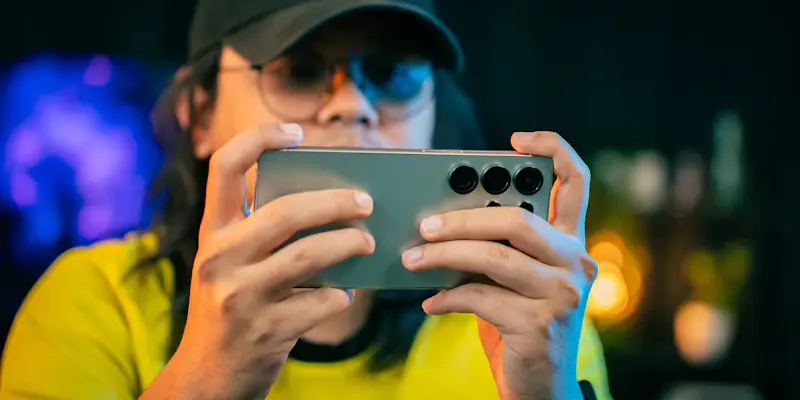
As Samsung enthusiasts eagerly await the latest flagship phone, the Galaxy S26 Ultra, several intriguing details have emerged about potential camera and feature upgrades. Set for a January 2026 release, the early leaks and speculations promise an impressive evolution of the already esteemed Galaxy series.At the core of these rumors lies the advanced camera technology and other significant enhancements that are expected to set new benchmarks for smartphone innovation.
Camera Innovations
The Return of Variable Aperture
One of the most talked-about features is the reintroduction of variable aperture technology in the Galaxy S26 Ultra, a feature that was last seen in the Galaxy S9 series. This development is anticipated to offer users greater versatility in capturing high-quality images in varied lighting conditions. The immediate benefit of such a feature is the ability to adjust the camera’s aperture to allow more light during low-light scenarios and reduce light intake during bright conditions. This dynamic adjustment can enhance both nighttime photography and shots taken in well-lit environments, leading to vivid and balanced images.Furthermore, the central camera module is expected to boast a single 200-megapixel sensor, a continuation of Samsung’s use of the ISOCELL HP2 sensor since the Galaxy S23 Ultra. Despite maintaining a similar 1/1.3-inch sensor size, improvements in pixel structures and optics might yield significantly better image quality. Enhanced optics and sensor technology could translate to images with more detail, reduced noise, and better color accuracy, adding considerable value for photography enthusiasts and professionals alike.
Potential Dual 200-Megapixel Sensors
There’s also chatter about the inclusion of dual 200-megapixel sensors, although such speculation remains tentative and less grounded in reliable sources.=The concept of dual high-resolution sensors could imply an advanced level of versatility in taking photos and videos. The second 200-megapixel sensor, if included, could potentially be utilized in a secondary telephoto or ultra-wide setting, allowing for exceptionally detailed shots at varied focal lengths. However, the feasibility of this feature is yet to be confirmed and might just remain a part of early prototype experiments.
Concurrent discussions suggest that Samsung could introduce dual periscope telephoto cameras, although this too seems less likely. Dual periscope setups could theoretically provide unprecedented zoom capabilities, appealing to users who frequently capture distant subjects.By incorporating these cutting-edge camera features, the Galaxy S26 Ultra could potentially redefine what consumers expect from a smartphone camera. However, until official announcements are made, these possibilities remain speculative and should be taken with cautious optimism.
Feature Enhancements
S-Pen and Qi2 Compatibility
The iconic S-Pen has been a distinguishing feature of the Galaxy S series, but there are mixed signals about its future in the Galaxy S26 Ultra. Some leaks suggest that Samsung might eliminate the S-Pen to make room for other key components. This decision would be a significant shift for the device, considering the S-Pen’s loyal user base and its versatile utility in tasks ranging from note-taking to creative drawing applications. Despite these rumors, it is widely expected that the S-Pen will still feature in the Galaxy S26 Ultra, albeit with potential modifications to its integration.The rumored changes might impact the built-in magnets necessary for full Qi2 wireless charging compatibility. Without these magnets, users would need specialized cases to attach magnetic accessories, introducing a new factor to consider for those reliant on wireless charging capabilities. This potential shift could spark varied reactions among long-time users and might influence their charging habits and accessory ecosystem. On the other hand, it opens up possibilities for new accessory designs that cater specifically to the emerging trends and user preferences.
The Return of Exynos Processors
Another significant development is the potential reintroduction of the Exynos processor in specific regions and variants of the Galaxy S26 series. Historically, Samsung has alternated between its own Exynos chipsets and Qualcomm’s Snapdragon processors depending on the market. This move suggests Samsung’s continued interest and investment in refining its proprietary chipset solutions. Integrating the Exynos processor could offer certain performance advantages in specific regions, reflecting Samsung’s confidence in its evolving technology.
Balancing its dual strategy, Samsung aims to provide optimized performance tailored to different user bases worldwide.This decision underscores the company’s commitment to innovation and its ability to offer competitive alternatives to the dominant Snapdragon processors. By bringing back Exynos, Samsung also signals its dedication to maintaining a significant footprint in the global chipset market. Consequently, the performance and efficiency of these devices may vary depending on the processor employed, giving customers more tailored choices based on their regions or specifications.
Final Takeaways
Samsung fans are brimming with excitement as they anticipate the release of the Galaxy S26 Ultra, the next big thing in the flagship phone lineup. Expected to launch in January 2026, early leaks and rumors have already painted a captivating picture of what’s in store. The buzz primarily surrounds the innovative camera advancements and other impressive feature upgrades that promise to elevate the already celebrated Galaxy series to new heights.These speculated improvements highlight Samsung’s commitment to pushing the boundaries of smartphone technology, setting new industry standards in the process. Enthusiasts and tech experts alike are eager to see how these potential upgrades will transform the user experience.The combination of cutting-edge photographic capabilities with enhanced performance features is expected to make the Galaxy S26 Ultra a game-changer in the competitive smartphone market. If the rumors hold true, Samsung’s latest offering will not only maintain its reputation for excellence but also redefine what’s possible in a handheld device.