

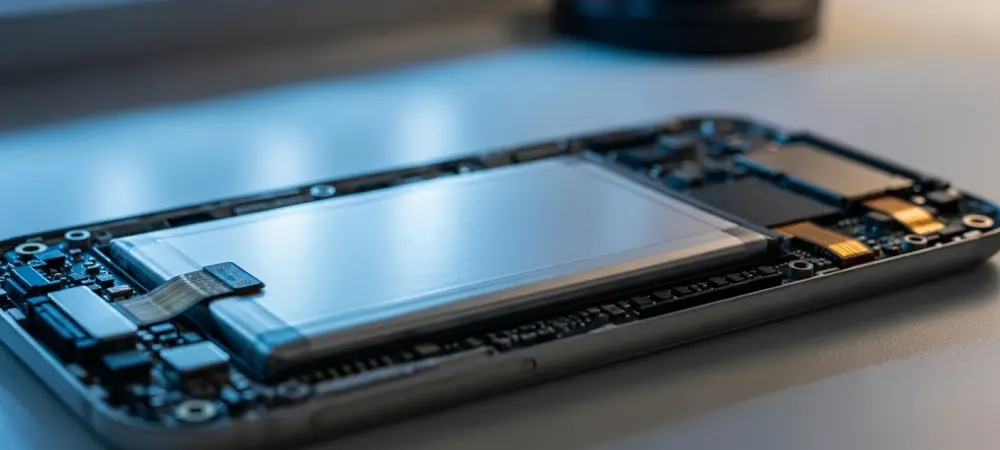
The upcoming release of the Samsung Galaxy S26 series on February 25 is currently triggering a wave of scrutiny across the global smartphone market due to unexpected hardware adjustments. While enthusiasts usually focus on camera megapixels or screen brightness, leaked European Union energy labels have pivoted the conversation toward a more sobering reality: the longevity of the battery cell itself. This shift suggests a tactical pivot where daily endurance is being prioritized over the long-term structural integrity of the device, marking a significant departure from previous engineering goals.
Contextualizing the Shift: A Move Away from the S25 Standard
To understand why this matters, one must recall the benchmark established by the preceding generation. The Galaxy S25 was celebrated for its 2,000-cycle durability rating, allowing users to maintain 80% health for several years of heavy use. This established a high-water mark for mobile sustainability, reinforcing the idea that a premium handset should comfortably serve a user for five years without requiring major internal maintenance. As the market moves forward, the contrast between that standard and the new data suggests a reevaluation of what consumers prioritize in a flagship.
Evaluating the New Power Architecture of the S26
Performance: The Balance of Runtime and Degradation
The leaked data highlights a drop to 1,200 charge cycles, a 40% decrease in the lifespan of the battery. Paradoxically, the S26 Plus and Ultra models still promise a robust 55-hour runtime under testing conditions. This implies that while the battery is efficient on a daily basis, its chemical composition may be more susceptible to wear, potentially leading to a “tired” battery much earlier in the product life cycle than previously seen. For power users, this represents a trade-off between the ability to get through a long day and the ability to keep the phone for half a decade.
Integration: Closing the Efficiency Gap Between Chipsets
A compelling aspect of the market strategy involves the parity between the Exynos 2600 and the Snapdragon 8 Elite Gen 5. Historically, the in-house Exynos chips lagged behind Qualcomm in power management, yet the S26 Plus reportedly matches the Ultra’s endurance. This indicates that Samsung has mastered software optimization to extract maximum utility from varying hardware configurations, even as physical durability takes a step back. The alignment of these results suggests that the processor architecture has become so efficient that it can mask the limitations of the physical battery cell.
Value: Justifying the Premium Price Point
Despite the shared endurance metrics, Samsung maintains a clear hierarchy through charging speeds and cost. The Ultra model commands a price of approximately €1,459 (~$1,719) by offering 60W wired charging, compared to the 45W cap on the Plus model, which retails for €1,269 (~$1,495). This tiered approach forces consumers to choose between raw charging speed and a more accessible price point, even though the core battery longevity remains lower across both tiers. By gatekeeping the fastest charging, Samsung creates a “Pro” distinction that relies on convenience rather than cell durability.
Forecasting the Evolution of Energy Density
As manufacturers push for faster charging standards like the 60W threshold, the resulting thermal stress is likely to drive more companies toward similar cycle reductions. In the coming years, we may see a market where transparent energy labels become as vital to sales as display specs. This trend could redefine the “premium” label, shifting it from mere performance to a balance of rapid recovery and heat management. Furthermore, the regulatory environment will likely demand greater disclosure regarding how fast these high-output batteries degrade under standard consumer use.
Consumer Strategies for Long-Term Ownership
For those committed to the S26 ecosystem, managing battery health will require more intentional software usage. Activating “Battery Protect” to cap charging at 80% will likely be a necessity for users who intend to keep their devices beyond the 30-month mark. Additionally, budgeting for a professional battery replacement early in the device’s life may become a standard part of the total cost of ownership for flagship enthusiasts. The market is shifting toward a model where the physical battery is viewed as a consumable part rather than a lifetime component.
Final Assessment of the Galaxy S26 Strategy
The market analysis of the S26 leaks revealed a complex intersection of innovation and compromise. While the efficiency gains in the Exynos 2600 proved that Samsung narrowed the gap with Snapdragon, the reduction in charge cycles signaled a departure from the durability-centric marketing of the past. Ultimately, the industry moved toward prioritizing the immediate user experience over multi-year cell stability, forcing a recalculation of what long-term value really meant in a high-speed mobile era. This evolution highlighted the need for consumers to balance initial performance against the inevitable reality of hardware aging.