
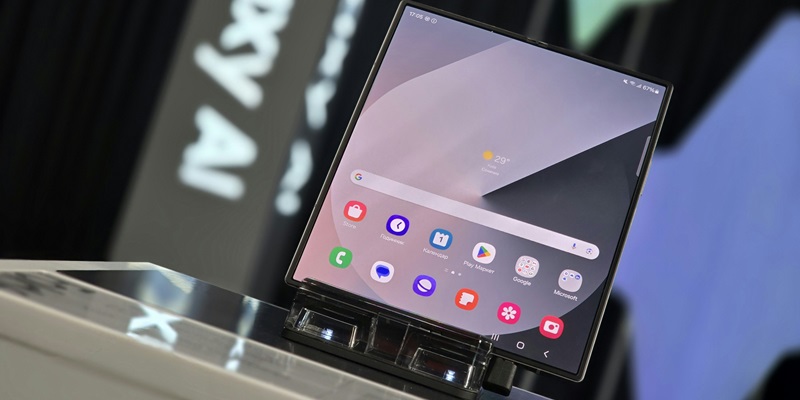
Samsung Discontinues Galaxy Z Fold Special Edition Due To Advancements

In a surprising move, Samsung has decided not to launch a second-generation Galaxy Z Fold Special Edition. Fans initially anticipated the release of a new special edition, especially after the first Galaxy Z Fold Special Edition was made available exclusively in South Korea and a similar model, the Samsung W25, was introduced in China. However, recent reports have confirmed that Samsung has no plans to bring what was referred to as the Galaxy Z Fold7 FE to the market. The decision stems from the fact that the upcoming changes in the regular Galaxy Z Fold7’s design and features are deemed significant enough to make the need for a distinct special edition obsolete.

The advancements in Samsung’s Galaxy Z Fold series are reaching new heights with the forthcoming Galaxy Z Fold7. The enhancements planned are expected to replace both the Galaxy Z Fold6 and the Special Edition model, indicating that the remarkable improvements in the standard version now render a separate special edition unnecessary. This shift underscores Samsung’s commitment to continuous innovation, as the company aims to deliver cutting-edge technology and superior user experience with each iteration of the Galaxy Z Fold series. While some users might have looked forward to an exclusive special edition, the focus on refining and advancing the primary model signifies broader accessibility to superior features and performance.

Overall, Samsung’s move to discontinue the Galaxy Z Fold Special Edition highlights the company’s confidence in its ability to offer significant improvements within the mainline Galaxy Z Fold series. With the upcoming Galaxy Z Fold7 poised to set new standards in design and technology, Samsung is directing its efforts towards ensuring that these groundbreaking advancements are accessible to a wider audience rather than being limited to a niche special edition release.

Explore more

Mimesis Data Anonymization – Review

The relentless acceleration of data-driven decision-making has forced a critical confrontation between the demand for high-fidelity information and the absolute necessity of individual privacy. Within this friction point, Mimesis has emerged as a specialized open-source framework designed to bridge the gap between usability and compliance. Unlike traditional masking tools that merely obscure existing values, this library utilizes a provider-based architecture

The Future of Data Engineering: Key Trends and Challenges for 2026

The contemporary digital landscape has fundamentally rewritten the operational handbook for data professionals, shifting the focus from peripheral maintenance to the very core of organizational survival and innovation. Data engineering has underwent a radical transformation, maturing from a traditional back-end support function into a central pillar of corporate strategy and technological progress. In the current environment, the landscape is defined

Trend Analysis: Immersive E-commerce Solutions

The tactile world of home decor is undergoing a profound metamorphosis as high-definition digital interfaces replace the traditional showroom experience with startling precision. This shift signifies more than a mere move to online sales; it represents a fundamental merging of artisanal craftsmanship with the immediate accessibility of the digital age. By analyzing recent market shifts and the technological overhaul at

Trend Analysis: AI-Native 6G Network Innovation

The global telecommunications landscape is currently undergoing a radical metamorphosis as the industry pivots from the raw throughput of 5G toward the cognitive depth of an intelligent 6G fabric. This transition represents a departure from viewing connectivity as a mere utility, moving instead toward a sophisticated paradigm where the network itself acts as a sentient product. As the digital economy

Data Science Jobs Set to Surge as AI Redefines the Field

The contemporary labor market is witnessing a remarkable transformation as data science professionals secure their positions as the primary architects of the modern digital economy while commanding significant wage increases. Recent payroll analysis reveals that the median age within this specialized field sits at thirty-nine years, contrasting with the broader national workforce median of forty-two. This demographic reality indicates a