

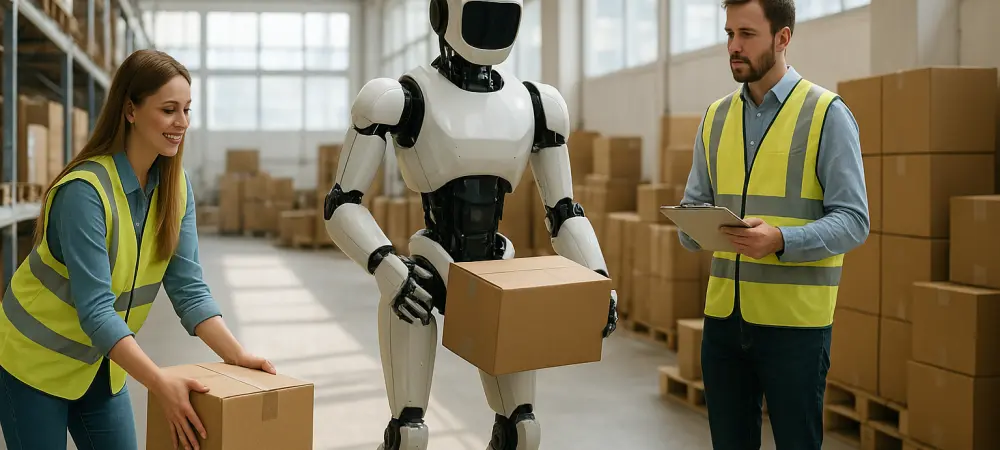
The proliferation of humanoid robots in corporate environments is fundamentally shifting the security landscape by turning digital code into a physical presence within office hallways. For many years, the concept of machine identity was confined to the ethereal realms of software APIs and cloud-based service accounts, where non-human entities outnumbered human users by an order of magnitude. In the current enterprise landscape, this ratio has solidified at over one hundred machine identities for every single human employee, yet the nature of these identities has undergone a radical transformation. We are seeing a move away from static code toward autonomous, mobile agents that inhabit the same physical spaces as their human counterparts. This shift demands a total reassessment of how security professionals define a user and how permissions are granted to entities that can now walk through a door or push a button, effectively bridging the gap between digital authorization and physical action.
The Robotic Surge: Bridging Software and Physicality
Global humanoid robot shipments have entered a period of unprecedented expansion, with projections indicating a nearly three hundred percent year-over-year increase by the midpoint of 2026. Major industrial players like BMW, Amazon, and Mercedes-Benz have already moved beyond theoretical discussions, initiating pilots with advanced robotics from companies such as Figure, Agility, and Apptronik. These machines represent the first generation of truly embodied AI, designed to perform tasks ranging from moving heavy pallets to navigating complex office layouts. Unlike traditional stationary industrial arms, these mobile units are equipped with sensors and cognitive models that allow them to interact with their surroundings in real time. This rapid adoption signifies that the corporate workforce is no longer purely biological, forcing a re-evaluation of security protocols that were once designed solely for humans. The challenge lies in managing these machines as they transition from being mere tools to active, mobile participants. The defining characteristic of this new identity paradigm is the physical presence of the machine itself, which requires a new level of environmental awareness in security policies. An identity is no longer just a string of encrypted characters; it is a physical entity capable of navigating elevators and accessing restricted zones. This mobility creates a unique set of demands for access control systems that were previously optimized for human personnel who carry badges and undergo manual vetting. When a machine identity can physically open a door, the technical capability to act must be perfectly aligned with the authorized permission to do so. This necessitates an expansion of the identity framework to include physical spatial awareness and context-dependent movement. Security systems must now account for where a machine is, where it is going, and whether its digital credentials grant it the authority to be in that specific physical location at that specific time.
Fragmented Governance: The Risk of Decoupled Systems
A dangerous governance gap has emerged between traditional physical security departments and digital identity teams, often referred to as a no man’s land. Physical access control was historically built around human employees, focusing on badges and biometrics to manage entry into buildings. Conversely, digital identity governance remained focused on the network layer, managing software permissions and cloud interactions. Humanoid robots occupy both spheres simultaneously, yet many organizations lack a clear policy for who authorizes a machine’s physical movement or who is responsible for revoking that access once a task is completed. This administrative friction creates significant vulnerabilities, as a robot might possess the digital credentials to access a server room but lack the safety clearance to be there physically. Without a unified governance model, enterprises risk a scenario where these autonomous agents operate with unmonitored freedom, bypassing the checks and balances that govern staff. The risks associated with over-permissioning, long a staple of cybersecurity concerns, have taken on a much more visceral and dangerous dimension when applied to physical machines. In a digital-only environment, an over-privileged account might result in a data breach or unauthorized file access. However, in an industrial or office setting, a robot with excessive permissions could enter a high-security laboratory, unintentionally damage expensive equipment, or bypass safety sensors in a way that endangers human workers. Because many enterprises currently operate without formal policies for provisioning or retiring these physical AI agents, the exposure to physical security breaches is growing significantly. The potential for a compromised instruction to result in physical harm or property damage is a reality that necessitates a shift in risk assessment. Security leaders must recognize that a credential in the hands of a mobile robot is effectively a skeleton key to the physical workplace.
A Unified Security Strategy: Applying Identity Management
To counter these emerging threats, organizations are beginning to apply rigorous cybersecurity principles like least privilege to the physical management of robots. This approach ensures that every autonomous machine is treated as a formal non-human identity with a lifecycle that includes enrollment, task-specific scoping, and time-bound access. Rather than granting a robot permanent access to a warehouse, security teams can issue ephemeral credentials that expire once a specific shift or delivery is completed. This model prevents a machine from roaming outside its designated work area or accessing sensitive zones during off-hours. Furthermore, permission must not be equated with authority; just because a machine has the technical capability to perform an action does not mean it is authorized to do so in every context. By implementing task-scoped access, enterprises can ensure that a robot’s authority is strictly limited to the requirements of its current assignment.
The organizations that successfully navigated this transition established a unified strategy that merged physical and digital security into a single governing framework. These leaders recognized that maintaining separate silos for identity management was no longer a viable strategy when autonomous agents operated across both environments simultaneously. They implemented a single audit trail that tracked every machine identity, providing real-time visibility into both network interactions and physical movements. By treating every robotic entity as a governed and revocable participant, companies were able to maximize the productivity of their new workforce while neutralizing potential safety hazards. This integration allowed security teams to move past the confusion of who owned the robot and instead focused on leveraging the technology securely. The adoption of these cohesive policies proved to be the only way to ensure that as robots entered the hallways, they did so as authorized and monitored entities.