

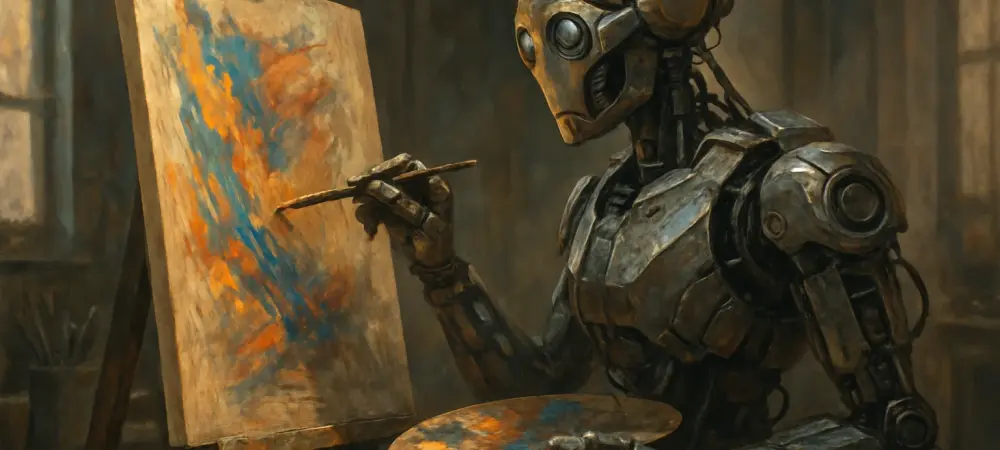
Setting the Stage for a Creative Revolution
In an era where technology permeates every facet of life, a staggering reality emerges: over 1 million robots are already transforming operations at Amazon’s warehouses, redefining efficiency in 2025, while a quieter but equally profound revolution unfolds as robots become muses for artistic creation. At the forefront of this movement is Maks Surguy, an Amazon design technologist whose custom-built robotic tools and code-driven artistry challenge the boundaries of traditional art. With a Master of Science in Technology Innovation from the University of Washington, Surguy has turned a personal limitation in sketching into a pioneering strength, crafting intricate “robot art” that blends engineering precision with aesthetic depth.
This review delves into how Surguy’s innovations are reshaping creative expression through robotics. His work not only showcases the potential of machines to produce gallery-worthy pieces but also democratizes art by empowering hobbyists and non-artists alike. The intersection of technology and creativity raises compelling questions about authorship and human agency, setting the stage for a deeper exploration of this transformative field.
Technical Foundations of Surguy’s Robotic Art
Precision Tools and Plotting Devices
Central to Surguy’s contributions are his custom-designed robotic tools and plotting devices, which serve as the backbone of his artistic process. These machines, meticulously engineered, translate lines of code into physical artworks with a level of detail that rivals hand-drawn masterpieces. The precision of these devices allows for intricate patterns and designs, pushing the limits of what can be achieved through automated means while maintaining an unmistakable artistic flair.
Unlike off-the-shelf solutions, Surguy’s tools are tailored to bridge the gap between digital instructions and tangible output. This bespoke approach ensures that every stroke and curve reflects intentionality, mirroring the finesse of traditional methods. Such innovation highlights how robotics can extend beyond mere functionality into the realm of aesthetic creation, offering a glimpse into a future where technology amplifies artistic potential.
Empowering Creators with Open-Source Kits
Another cornerstone of Surguy’s impact lies in his commitment to accessibility through open-source software and hardware kits. These resources enable individuals with little to no technical background to construct their own plotting devices and experiment with robot art. By sharing detailed designs and code, Surguy lowers the entry barrier, allowing hobbyists to engage with technology in a creative context.
What sets these kits apart is their emphasis on user control, distinguishing them from fully autonomous systems that often sideline human input. This focus ensures that creators remain at the heart of the process, using robots as collaborators rather than replacements. The result is a growing community of tech-savvy artists who can explore new forms of expression without needing extensive resources or expertise.
Performance and Real-World Impact
Enhancing Creativity Across Skill Levels
Evaluating the performance of Surguy’s robotic art tools reveals their remarkable versatility in real-world settings. From beginners crafting their first pieces to seasoned artists integrating robotics into complex projects, these tools have proven capable of producing high-quality results across diverse skill levels. The ability to transform abstract code into concrete art empowers users to bypass traditional limitations, such as lack of drawing skills, and focus on conceptual innovation.
Moreover, the practical applications extend into educational environments, where Surguy’s shared tutorials inspire a new wave of creators. This democratization of art fosters an inclusive space where technology serves as an enabler, not a gatekeeper. The tangible impact is evident in the growing number of individuals producing works that challenge conventional notions of creativity.
Broader Industry Alignment and Unique Use Cases
Surguy’s innovations align closely with broader industry trends, particularly Amazon’s integration of robotics to enhance efficiency and creativity. Just as automation streamlines warehouse operations, his tools optimize artistic workflows, demonstrating how technology can elevate human potential in unexpected domains. This synergy underscores a shift toward collaborative human-machine dynamics, a narrative gaining traction in 2025.
Beyond individual creation, potential extensions of Surguy’s work into sustainable design and media production reveal its adaptability. Imagine robotic tools aiding in eco-friendly art installations or generating dynamic visuals for digital content—such applications hint at untapped possibilities. These use cases position robotic art as a versatile medium with implications far beyond personal projects, influencing diverse creative industries.
Challenges and Ethical Dimensions
Navigating Originality and Ownership
Despite its promise, robotic art faces significant challenges, particularly around questions of originality and authorship. As AI and automation become more prevalent in creative fields, distinguishing between human-driven and machine-generated art grows increasingly complex. Surguy’s approach, which prioritizes user input through code and custom tools, offers a partial resolution, but broader debates persist about who truly owns a piece created with robotic assistance.
These concerns are amplified in an era where AI tools can replicate styles and concepts at unprecedented speeds. Ensuring that technology augments rather than overshadows human ingenuity remains a critical hurdle. Surguy’s work provides a model for maintaining a human touch, yet the field as a whole must address these ethical ambiguities to sustain trust and credibility.
Balancing Automation with Human Agency
Another pressing issue is the societal perception of automation, often linked to fears of job displacement and diminished human roles. While Surguy’s collaborative framework counters this narrative by positioning robots as partners, skepticism about technology’s long-term impact lingers. The challenge lies in fostering public understanding that automation can liberate individuals from mundane tasks, freeing time for imaginative pursuits.
Industry perspectives, such as those from Amazon’s chief robotics technologist Tye Brady, reinforce this optimistic view, advocating for machines to handle repetitive work while humans focus on creativity. Aligning technological advancement with human agency requires ongoing dialogue and intentional design, areas where Surguy’s contributions serve as a valuable reference point. Addressing these tensions is essential for the ethical evolution of robotic art.
Reflecting on a Groundbreaking Journey
Looking back, Maks Surguy’s pioneering efforts in robotic art stand as a testament to the transformative power of merging technology with creativity. His custom tools and open-source kits not only redefined artistic expression but also challenged prevailing fears about automation by emphasizing collaboration over replacement. The impact of his work, from empowering hobbyists to inspiring industry-aligned innovation, marks a significant milestone in the creative tech landscape.
Moving forward, the next steps involve scaling such innovations to reach broader audiences and diverse fields, ensuring accessibility remains a core principle. Stakeholders in technology and art must collaborate to develop frameworks that address ethical concerns like authorship while promoting sustainable applications. Additionally, investing in education around human-machine synergy can further shift narratives toward empowerment, building on Surguy’s legacy to inspire a future where robots continue to serve as muses, amplifying human imagination in unforeseen ways.