

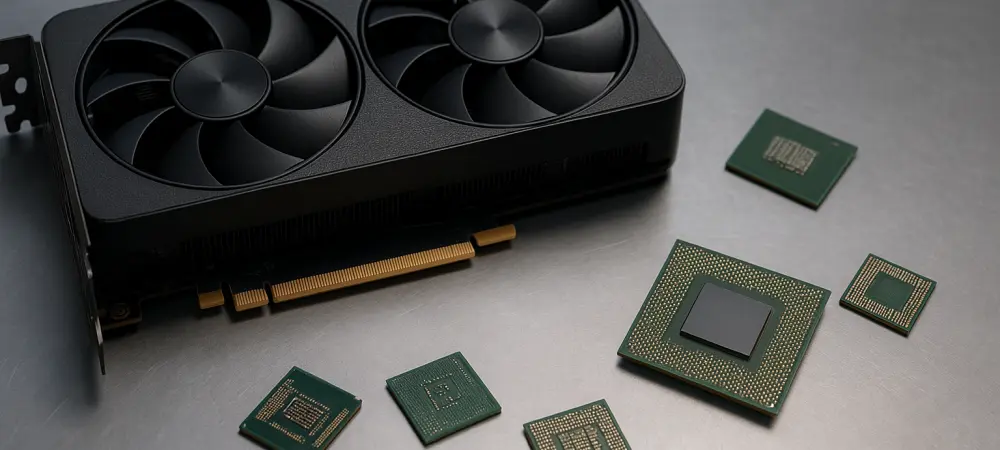
Strategic differences between the two major GPU manufacturers are widening as AMD addresses the rising cost of established GDDR6 technology used in its cards. While PC enthusiasts have historically relied on Radeon hardware to provide a cost-effective alternative to more expensive competitors, the current supply chain climate is forcing a significant recalibration of that value proposition. The manufacturing landscape has shifted from a period of relative stability to one characterized by rapid inflation in the prices of foundational semiconductor components. This trend is not merely a localized phenomenon but a global shift affecting the procurement strategies of every major board partner. As the demand for high-speed memory continues to outpace production capacity in late 2026, the surplus that once kept retail prices low has effectively evaporated. Consequently, the industry is witnessing a structural change in how mid-range graphics cards are positioned, signaling an end to the aggressive price-to-performance ratios that gamers once took for granted.
Economic Pressures: The Impact of Component Scarcity
The most immediate catalyst for this market shift was the official price adjustment for GDDR6 memory modules supplied by AMD to its manufacturing and assembly partners, which took effect on October 1. These partners, responsible for creating the branded cards found on store shelves, operate on thin margins and are generally unable to absorb significant increases in component overhead. As a result, the higher costs are being passed directly to the retail level, leading to a noticeable uptick in the MSRP of various Radeon models. This pricing correction reflects the broader scarcity of memory chips as fabrication plants prioritize more lucrative high-bandwidth memory for artificial intelligence servers. While the legacy RX 5000 series remains largely unaffected due to its diminished role in active production, the current generation of hardware is bearing the full brunt of these economic adjustments. This ensures that any new inventory entering the distribution channel will carry a premium price tag.
Beyond the rising cost of VRAM, the industry is grappling with increased expenses for other essential materials such as high-density printed circuit boards and surface-mounted devices. These secondary components have seen their own price hikes due to logistical complexities and the rising cost of raw materials required for advanced circuitry. For the upcoming RX 9000 series, based on the RDNA 4 architecture, these compounding factors represent a significant hurdle for maintaining affordable entry points. Even though RDNA 4 was designed to optimize efficiency, the sheer cost of the physical housing and the delivery of power to the silicon has reached a point where previous price targets are no longer sustainable. This creates a challenging environment for value-oriented buyers who have traditionally waited for generational refreshes to upgrade their systems. The volatility in these basic assembly costs suggests that even localized efforts to subsidize certain models may only offer temporary relief for buyers.
Market Shifts: Comparative Strategies and Future Outlook
In contrast to the immediate price adjustments seen from AMD, Nvidia has maintained a different posture by holding its current pricing steady through the end of the year. This divergence is primarily rooted in the fact that Nvidia’s upcoming RTX 50 series utilizes GDDR7 technology, which is already positioned at a premium early adopter price point. By leveraging a newer, more expensive memory standard, Nvidia avoids the immediate inflationary pressure affecting the saturated GDDR6 market that AMD relies on for its current and near-future product stack. However, this stability does not necessarily equate to affordability; rather, it indicates that Nvidia’s pricing was already high enough to accommodate fluctuating component costs. AMD’s reaction to the rising cost of established technology highlights the vulnerability of the mid-range segment, where every dollar of component cost directly impacts the final retail price. This creates a market where the floor for modern hardware is consistently rising. The shift in the PC hardware landscape signaled that the era of budget-friendly upgrades had entered a period of extreme volatility. Consumers who previously relied on a wait-and-see approach for price drops found that supply chain costs for core components continued to climb, effectively ending the period of aggressive price-to-performance advantages. To navigate this new reality, gamers and system builders needed to prioritize immediate hardware acquisitions when deals appeared rather than waiting for seasonal discounts that never materialized. It became essential for buyers to diversify their component sources and consider the total cost of ownership over a multi-year period rather than focusing solely on the initial MSRP. Looking ahead, the industry shifted toward a model where hardware longevity and software-driven performance enhancements, such as upscaling, became more critical. Potential buyers had to focus on cooling to ensure investments lasted through this expensive hardware cycle.