

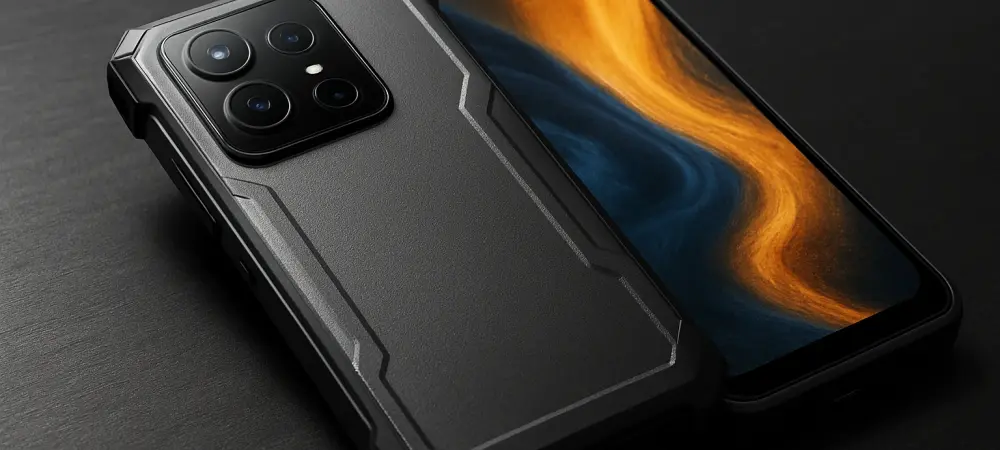
The relentless search for a power outlet has become a modern ritual, a daily dance of anxiety that most smartphone users know all too well, yet Realme’s latest offering suggests this routine may soon become a relic of the past. Launched on January 29, the Realme P4 Power arrives not with a slightly faster chip or a marginally brighter screen but with a fundamental promise to solve the single greatest frustration of the smartphone erthe constantly dying battery. This review examines whether this device is a true game-changer or simply another contender in the numbers race.
A New Powerhouse in a Stagnant Market
In a market saturated with iterative updates and minor software enhancements, the smartphone landscape has felt uninspired. Manufacturers often focus on camera megapixels or processing speeds that offer diminishing returns for the average user. Against this backdrop, the Realme P4 Power introduces a refreshingly practical innovation. Its core value proposition is not a novel AI feature but a direct solution to the universal problem of battery anxiety, questioning whether consumers are ready to prioritize genuine utility over incremental spec bumps.
This approach forces a reevaluation of what constitutes a meaningful upgrade. For consumers exhausted by the mandatory nightly charge, the prospect of a phone that lasts for several days is a compelling argument. The P4 Power bets that a significant portion of the market values endurance and reliability above all else, positioning its massive battery not as a gimmick but as the most essential feature a modern smartphone can possess. It represents a tangible improvement to the daily user experience in a way that a fractional increase in performance simply cannot match.
Redefining the Big-Battery Smartphone
The centerpiece of the P4 Power is its groundbreaking 10,001mAh Titan silicon-carbon battery, a capacity that effectively doubles what is found in most flagship devices. Realme claims this powerhouse can sustain nearly four days of light to moderate usage on a single charge, a figure that moves the goalposts from surviving a day to lasting the better part of a week. This isn’t just an improvement; it’s a complete paradigm shift in user expectations for mobile freedom.
Historically, phones with enormous batteries were relegated to a niche market of bulky, rugged devices that sacrificed aesthetics and ergonomics for endurance. However, the P4 Power shatters this stereotype by packing its immense power into a sleek, modern chassis weighing just 218g, making it comparable to mainstream flagships. This engineering feat makes multi-day battery life accessible without the typical compromise on design, proving that power and portability are no longer mutually exclusive. Furthermore, its utility is amplified by its 27W reverse charging capability, which effectively transforms the phone into a high-speed power bank for other devices.
Performance in the “Battery Wars”
The launch of the P4 Power is a calculated move in the escalating “battery wars,” a competitive arena where manufacturers vie for the title of endurance champion. The choice of a 10,001mAh capacity is a clear marketing tactic, designed to edge out Honor’s 10,000mAh device and claim a numerical victory. While this battle of specifications may seem superficial, it drives innovation that ultimately benefits consumers by pushing the boundaries of what is possible in battery technology.
Despite this numbers game, Realme holds a significant strategic advantage: market accessibility. While rivals have launched competing devices with slightly larger batteries, their availability has often been restricted to the Chinese market. The P4 Power’s debut in India signals a broader international release strategy, making its advanced battery technology available to a global audience. This wider reach gives Realme a critical edge, allowing it to capture a market of users worldwide who have been waiting for a mainstream device that finally eliminates the need for daily charging.
Strengths and Strategic Considerations
The primary strength of the Realme P4 Power lies in its masterful fusion of two previously conflicting ideals: extreme battery endurance and a desirable, lightweight design. It delivers on the promise of multi-day usage without forcing users to carry a device that feels cumbersome or outdated. The addition of high-speed reverse charging further enhances its value, providing a practical utility that extends beyond the phone itself.
Its most significant strategic advantage, however, is its planned global availability. By bringing this level of battery innovation to international markets, Realme is positioning itself as a leader in practical, user-centric technology. Nonetheless, the device is not without potential drawbacks. Its impressive specifications are part of an ongoing numbers game, and competitors are already developing and launching phones with even larger batteries. The P4 Power’s long-term dominance will depend on its ability to offer a compelling overall package that transcends mere battery capacity.
Summary and Final Assessment
The Realme P4 Power successfully demonstrates that exceptional battery life does not have to come at the expense of a premium user experience. It delivers a solution to one of the most persistent problems in the mobile industry while maintaining a modern and attractive form factor. The device stands as a testament to practical innovation, offering a tangible benefit that will be immediately apparent to any user. Its combination of a multi-day battery, a sleek design, and the added utility of functioning as a power bank makes it a uniquely compelling option in the current market. The phone’s strategic international launch further solidifies its position as a frontrunner in the push for greater mobile freedom. The P4 Power is more than just a phone with a big battery; it is a well-rounded device that redefines what consumers should expect from their daily driver.
The Final Verdict: Who Should Buy the P4 Power?
Ultimately, the review process confirmed that in an age of minor hardware upgrades, a genuinely long-lasting battery has become an incredibly powerful and practical selling point. The device successfully delivered on its core promise, proving that freedom from the daily charge was not a futuristic concept but a present-day reality. The Realme P4 Power is an ideal choice for users who prioritize battery endurance above all else but are unwilling to compromise on a modern design and everyday usability. For the digital nomad, the busy professional, or anyone simply tired of carrying a charger everywhere, this smartphone represents one of the most significant and worthwhile upgrades available on the market.