

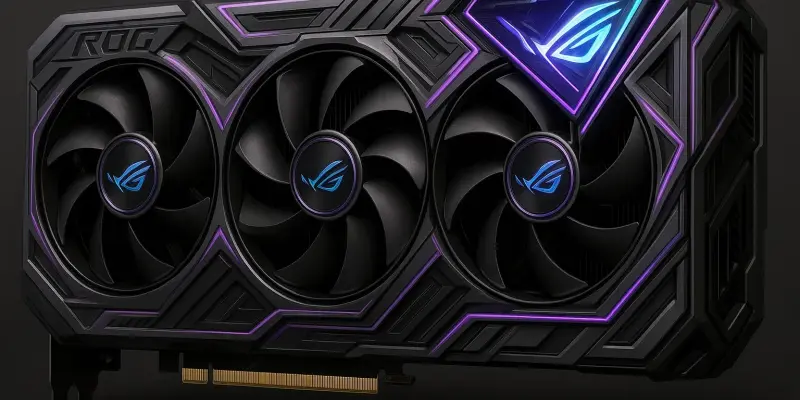
The ASUS ROG Astral RTX 5080, a marvel in the gaming hardware industry, has set a new benchmark for graphics card performance. Designed with both gamers and professional creators in mind, this cutting-edge piece of technology combines the latest in graphics processing with aesthetic brilliance, offering an analytical perspective on its performance and potential user benefits.
Overview of the ASUS ROG Astral RTX 5080
ASUS’s ROG Astral RTX 5080 stands out in the realm of gaming GPUs due to its remarkable features. At its core lies NVIDIA’s Blackwell architecture, specifically engineered to boost processing efficiency and enhance real-time ray tracing, a technology crucial for advanced graphical fidelity. Coupled with NVIDIA DLSS 4 Super Resolution and Multi-Frame Generation, users are promised an elevated visual experience, whether in high-definition gaming or complex 3D applications. Aesthetically, the card flaunts a unique design adorned with gold accents and an alluring elegance, making it not only a high-performance tool but also a visual centerpiece for any gaming setup. The ROG Astral RTX 5080 is armed with a robust AI capacity, boasting an impressive 1899 TOPS. This, along with 16GB of GDDR7 high-bandwidth memory, positions the card as a formidable ally for both gaming enthusiasts and professionals within the content creation sphere. Its factory-overclocked core speed of 2760MHz ensures a significant edge over competitors, allowing users to push boundaries when it comes to rendering and gaming.
Performance Evaluation
In real-world performance scenarios, the ROG Astral RTX 5080 excels with flying colors. When measuring speed and graphical fidelity, the card outperforms many in its class, delivering smooth gameplay and impressive visual outputs that maintain their high quality even at maximum settings. A standout aspect is the card’s AI capabilities, which allow for adaptive enhancements in gaming experiences through technologies like Ray Reconstruction. Overall, it offers an exceptional user experience, characterized by unparalleled computational power and the capability to handle demanding applications with ease.
The card’s design focuses heavily on thermal efficiency to support its high performance. With a robust quad-fan setup paired with patented cooling technologies such as vapor chambers and phase-change thermal pads, the ROG Astral is adept at maintaining optimal temperatures even under strenuous workloads. This means users can enjoy intensive gaming marathons without fear of performance drawbacks due to overheating.
Advantages and Disadvantages
Among the advantages of the ROG Astral RTX 5080 is its cutting-edge architecture, which ensures exceptional speed and visual performance. The AI capabilities further enhance the card’s utility, providing considerable boosts in graphical fidelity and efficiency. Additionally, the ergonomic design ensures durability and longevity, making this card a worthwhile investment for serious gamers and creators. However, potential drawbacks include the necessity for a high-wattage power supply, which can increase overall system costs. Moreover, while its superior design is an advantage, the premium price point might not align with budget-conscious consumers. When compared to its peers, the ROG Astral holds a distinctive edge in raw performance and design, but these benefits come at a proportional cost.
Summary and Recommendation
In summary, the ASUS ROG Astral RTX 5080 is a powerhouse in the graphics card market, combining technological sophistication with aesthetic appeal. Its superior real-world performance, coupled with innovative AI enhancements, makes it an ideal choice for those seeking the pinnacle of gaming and creating capabilities. For users who value unparalleled speed, graphical fidelity, and efficiency, this graphics card is highly recommended. Despite its premium pricing, the investment is justified by the potential for creative and gaming excellence.
Conclusion and User Considerations
This review found the ASUS ROG Astral RTX 5080 to be an exceptional choice for high-level gaming and professional content creation. Users looking for top-tier performance coupled with an elegant design would find this card beneficial. However, future considerations involve the power requirements and compatibility with existing systems. Evaluating one’s specific needs and existing hardware setup is crucial before making a purchase. Overall, the ROG Astral RTX 5080 impresses as a flagship GPU, raising the bar for what users can expect from gaming and creative technology.