

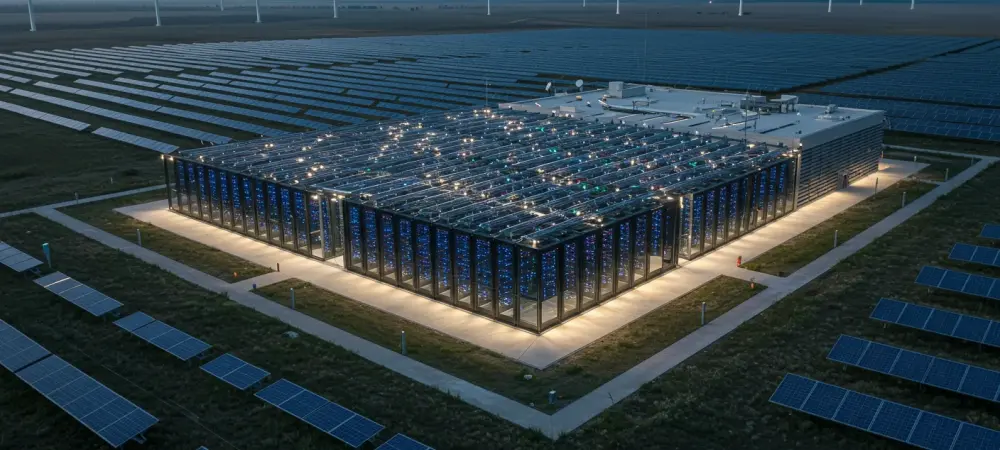
Imagine a world where the insatiable hunger for digital services—streaming, cloud computing, and artificial intelligence—doesn’t come at the expense of the planet. This is no longer a distant dream but a tangible reality with the rise of renewable data centers, which are redefining how digital infrastructure operates by harnessing sustainable energy sources like wind and solar power. As global demand for data skyrockets, the urgency to curb the environmental impact of energy-intensive data centers has never been more critical. This review delves into the transformative potential of renewable data centers, exploring their technology, real-world applications, and the challenges they face in balancing tech growth with sustainability.
Core Features of Renewable Data Centers
Harnessing Sustainable Energy Sources
Renewable data centers stand out for their integration of clean energy to power vast server networks. Unlike traditional facilities reliant on fossil fuels, these centers utilize wind turbines and solar panels to meet their high energy demands. This shift significantly cuts down carbon emissions, aligning with global sustainability goals. The technology often involves advanced energy storage systems to ensure a steady power supply despite the intermittent nature of renewable sources.
Beyond environmental benefits, this integration can lower operational costs over time. Energy storage solutions, paired with smart grid technologies, allow data centers to store excess power during peak production and use it during low generation periods. Such mechanisms showcase how renewable energy not only supports ecological responsibility but also offers economic advantages for long-term operations.
Grid Connectivity and Infrastructure
A robust connection to national power grids is vital for the reliability of renewable data centers. Infrastructure components like transmission lines, substations, and bus arrangements ensure seamless integration, enabling consistent energy flow to support uninterrupted digital services. Adherence to technical standards and cost-effective designs is crucial for grid reinforcement, ensuring that expansions do not strain existing systems.
The role of grid connectivity extends beyond mere power delivery. It involves meticulous planning to maintain stability, especially when incorporating variable renewable energy inputs. Sophisticated systems monitor and balance energy loads, preventing disruptions that could impact data center performance. This intricate balance highlights the engineering prowess behind sustainable digital infrastructure.
Performance and Real-World Impact
Technological Advancements Driving Efficiency
Recent innovations in renewable energy technologies have significantly boosted the efficiency of data centers. Enhanced designs in wind turbines capture more energy even in low-wind conditions, while improvements in solar panel efficiency maximize power output from limited surface areas. These advancements ensure that data centers can meet escalating demands without compromising on sustainability.
Policy support and investment trends further amplify this progress. Governments worldwide are incentivizing the development of green digital infrastructure through subsidies and streamlined regulations. Such backing encourages tech companies to adopt renewable solutions, fostering a cycle of innovation and implementation that benefits both the industry and the environment.
Case Study: Brazil’s Renewable Data Center Initiatives
Brazil emerges as a leader in this space, with projects like the Satoshi I_B Data Center in Bahia setting a benchmark. Operated by Renova Energia, this facility connects to the national grid through a 22-kilometer line linked to the Igaporã III substation, utilizing wind power from the Alto Sertão III complex. This synergy of digital infrastructure and renewable energy exemplifies practical application on a large scale.
The impact of such projects extends to various industries, including tech giants and financial institutions relying on cloud services. By powering operations with clean energy, these data centers reduce environmental footprints while supporting regional tech hubs. Brazil’s focus on Bahia as a center for such initiatives signals a strategic move to blend digital growth with sustainable practices, inspiring global counterparts.
Challenges in Scaling Renewable Data Centers
Technical and Operational Hurdles
Despite their promise, renewable data centers face significant technical challenges. The intermittency of renewable sources like wind and solar can disrupt power consistency, necessitating advanced storage and backup systems. Grid stability remains a concern, as sudden fluctuations in energy supply can affect data center reliability, requiring constant innovation in load management.
Additionally, the high initial costs of setting up renewable infrastructure can deter adoption. While long-term savings are evident, the upfront investment in energy storage and grid integration poses a barrier for smaller enterprises. Overcoming these obstacles demands collaborative efforts between technology providers and energy experts to refine solutions tailored to diverse operational needs.
Regulatory and Compliance Issues
Navigating regulatory landscapes adds another layer of complexity. In Brazil, for instance, projects like Satoshi I_B require approvals from agencies such as ANEEL and ONS to ensure compliance with national grid standards. These processes, while essential for safety and efficiency, can delay implementation and increase project timelines.
Such regulatory oversight, though rigorous, ensures that expansions do not compromise grid integrity. Striking a balance between innovation and adherence to standards remains a critical focus. Strategic partnerships between the energy and tech sectors, alongside policy reforms, are essential to streamline approvals without sacrificing safety or performance.
Final Verdict on Renewable Data Centers
Reflecting on the journey of renewable data centers, their emergence marks a pivotal shift in how digital infrastructure addresses environmental concerns. The integration of sustainable energy sources with cutting-edge grid technology demonstrates a viable path to reducing carbon footprints while meeting soaring data demands. Brazil’s initiatives through Renova Energia, particularly in Bahia, stand as a testament to the potential for regional leadership in this domain.
Looking ahead, the focus should pivot to scaling solutions through enhanced energy storage and smarter grid systems to tackle intermittency issues. Policymakers and industry leaders must prioritize funding and regulatory frameworks that accelerate adoption, ensuring smaller players can also enter the space. Collaborative innovation between tech and energy sectors will be key to unlocking the full potential of renewable data centers, paving the way for a digital future that harmonizes growth with planetary well-being.