

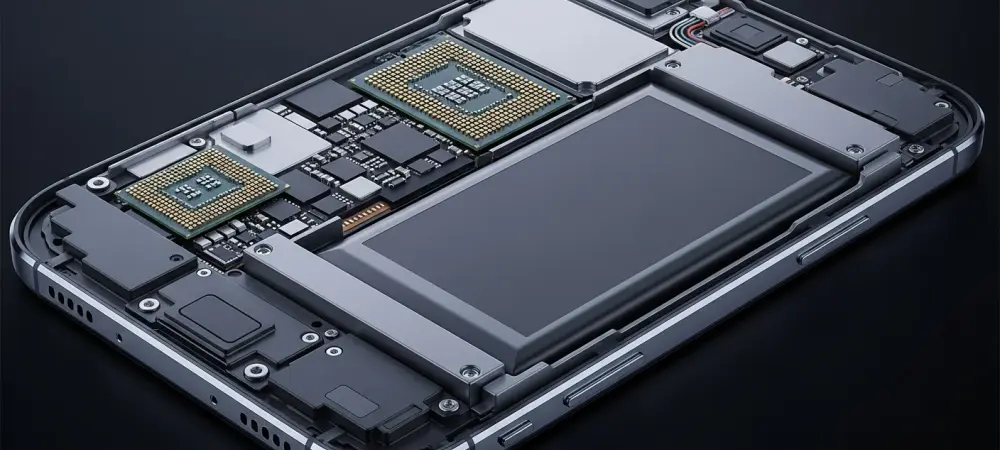
The smartphone industry reached a pivotal juncture where raw processing power no longer dictates consumer preference as much as the sheer endurance of the device throughout a demanding workday. Recent teardowns of the Redmi Note 17 Pro reveal a strategic shift in internal engineering that prioritizes an expansive 6,500mAh silicon-carbon battery over some traditional premium build components. While flagship models often emphasize titanium frames or complex periscope lenses, this mid-range contender focuses on solving the universal pain point of battery anxiety by utilizing high-density energy cells that were once reserved for niche experimental units. This shift indicates a broader market trend where manufacturers are willing to reorganize the entire chassis architecture to satisfy the growing energy demands of AI-driven background processes and high-refresh-rate displays. By analyzing the internal layout, it becomes clear that fitting such a massive power source requires a meticulous balance of volume.
Internal Engineering: The Cost of High Capacity
Upon removing the back panel, the most striking observation is the dominant presence of the battery assembly, which occupies nearly seventy percent of the available internal volume. To facilitate this massive component, engineers opted for a highly integrated motherboard design that stacks components more tightly than in previous generations, potentially increasing the difficulty of localized repairs. Furthermore, the cooling system utilizes a thinner vapor chamber compared to performance-centric rivals, suggesting that heat dissipation was somewhat compromised to make room for more milliampere-hours. This trade-off is particularly evident in the camera housing, where the sensors are packed closely together without the extensive dampening materials found in the Pro Plus variants. The structural frame also relies heavily on reinforced polycarbonate rather than high-grade aluminum, a decision that sheds necessary grams to offset the weight of the dense battery and maintain its portability.
Future Implications: Reliability Versus Longevity
The findings from this teardown established that the Redmi Note 17 Pro represented a significant milestone in the evolution of high-capacity mobile devices through its aggressive prioritization of power density. Consumers who valued endurance over modularity found a device that fundamentally changed the expectation for mid-range longevity, though it introduced specific challenges regarding post-warranty maintenance. Looking forward, manufacturers should consider implementing more modular battery brackets to mitigate the repairability risks associated with integrated high-density cells. For tech enthusiasts, the takeaway from this hardware analysis remained clear: the era of slim, lightweight phones with small batteries effectively ended in favor of robust, energy-focused designs. Future iterations will likely need to refine thermal management techniques, perhaps through the use of graphene-based heat spreaders. Professionals seeking reliable hardware were advised to weigh these benefits.