

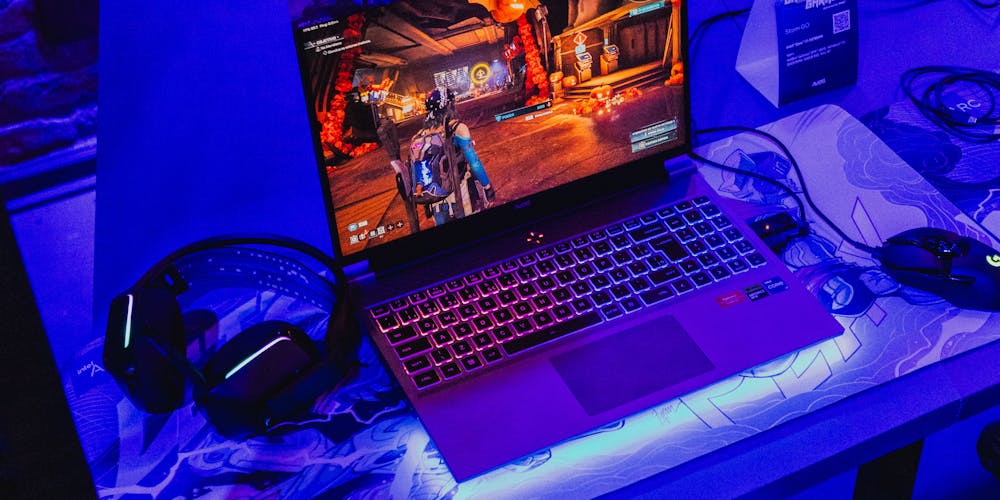
Elevating the gaming experience to new heights, the Razer Blade 18 emerges as a paragon in the realm of elite gaming laptops. This powerhouse encapsulates the pinnacle of what gamers have come to expect from top-tier portable gaming machines, thanks to its formidable hardware configurations. Each component within the Blade 18 is meticulously selected to guarantee peak performance, ensuring it meets the rigors of the most intensive modern games and software with ease.
Razer’s unwavering dedication to exceeding the expectations of gamers is reflected in the Blade 18’s remarkable design and capabilities. It boasts cutting-edge technology and innovations that redefine the limits of gaming mobility. This device is not just a tool for gaming; it’s a precision-crafted instrument that promises to accompany gamers into the future of high-fidelity gaming. The Blade 18 is not just a step but a giant leap forward, solidifying Razer’s vision of offering unsurpassed gaming experiences on the go.
Uncompromising Performance
The Brains Behind the Beast
The new Razer Blade 18 boasts some of the most powerful processors available for laptops. Users have the choice between the formidable Core i9-12900HX and the even more potent Core i9-13980HX from Intel. The Core i9-12900HX is designed to provide exceptional performance for demanding games and multitasking, ensuring that the laptop can handle almost anything you throw at it. For users who require the utmost in processing power, the Core i9-13980HX steps up the game, capable of tackling extensive video editing, 3D rendering, and the most CPU-intensive tasks with ease.
With such high-end CPU options, the Blade 18 is certainly targeting those who need and expect the best in laptop performance. The thermal design of the laptop ensures that the processors can maintain high performance without throttling, which is an essential aspect for gamers and professionals alike.
Graphics That Bring Realism to Life
When it comes to gaming laptops, the GPU is just as important as the CPU, and this is where the Blade 18 truly shines. With a range of NVIDIA’s Ada Lovelace GPUs, including the powerful RTX 4090, the Blade 18 is poised to deliver an immersive, high-fidelity gaming experience with ray tracing and AI-driven advancements like DLSS. This level of graphic capability allows games to be played at the highest settings, with silky smooth frame rates and stunning visual fidelity.
The option to equip the Blade 18 with such a high-powered GPU is a clear indication of Razer’s commitment to delivering a no-compromise gaming experience. The laptop’s cooling system has been engineered to ensure optimal performance, meaning that even during long gaming sessions, the graphics card will maintain its prowess without thermal throttling hampering the experience.
Cutting-edge Features and Design
Display Options for Every Gamer
The Razer Blade 18 comes with three different display configurations to suit any gamer’s preference. At the top of the range is the 18-inch UHD+ screen with an ultra-smooth 200 Hz refresh rate, a 16:10 aspect ratio, and a maximum resolution of 3840 x 2400, which is perfect for those who want the crispest images and fluid gameplay. For gamers who are focused on speed, there’s a 300 Hz Mini-LED display option available, which offers reduced latency for competitive play, though at the cost of a lower resolution.
Each display option has been carefully crafted to offer a balance of features that optimize the gaming experience. Whether you prioritize image clarity or response times, the Blade 18 delivers without compromise. The larger screen size also enhances the level of immersion, making the gameplay more engaging and enjoyable.
A Step Forward with Thunderbolt 5
The Razer Blade 18 leaps into the future of connectivity with its integration of Thunderbolt 5. This advanced standard propels data transfer rates to a staggering 120 Gbps, doubling the capacity of the former Thunderbolt iteration. With this kind of speed, users can effortlessly connect a multitude of peripherals, including several high-definition monitors, without hitting any performance snags.
Although Thunderbolt 5 technology is relatively new and not yet widely adopted, its inclusion in the Blade 18 solidifies the laptop as a cutting-edge device for users who demand longevity and top-tier versatility from their tech. Razer clearly prioritizes innovation, providing customers with the security that their investment will not be compromised by obsolescence. The Blade 18, equipped with Thunderbolt 5, not only meets current user demands but also anticipates and adapts to future technological advancements, ensuring a lasting and adaptable user experience.