
Intel Unveils Gaudi 3 to Challenge Nvidia in AI Hardware Market

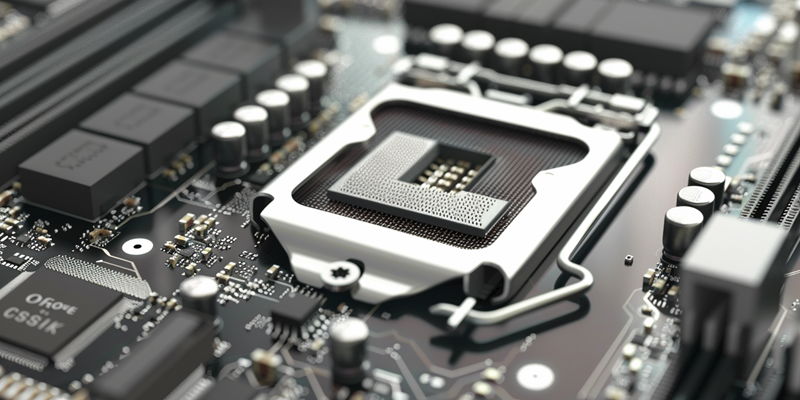
In the rapidly evolving sphere of artificial intelligence, a new challenger arises. Intel’s leap into the AI hardware competition manifests itself with the unveiling of Gaudi 3, their third-generation AI chip. Announced during the Intel Vision event in Arizona, this powerful accelerator is Pat Gelsinger’s answer to Nvidia’s dominating presence in AI computing. Designed to be faster, more efficient, and cost-effective, the Gaudi 3 chip is set to disrupt the market status quo.

Intel strategically markets Gaudi 3 by touting its performance enhancements. Boasting a claimed 50% faster inference rate on certain tasks than Nvidia’s products and a laudable 40% efficiency increase, the latest offering is poised to capture attention. Though not directly compared with AMD’s AI product suite, Intel’s focus is pinned on how Gaudi 3 surpasses its own predecessor, Gaudi 2, with a four-times increase in BF16 operations and a 1.5 times enhancement in memory bandwidth.

Emphasizing Open Standards in AI

Intel is stepping up in the high-stakes AI chip race with its latest Gaudi 3 processor. This new chip isn’t just about raw power; it’s built to connect at incredible speeds with 24 Ethernet ports capable of 200 Gb each, aimed at breaking down walls within the tech industry by advocating open standards. This move is a strategic challenge to Nvidia’s closed systems, marking Intel’s bold step toward fostering a broad, collaborative tech environment.

The company is on a brisk timeline, targeting Q2 for initial shipments to OEMs like Dell and Lenovo, with a wider release in Q3. This rapid deployment underscores Intel’s aspirations to become a key player in the AI sector, an area currently dominated by Nvidia. Gaudi 3’s design for extensive scalability, enabling the interconnection of thousands of processors, reflects Intel’s tactical approach – not just launching another chip, but setting a new industry benchmark and cementing its role as an influential architect in the AI hardware arena.

Explore more

Jenacie AI Debuts Automated Trading With 80% Returns

We’re joined by Nikolai Braiden, a distinguished FinTech expert and an early advocate for blockchain technology. With a deep understanding of how technology is reshaping digital finance, he provides invaluable insight into the innovations driving the industry forward. Today, our conversation will explore the profound shift from manual labor to full automation in financial trading. We’ll delve into the mechanics

Chronic Care Management Retains Your Best Talent

With decades of experience helping organizations navigate change through technology, HRTech expert Ling-yi Tsai offers a crucial perspective on one of today’s most pressing workplace challenges: the hidden costs of chronic illness. As companies grapple with retention and productivity, Tsai’s insights reveal how integrated health benefits are no longer a perk, but a strategic imperative. In our conversation, we explore

DianaHR Launches Autonomous AI for Employee Onboarding

With decades of experience helping organizations navigate change through technology, HRTech expert Ling-Yi Tsai is at the forefront of the AI revolution in human resources. Today, she joins us to discuss a groundbreaking development from DianaHR: a production-grade AI agent that automates the entire employee onboarding process. We’ll explore how this agent “thinks,” the synergy between AI and human specialists,

Is Your Agency Ready for AI and Global SEO?

Today we’re speaking with Aisha Amaira, a leading MarTech expert who specializes in the intricate dance between technology, marketing, and global strategy. With a deep background in CRM technology and customer data platforms, she has a unique vantage point on how innovation shapes customer insights. We’ll be exploring a significant recent acquisition in the SEO world, dissecting what it means

Trend Analysis: BNPL for Essential Spending

The persistent mismatch between rigid bill due dates and the often-variable cadence of personal income has long been a source of financial stress for households, creating a gap that innovative financial tools are now rushing to fill. Among the most prominent of these is Buy Now, Pay Later (BNPL), a payment model once synonymous with discretionary purchases like electronics and