

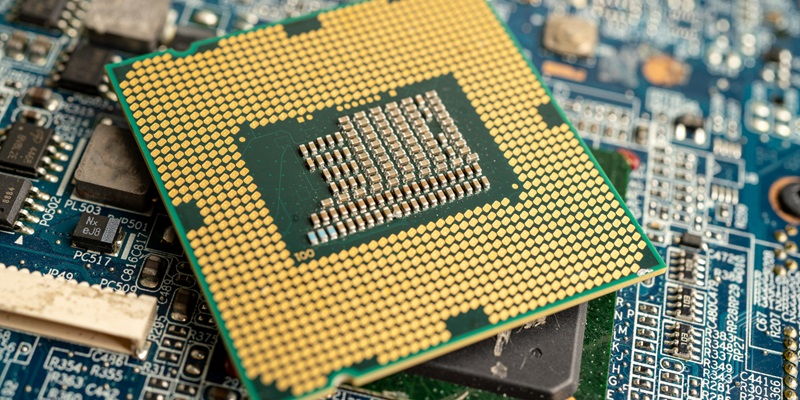
The Qualcomm Snapdragon X Elite 12-Core CPU has emerged as a powerful contender, showcasing remarkable efficiency compared to Intel and AMD CPUs. With a mere 28W power consumption, this innovative chip is set to revolutionize the landscape of computing. In this article, we delve into the benchmark test results, exploring the Snapdragon X Elite CPU’s single-core and multi-core performance, impressive efficiency, configuration, and potential applications.
Single-Core Performance Comparison
Utilizing the Geekbench 6 tests, the Snapdragon X Elite X1E80100 CPU exhibited outstanding single-core performance, achieving an impressive score of 2741 points. What sets it apart is its ability to surpass the performance of AMD and Intel chips, despite running at lower clock speeds. While the Snapdragon chip maintains a maximum clock speed of 4 GHz across one or two cores, the competition boasts clock speeds of 5.2 and 5.0 GHz, respectively.
Multi-Core Performance Comparison
The Snapdragon X Elite X1E80100 CPU continued to impress in multi-core performance, attaining a notable score of 13021 points in the Geekbench 6 tests. Although the Intel Core i7-12700K Desktop CPU registered a 4% faster performance, and the AMD Ryzen 9 7845HX CPU outperformed it by 5%, the Snapdragon chip’s prowess remains remarkable in its own right. Achieving this level of performance at a power consumption of just 28W truly showcases the potential of the Oryon CPU architecture.
Impressive Performance at 28W
The Snapdragon X Elite 12-Core CPU has truly redefined expectations by delivering exceptional multi-threaded performance within a 28W power envelope. Its capabilities are further amplified when compared to the competition’s chips. Even more impressive is the 80W configuration of the Snapdragon chip, which effortlessly outperforms its rivals. With such remarkable performance, the Qualcomm Snapdragon X Elite CPU is poised to revolutionize industry standards.
Configuration and Features
The laptops featuring the Snapdragon X Elite CPU are available in both 28W and 80W configurations. These options provide users with flexibility in choosing the power consumption that best suits their needs. Additionally, the benchmarking test platform boasts a massive 64 GB of LPDDR5x-8533 memory, offering substantial capacity for memory-intensive tasks. In the 28W configuration, the Snapdragon X Elite X1E80100 features an all-core frequency of 3.40 GHz, further highlighting its performance capabilities.
The Qualcomm Snapdragon X Elite 12-Core CPU stands tall as a game-changer in the computing industry. With its efficient power consumption, it surpasses Intel and AMD chips in single-core performance and demonstrates remarkable multi-core capabilities. The Oryon CPU architecture’s multi-thread performance at just 28W is genuinely impressive, while the 80W configuration showcases even greater potential. The Snapdragon X Elite CPU paves the way for groundbreaking advancements and redefines what is possible in the world of computing. Exciting times lie ahead as this powerhouse chip finds its way into various applications, revolutionizing performance, efficiency, and power consumption across the board.