

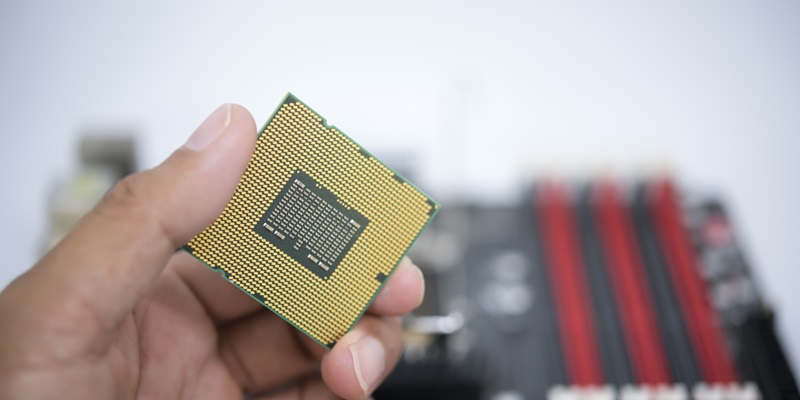
For years, AMD has been at the forefront of CPU innovation, offering powerful processors that cater to the needs of both enthusiasts and professionals. However, a persistent challenge has emerged – the issue of high CPU temperatures. In a recent statement, an AMD vice president shed light on the situation, expressing that this problem is not likely to be resolved in the near future. This article delves deeper into the reasons behind this issue and explores AMD’s ongoing efforts to tackle it, as well as the implications for the future of chiplet design.
The VP’s Explanation for not Using Chiplets in Mobile Chips
In the quest to enhance performance and efficiency, chiplet technology has gained traction in the semiconductor industry. However, AMD has opted not to utilize chiplets in its mobile chips, according to the Vice President. Elaborating on this decision, the VP cited concerns about heat generation and heat density as major impediments. These factors have led to the exclusion of chiplets from AMD’s laptop CPUs, illustrating the significance and complexity of the temperature challenge.
AMD’s collaboration with TSMC to address the heat issue
Recognizing the urgency of finding a viable solution, AMD has partnered with Taiwan Semiconductor Manufacturing Company (TSMC) to address the heat issue. The collaboration aims to develop innovative approaches to mitigate high heat density and improve the overall temperature performance of AMD’s processors. This collaborative effort between two industry leaders signifies the gravity of the situation and their determination to find a resolution.
The Predicted Intensification of Heat Density in CPUs
While the collaboration with TSMC showcases a proactive approach to addressing heat challenges, experts predict that the issue of heat density in CPUs will not dissipate easily. In fact, as processors continue to become more powerful and compact, heat density is expected to intensify. The increasing heat generation poses a considerable hurdle for AMD and other industry players in their quest for high-performance, efficient CPUs.
The Importance of Finding Effective Solutions for High Heat Density in Chiplets
The AMD VP stressed the significance of effectively addressing the high heat density generated by chiplets. This has become a critical concern as chiplets offer a promising solution for enhancing CPU performance. However, harnessing the full potential of chiplets is limited by the challenges posed by heat. Researchers and engineers are now actively seeking ways to optimize chiplet designs, develop advanced cooling solutions, and minimize the impact of heat density on performance.
The Impact of Heat Density on AMD’s Laptop CPU Design
AMD’s decision to exclude chiplets from laptop CPUs underscores the severity of the heat-density challenge. The increased difficulties in heat accumulation and dissipation associated with chiplets have hindered AMD from implementing this innovative design in its mobile processors. This signifies the depth of the issue and highlights the critical need for breakthrough solutions that would make chiplets viable for portable computing devices.
McAfee’s Perspective on the Power Penalty of Chiplets
Industry veteran John McAfee weighed in on the topic, addressing the power penalty associated with chiplets. McAfee emphasized that the power penalty has thus far prevented chiplet adoption in mainstream laptop CPUs. While acknowledging the potential of this design, McAfee emphasized the need to balance performance gains with power efficiency to satisfy consumer demands.
McAfee’s Views on the Threat Posed by ARM-based SoCs to x86 Dominance
In addition to discussing the challenges posed by chiplet designs, McAfee provided insights into the growing threat of ARM-based System-on-Chips (SoCs) to the long-standing dominance of x86 architecture. McAfee stressed that the competitive landscape is tightening, and the ARM camp cannot be underestimated. The ultimate judge of success, McAfee noted, lies in delivering processors that offer both power and efficiency, regardless of the underlying architecture.
Acknowledging the significance of the ARM Camp’s threat
While the x86 architecture has long been the prominent choice in the CPU market, the rising competition from ARM-based SoCs cannot be ignored. The consumer’s primary focus is on power and efficiency, and whichever design effectively meets these demands will flourish in the market. This recognition prompts industry leaders like AMD to continuously adapt and innovate to maintain their competitive edge.
AMD’s ongoing battle with high CPU temperatures brings to light the complex challenges that arise in the quest for improved performance and efficiency. While the issue may persist for some time, collaboration with TSMC underscores AMD’s commitment to finding effective solutions. Additionally, the emergence of ARM-based SoCs highlights the need for adaptability and constant innovation in the face of a changing market. Ultimately, the consumer’s pursuit of power and efficiency will continue to drive advancements in CPU design, ensuring that the best processors rise to the top, regardless of the underlying architecture.