

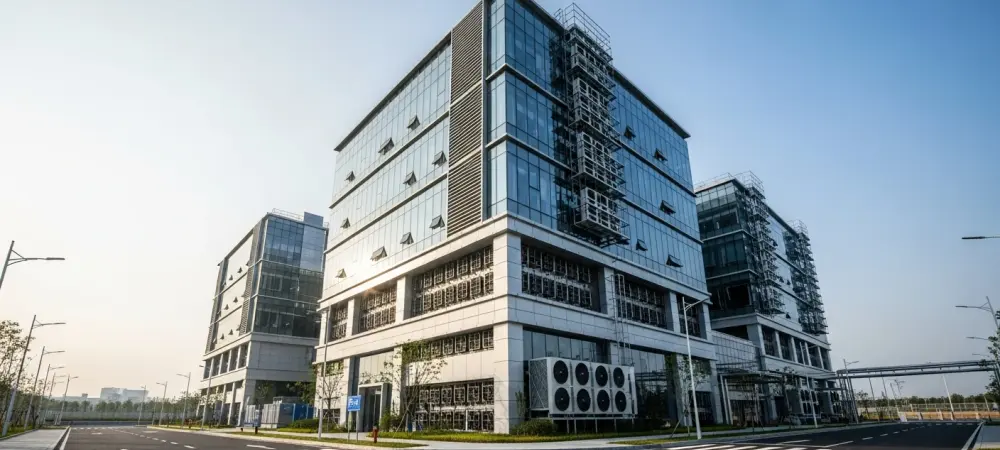
The quiet landscape of Salem Township is undergoing a radical metamorphosis as heavy machinery prepares to break ground on a digital infrastructure project of unprecedented scale. QTS Data Centers recently finalized a $500 million consolidation of 1,700 acres, a feat that required negotiating with nearly 100 individual landholders to assemble a contiguous tech corridor. This transition from rural acreage to a global epicenter for artificial intelligence infrastructure marks a significant shift in how the industry views regional development.
By planning up to 17 high-density data centers at this single site, QTS is signaling a paradigm shift in digital real estate. Instead of scattered facilities, the industry is moving toward “gigawatt-scale” campuses that can house the massive liquid-cooled server clusters required for modern generative AI models.
Why the Keystone State: The New Frontier for Global AI Infrastructure
Pennsylvania is rapidly evolving beyond its traditional industrial roots to become a cornerstone of the global technology landscape. While Philadelphia and Pittsburgh have long served as regional hubs, the interior of the state now attracts the most significant investment due to its unique combination of available land and robust connectivity. The proximity to major East Coast markets allows for low-latency data transmission without the exorbitant real estate costs found in Northern Virginia. The state’s ability to provide massive amounts of carbon-free energy is the primary driver of this boom. As generative AI demands skyrocket, tech firms are prioritizing regions where they can meet sustainability goals while tapping into high-voltage transmission lines. This shift has turned the Pennsylvania countryside into a strategic asset for the world’s largest cloud providers.
Inside the Salem Township Project: High-Density Computing and Strategic Consolidation
Securing the 1,700-acre footprint was a logistical masterpiece that involved navigating a complex web of agricultural and residential parcels. This consolidation allows QTS to build with a long-term vision, ensuring that the infrastructure for power and cooling is integrated from the start. With Blackstone’s institutional capital backing the venture, the developer can outpace competitors by committing to massive upfront infrastructure costs that smaller players cannot afford. A defining feature of this project is the “nuclear-to-data-center” strategy, which places the campus adjacent to the Susquehanna Nuclear Power Plant. This allows for a direct-to-source power connection, bypassing the often-congested public electrical grid. Development timelines are aggressive, with site preparation expected to finish soon so that vertical construction can commence by the end of this year.
Deciphering the Regional Surge: Market Projections and Competitive Dynamics
The scale of growth in Pennsylvania is staggering, with total data center capacity projected to rise from 2026 levels toward a massive 7.8GW by 2028. This surge is fueled by a “battle of the giants” as QTS and Amazon compete for dominance in the Susquehanna region. Amazon’s neighboring 1,200-acre expansion further validates the area as the premier destination for energy-intensive computing.
Local governance has played a pivotal role in facilitating this rapid expansion. The township’s decision to implement a specific “Overlay Zone” provides a streamlined regulatory path for data center development. By allowing these projects “by-right,” local authorities removed the bureaucratic hurdles that often stall large-scale infrastructure, providing the speed-to-market that AI developers desperately crave.
Identifying the Strategic Advantages: The Pennsylvania Data Center Model
The Pennsylvania model offers a blueprint for future infrastructure by prioritizing direct energy access and regulatory certainty. By bypassing grid bottlenecks, these facilities ensure operational stability even as regional power demands fluctuate. This localized energy approach reduces the strain on public utilities while providing the consistent, high-load power necessary for 24/7 AI training and inference.
Future-proofing these assets required a commitment to scalability and “by-right” zoning frameworks that accelerated the construction phases. Developers looked toward long-term energy security as the ultimate competitive advantage in the AI era. As the project moved forward, the focus shifted to integrating advanced cooling technologies and modular designs to accommodate the next generation of silicon, ensuring the campus remained relevant for decades.