

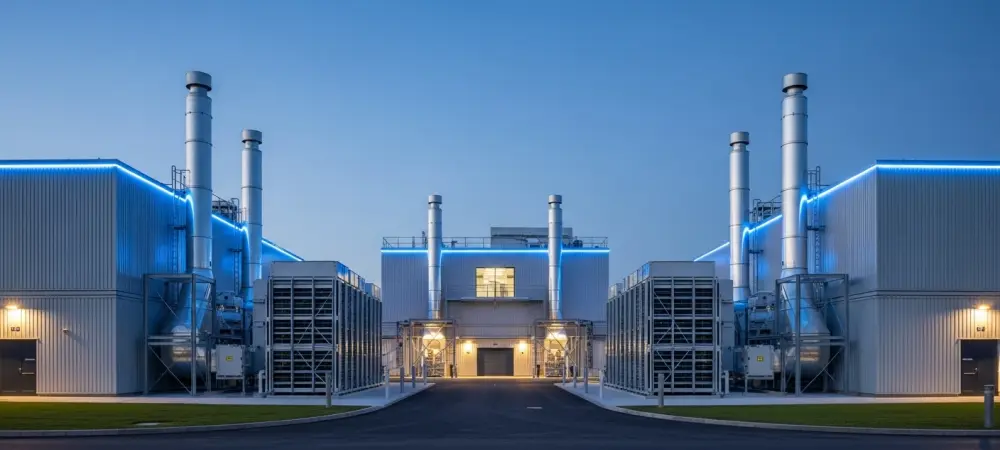
The rapid expansion of artificial intelligence and cloud computing has pushed traditional power grids to their absolute breaking point, forcing a radical shift in how critical infrastructure is designed and deployed across the European continent. This fundamental change is most visible at the Pure Data Centres Group campus in Dublin, Ireland, where the unveiling of Europe’s first 110-megawatt large-scale microgrid marks a significant departure from legacy operational models. Historically, data centers functioned as passive consumers, relying almost exclusively on national grids for primary energy while keeping on-site generators reserved for rare emergency backups. However, the emergence of the “Bring Your Own Power” strategy represents a strategic decoupling of digital growth from the constraints of aging and often congested electricity networks. Developed in close partnership with the power solutions provider AVK, this microgrid serves as a blueprint for high-density computing in markets where the utility infrastructure can no longer keep pace with the exponential demand for AI-ready capacity.
Innovative Technical Engineering
Modular Generation and Future-Proof Fueling
The technical heart of the Dublin campus relies on a sophisticated suite of dual-fuel Wärtsilä engines designed to provide consistent and dispatchable power to the facility’s high-density server racks. By utilizing natural gas as the primary fuel source, the microgrid ensures that the data center maintains stable, uninterrupted operations regardless of the pressures placed on the external national grid. This setup is organized into three distinct energy centers, each capable of generating 30 megawatts of electricity, which allows for a modular deployment strategy that can scale alongside the actual hardware requirements of tenants. This phased approach is essential for cloud service providers who need to match their capital expenditure with the gradual ramp-up of AI workloads. By operating as a primary power source twenty-four hours a day, the system eliminates the traditional reliance on utility substations that are often delayed by complex local infrastructure upgrades or administrative backlogs in the region.
While natural gas currently provides the foundational reliability for the site, the engineering team has prioritized future-proofing to ensure long-term alignment with evolving environmental regulations and corporate sustainability targets. The Wärtsilä engines are inherently flexible, possessing the capability to operate on Hydrotreated Vegetable Oil as a backup fuel and requiring only minor modifications to support a transition toward hydrogen blending. This technical foresight allows the facility to gradually reduce its carbon footprint as alternative fuels become more commercially viable and widely available within the local supply chain. This adaptability is not just an environmental consideration but a risk management strategy that protects the investment from potential changes in fuel availability or carbon pricing structures. By integrating such versatile generation technology, the campus demonstrates how large-scale digital infrastructure can maintain peak performance while remaining prepared for a global energy transition that favors lower-carbon alternatives over the next decade.
Energy Storage and Resource Circularity
Complementing the generation suite is a robust 20-megawatt Battery Energy Storage System that serves as a critical buffer between the power plant and the sensitive computing equipment. This energy storage component is vital for smoothing out the significant load fluctuations that characterize high-performance computing environments, where power demand can spike or drop rapidly based on the complexity of AI processing tasks. The storage system provides the near-instantaneous response times necessary to maintain perfect uptime, acting as the first line of defense against any minor mechanical variances in the primary engines. Furthermore, the integration of large-scale battery capacity allows the facility to eventually incorporate intermittent renewable energy sources, such as local wind or solar, without compromising the reliability of the power delivery. This synergy between combustion engines and chemical storage creates a resilient energy ecosystem that can withstand both internal operational stresses and external environmental challenges while maintaining constant service.
The Dublin facility extends its engineering innovation beyond mere electricity generation by incorporating advanced resource management systems that promote a circular economy within the campus. The infrastructure is pre-configured for Combined Heat and Power readiness, enabling the recovery of waste heat generated by the engines and servers for use in local district heating projects. This approach transforms what was once a waste product into a valuable community asset, potentially providing sustainable warmth to nearby residential or commercial developments. Additionally, the campus addresses the growing concern over industrial water consumption by employing comprehensive rainwater harvesting and sophisticated on-site treatment facilities. These systems significantly reduce the data center’s reliance on municipal water supplies, which are often under as much pressure as the electrical grid in densely populated areas. By closing the loop on heat and water usage, the project sets a new benchmark for how data centers can exist as beneficial components of the urban landscape.
Strategic Drivers and Market Evolution
Bypassing National Grid Constraints
The shift toward on-site generation is largely driven by the extreme difficulty of securing timely grid connections in Europe’s primary data center markets, often referred to as the Tier 1 cities. In hubs like London, Frankfurt, and Amsterdam, the timeline for obtaining a high-capacity utility connection has stretched into several years, and in certain overburdened zones, it can now take over a decade to finalize the necessary infrastructure. This bottleneck has created a significant hurdle for the deployment of the latest artificial intelligence platforms, which require massive amounts of power to function effectively. By adopting a microgrid approach, developers can effectively bypass these structural delays, allowing for the construction and activation of new digital capacity at a pace that matches the speed of technological innovation. This independence from the national utility’s schedule is becoming a critical competitive advantage for operators who must meet the urgent demands of global enterprises that cannot afford to wait for long-term grid expansions.
Ireland’s electricity network has faced particularly acute challenges due to the rapid growth of its digital economy, leading to a situation where the demand for power frequently outstrips the available supply from centralized plants. The Dublin microgrid project proves that digital infrastructure can still thrive in these power-constrained regions if the developer assumes the responsibility for its own energy generation and management. This “on-site-first” philosophy changes the relationship between the data center and the surrounding community, as the facility no longer competes with local residents or small businesses for the limited capacity of the local substation. Instead, the data center becomes a self-sufficient island of reliability that can even offer stability to the wider network during times of peak stress. This strategic pivot allows for the continued growth of a vital economic sector while alleviating the pressure on public infrastructure, demonstrating a path forward for other major technology hubs currently facing similar moratoriums or development restrictions.
The Rise of the BYOP Philosophy
The “Bring Your Own Power” philosophy is rapidly evolving from a niche experimental concept into a primary consideration for any large-scale infrastructure project in the current energy landscape. Under this model, the data center operator essentially functions as a mini-utility, taking direct control over the sourcing, generation, and distribution of the electricity required to keep servers running. This trend reflects a broader industry realization that the traditional reliance on a single utility provider is now a significant liability for market entry and operational scalability. By investing in the hardware necessary to produce power on-site, companies gain a level of optionality that was previously unavailable, allowing them to remain operational even when the surrounding grid is unstable or undergoing maintenance. This autonomy is particularly important for AI workloads, which require higher power densities and more consistent voltage levels than standard cloud computing, making the controlled environment of a private microgrid an ideal setting for these advanced applications.
While the microgrid provides immediate independence, the BYOP strategy is designed to eventually integrate into a hybrid energy model where the data center acts as both a consumer and a provider for the grid. Once a formal interconnection is established, the on-site generation capacity can be utilized to provide essential services back to the national network, such as frequency response or peak shaving during times of high demand. This bidirectional relationship transforms the data center from a perceived burden on the public infrastructure into a strategic asset that can help stabilize the entire energy ecosystem. For example, during periods when renewable energy production is low, the microgrid’s dispatchable power can help fill the gap, preventing the need for more carbon-intensive backup plants to come online. This transition toward a more active role in the energy market not only improves the economic viability of the project through new revenue streams but also demonstrates a commitment to the overall resilience and sustainability of the regions where these facilities are located.
Regional Expansion and Industry Outlook
Replicability Across European Markets
The success of the inaugural 110-megawatt site in Dublin has already paved the way for the replication of this microgrid model in other major European markets facing similar infrastructure constraints. Partnership agreements are currently being explored for expansions into Germany, the Netherlands, and the United Kingdom, where the demand for specialized AI and cloud services continues to grow despite the presence of overburdened electrical networks. These regions share common characteristics, such as high land costs and strict environmental regulations, which make the self-contained and efficient nature of a microgrid particularly attractive to local authorities. By providing a pre-packaged solution that includes power generation, storage, and resource recovery, developers can offer a much more predictable timeline for international clients looking to establish a presence in these critical hubs. This replicability is a core component of the long-term strategy, ensuring that the lessons learned during the Dublin implementation can be applied to streamline future projects across the continent.
Integrating advanced sustainability features such as heat recovery and water treatment has also made these large-scale facilities more palatable to local regulators and the communities that host them. In many jurisdictions, the planning process for new data centers has become increasingly scrutinized due to concerns about the impact on local resources and carbon neutrality targets. However, a microgrid that utilizes lower-carbon fuels like Hydrotreated Vegetable Oil and is designed for future hydrogen blending directly addresses these environmental anxieties. By showing that a massive data campus can operate with minimal impact on municipal water and heating networks, the industry can overcome the social and political hurdles that often lead to development moratoriums. The ability to present a project as a self-sufficient energy hub that contributes to local district heating rather than just consuming electricity is a powerful argument for approval. This holistic approach to site development ensures that the digital future is built on a foundation of community cooperation and environmental responsibility.
A New Standard for Digital Infrastructure
The launch of the Dublin microgrid signifies a definitive shift in the digital infrastructure sector, where the traditional distinction between backup power and primary power is increasingly blurred. In this new paradigm, site selection is no longer driven solely by proximity to fiber optic hubs or low land costs, as the ability to generate and manage high-density power on-site has become the ultimate arbiter of a project’s viability. As the complexity of artificial intelligence models continues to push the boundaries of energy consumption, the industry must move away from its historic dependence on the centralized grid toward a more decentralized and proactive energy strategy. This evolution is not merely about surviving in a power-constrained world but about thriving through technical independence and operational flexibility. Data center operators are now expected to be as proficient in energy engineering as they are in server management, creating a more integrated approach to digital service delivery that is better suited to the demands of the modern economy.
Looking back at the initial implementation, the project established a clear path for future developments by prioritizing actionable energy solutions over a reliance on external utility upgrades. The engineering team successfully demonstrated that on-site generation could provide the necessary reliability for mission-critical AI workloads while maintaining a flexible roadmap for long-term decarbonization. Decision-makers in the industry recognized that the “Dublin Model” offered a practical response to the immediate challenge of grid congestion, providing a framework for scalable growth that was previously considered unattainable in high-demand markets. By integrating battery storage and circular resource management, the facility moved beyond simple consumption to become an active participant in the regional energy ecosystem. These insights provided a foundation for the next generation of data center design, ensuring that infrastructure stayed ahead of technological requirements. The project concluded with the realization that self-sufficiency and modularity were the essential keys to unlocking Europe’s digital potential.