

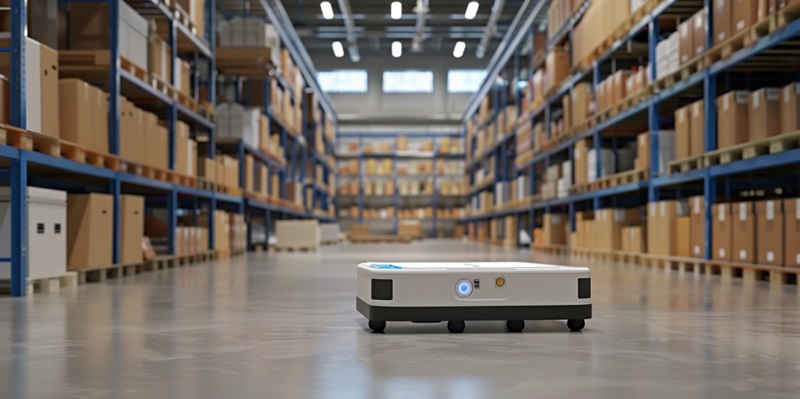
The dawn of an era in industrial efficiency has been heralded by Pudu Robotics with the unveiling of the T300, an advanced robot set on transforming the nuance-filled world of material transportation within manufacturing environments. Addressing critical issues such as time-sensitive logistics and safety, the T300 embodies a revolution in how goods are maneuvered through the sprawling halls of factories. This innovation leaps beyond traditional methods that have long been fraught with inefficiencies and the potential for perilous incidents.
Meeting the Demand for Safer and Smarter Transports
Gone are the days of reliance on forklifts, pallet jacks, or muscle-driven labor for intra-factory goods transfer. Pudu’s T300 deftly shoulders these responsibilities while curtailing the risk of operational setbacks and workplace injuries. It boasts a remarkable capacity to carry up to 300 kg and is poised to supersede a plethora of manual transport tools. Integration of high-tech navigational aids such as LIDAR and Simultaneous Location and Mapping (SLAM) technologies endow the T300 with the proficiency to adeptly sidestep obstacles, find the optimal route, and ensure smooth transitions even in the most space-constrained corridors of industrial activity.
The T300 does not merely stop at delivering unparalleled transportation services; it has been engineered to demonstrate exceptional adaptability. It capably threads through narrow passageways, negotiates secured access points, and interworks with elevator systems, reinforcing its role as a versatile asset. This flexibility is crucial in keeping the tempo of modern production environments where timing and space utilization are essential to maintaining the flow of operations.
Uninterrupted Productivity with Advanced Automation
Pudu Robotics has launched the T300, revolutionizing material transport in manufacturing with its advanced features. This robotic innovation mitigates long-standing inefficiencies and safety concerns associated with moving goods in complex factory settings. The T300 propels factory logistics into a new era, where time-critical deliveries and worker safety are greatly enhanced through automation. With its introduction, Pudu Robotics is not only redefining the movement of goods but also setting a new benchmark in industrial efficiency, ensuring that factory floors can operate with unprecedented precision and reliability. The arrival of the T300 promises a transformative impact on the manufacturing industry, offering a solution to the challenges of traditional transportation methods that are often slow and hazardous.