

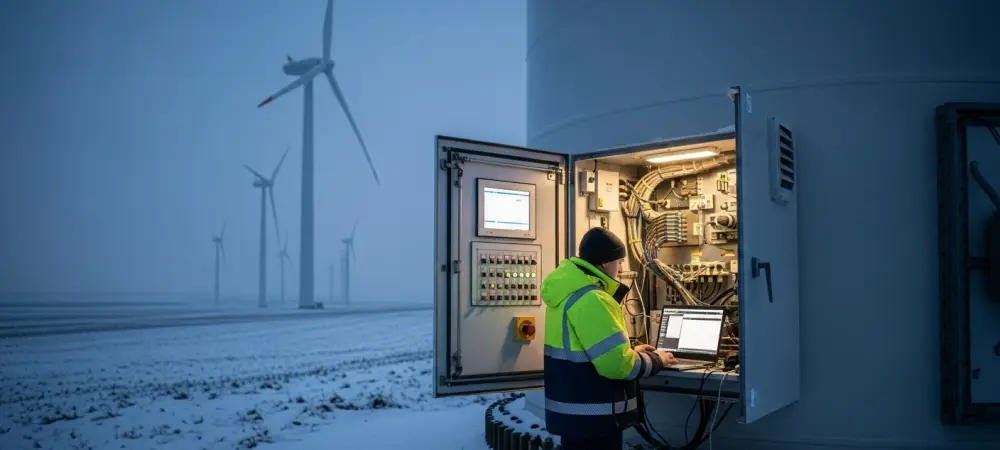
A meticulously planned cyberattack against Poland’s energy infrastructure in late 2025, while ultimately thwarted, cast a long shadow over the security of critical systems worldwide, revealing a sophisticated new blueprint for disrupting modern power grids. The assault, deliberately timed to coincide with severe winter weather, targeted the nation’s growing portfolio of decentralized energy resources (DERs), such as wind and solar farms. Although it failed to trigger a widespread blackout, the incident served as a dangerous proof of concept, demonstrating how common security oversights in operational technology (OT) could be exploited to destabilize an entire nation’s power supply. The event, attributed with high confidence to a Russia-aligned threat actor, has since become a critical case study, prompting an urgent reevaluation of cybersecurity postures in the global energy sector and exposing the profound vulnerabilities that accompany the transition to renewable energy sources.
Anatomy of a Coordinated Assault
The offensive was a calculated act of digital aggression, launched on December 29 and 30, 2025, as Poland grappled with freezing temperatures and snowstorms just before the New Year’s holiday. This timing was clearly chosen to maximize potential disruption and public distress. The attackers deployed destructive “wiper” malware in a widespread campaign against over 30 renewable energy farms, a private manufacturing company, and a combined heat and power plant. According to Poland’s national security response team, CERT Polka, the attack’s design was malicious and destructive, comparing the digital assault to an act of arson intended to cause catastrophic damage during a moment of peak vulnerability. Prime Minister Donald Tusk confirmed the attack’s severity but also noted its failure to achieve the primary goal of initiating large-scale power outages, a fortunate outcome that belied the sophistication and destructive intent behind the campaign.
There is a firm consensus among international security agencies and private firms that the attack was orchestrated by a highly capable and well-resourced threat group aligned with Russia. Prime Minister Tusk was quick to identify Russia as the likely perpetrator, a conclusion supported by CERT Polka’s technical investigation, which found significant overlaps with a known threat cluster tracked as Berserk Bear. The industrial security firm Dragos, which assisted in the incident response, attributed the attack’s tradecraft to Electrum, a group with deep connections to the notorious Sandworm actor responsible for previous grid attacks in Ukraine. Dragos’s analysis further revealed a collaborative ecosystem where another actor, Kamicite, conducted reconnaissance and established initial access, enabling Electrum to execute the final destructive phase. This two-stage model highlights a mature, well-orchestrated campaign far beyond the capabilities of ordinary cybercriminals.
A New Frontline in Energy Security
The most alarming aspect of the Polish incident was its status as the first large-scale, coordinated cyberattack specifically targeting DERs, heralding a significant shift in the threat landscape for critical infrastructure. As nations worldwide accelerate their transition to green energy, their increasing reliance on vast, interconnected networks of wind turbines and solar farms creates a new and highly attractive attack surface. While Poland’s relatively lower dependency on these resources played a key role in preventing a grid collapse, experts issued a stark warning. An identical attack methodology, if replicated in a nation more heavily reliant on renewable energy—such as parts of the United States, Australia, or the Nordic countries—could have triggered cascading failures across the entire electrical system, leading to potentially catastrophic and prolonged blackouts. The incident served as a grim preview of the future of energy warfare. The attackers’ success in penetrating these systems hinged on exploiting fundamental and distressingly common security weaknesses prevalent across the OT sector. Their methodology was simple yet highly effective. Initial access was gained through vulnerable, internet-facing edge devices, a common entry point in many industrial networks. From this foothold, they moved laterally by leveraging unchanged default credentials on critical operational equipment, including remote terminal units (RTUs) and human-machine interfaces (HMIs). Once they had pivoted onto these vital systems, they deployed the wiper malware. This had a multi-pronged effect: it destroyed data, corrupted device firmware, and ultimately severed the lines of communication between the renewable energy facilities and the distribution system operators. Although the turbines and solar panels continued generating power, they became unmanageable “islands,” rendering grid operators blind and unable to control a crucial segment of their power generation portfolio.
Hard Lessons and a New Defensive Posture
The attack served as a powerful catalyst for change, forcing a reckoning within the industrial control systems community about long-neglected security fundamentals. The detailed analysis of the attackers’ methods provided a clear, actionable roadmap for defense, highlighting that even sophisticated state-sponsored threats often rely on basic security lapses. The incident underscored that the most critical vulnerabilities were not exotic zero-day exploits but rather systemic issues like the failure to change default passwords and the insecure configuration of internet-facing devices. It prompted a renewed focus on foundational security hygiene, reminding organizations that mastering the basics is the most effective defense against a wide array of threats. The aftermath of the Polish grid attack created a sense of urgency, moving cybersecurity from a background IT concern to a central operational priority for asset owners and operators across the global energy sector, who now recognized that their physical operations were directly exposed to digital threats.