

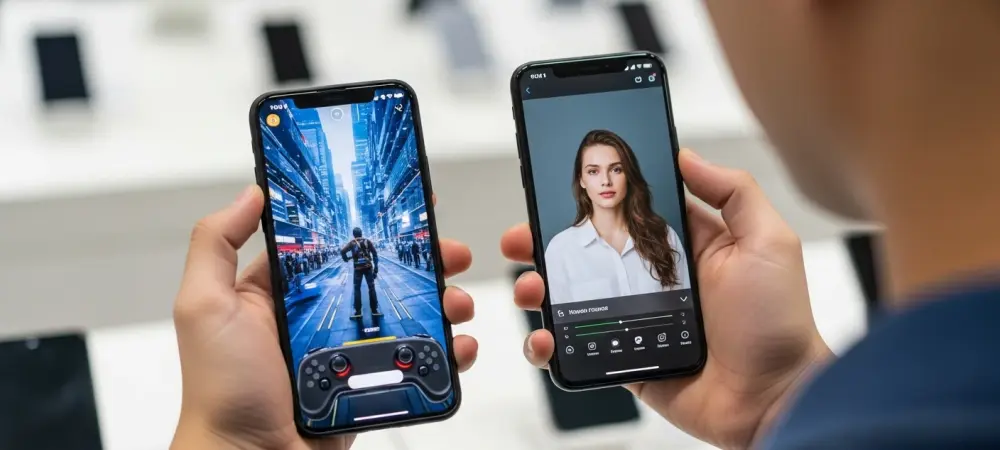
The Modern Smartphone Dilemma Deciding Between Brute Force and Brains
This week’s most compelling smartphone offers present consumers with a fundamental choice that defines the current market: the pursuit of bleeding-edge hardware versus the embrace of a seamlessly intelligent software experience. This decision is no longer a niche consideration for tech enthusiasts but a central dilemma for anyone seeking the best value for their money. The contrast between Poco’s strategy of packing devices with formidable specifications and Google’s focus on a polished, AI-driven ecosystem highlights this industry-wide divergence.
The showdown is particularly relevant as both brands aggressively court consumers with timely discounts and strategic product positioning. For buyers, the question becomes what truly constitutes a premium experience. Is it the raw, unadulterated speed offered by the latest processor and a massive battery, or is it the subtle, everyday convenience of a device that anticipates your needs? This analysis will deconstruct the current deals on the Poco F8 and Pixel 10 series to determine which approach delivers the most practical and satisfying value in 2026.
Deconstructing the Deals a Tale of Two Philosophies
The Uncompromising Performer Analyzing the Poco F8 Ultra’s Spec-Heavy Strategy
Poco’s philosophy is on full display with the F8 Ultra, a device built around an overwhelming list of specifications designed to leave no doubt about its performance credentials. At its core is the new Snapdragon 8 Elite Gen 5 chipset, paired with a colossal 6,500mAh battery that supports incredibly fast 100W wired and 50W wireless charging. This hardware-first approach extends to its media capabilities, featuring a vibrant 6.9-inch 120Hz OLED display and a unique 2.1-channel Bose speaker system with an integrated woofer for enhanced bass. Priced at €750 for the 16/512GB model, the F8 Ultra presents a clear argument: tangible power you can measure. The benefits are immediately apparent in demanding applications, from high-fidelity gaming to rapid multitasking, where the device’s raw horsepower shines. However, this raises a crucial debate in an era of advanced software optimization. While the hardware is undeniably top-tier, the ultimate measure of a premium phone increasingly involves the seamless integration of software, something that spec sheets alone cannot convey.
Seizing an Unbeatable Advantage How the Poco F8 Pro’s Timed Offer Disrupts the Mid-Range
The Poco F8 Pro employs a shrewder strategy, leveraging slightly older flagship technology to create an irresistible value proposition. It utilizes last year’s still-potent Snapdragon 8 Elite chip and a substantial 6,210mAh battery, ensuring it remains a performance leader in its price bracket. The camera system, while a step down from the Ultra, still includes a capable 50MP main sensor and a 2.5x telephoto lens.
Its most disruptive feature, however, is a limited-time promotional deal. Poco is offering the 512GB model, which also includes an extra 4GB of RAM, for the same price as the base 256GB version. This aggressive pricing move effectively eliminates the storage dilemma for potential buyers and sets a new benchmark for what consumers should expect. By creating such a clear value upgrade, Poco places immense pressure on its competitors, forcing them to reconsider their own pricing models and feature sets.
The Pixel 10’s Calculated Compromise Trading Hardware for Intelligence
In stark contrast, the Google Pixel 10 makes a series of calculated hardware compromises to deliver its signature software experience at a specific price point. For the first time, the standard Pixel model includes a dedicated 5x telephoto lens, a significant feature that brings zoom photography to a more accessible level. This addition, powered by Google’s computational photography prowess, is the device’s main hardware highlight. However, these gains come with notable trade-offs that challenge its €800 price. The 4,970mAh battery delivers an underwhelming active use score, and its 6.3-inch screen is a lower-resolution panel that lacks the smooth LTPO technology found in its Pro siblings. The core value proposition rests on the assumption that early access to Google’s latest AI enhancements and exclusive Android features is worth accepting tangible concessions in battery life and display quality, a gamble that will not appeal to every consumer.
Navigating the Premium Pixel Conundrum the Pro XL’s Clear Value vs the Pro’s Niche Appeal
The premium end of the Pixel lineup presents its own complex purchasing decision. Thanks to a significant €350 discount, the Pixel 10 Pro XL emerges as the clear front-runner, offering a large, high-quality 6.8-inch LTPO display and a superior triple-camera array. This aggressive price reduction makes it a far more compelling option than its smaller counterpart for most buyers.
The standard Pixel 10 Pro, meanwhile, is caught in a difficult position. While it shares the same excellent camera system as the XL, its value is undermined by inventory issues and awkward pricing. The 256GB model is currently out of stock, and the 512GB version is priced nearly identically to the discounted Pro XL. This creates a paradox where the smaller Pro model only makes sense for a niche group of consumers who prioritize a compact form factor above all else, including price and availability.
Your Strategic Buying Guide Matching the Device to Your Demands
The key takeaway from this market snapshot is clear: Poco establishes its dominance in raw performance, battery longevity, and aggressive value, making its F8 series the go-to for power users. In contrast, the discounted Pixel 10 Pro XL stands out for its intelligent camera system and refined software experience, representing the peak of Google’s polish. The standard Pixel 10 and the awkwardly priced Pixel 10 Pro occupy a more compromised middle ground. For the performance-hungry gamer or multimedia enthusiast, the Poco F8 Ultra’s specifications are hard to ignore, while the F8 Pro’s timed deal offers unmatched value. Conversely, the point-and-shoot photographer who values software intelligence and a clean user interface will find the Pixel 10 Pro XL, with its current discount, to be the most logical choice. Ultimately, making an informed decision requires weighing these promotional advantages against your personal, long-term needs for a device that complements your daily life.
Beyond the Spec Sheet the Final Verdict on Power vs Polish
The competition between Poco and Google reinforced that the ideal smartphone was not defined by a single metric but by a user’s individual priorities. Whether one valued the quantifiable might of a top-tier chipset or the intangible polish of an AI-driven interface, the market provided distinct and compelling options.
This dynamic between brute-force hardware and intelligent software continues to shape device development, pushing manufacturers to innovate on both fronts. Consumer expectations have evolved, with many now looking beyond simple benchmarks to how a device actually feels to use day after day. The best deal was ultimately found not in the temporary allure of a price cut, but in selecting the product philosophy that best aligned with and enhanced one’s digital life.