

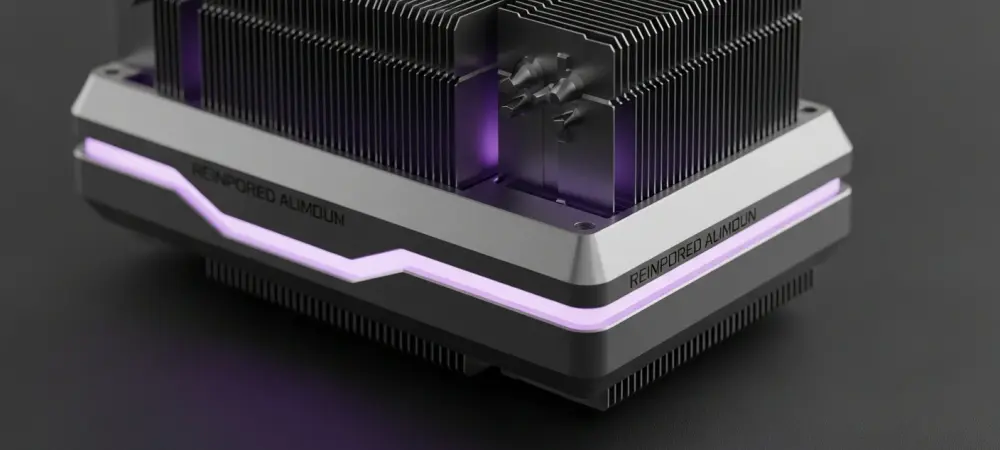
The high-performance graphics hardware industry frequently witnesses ambitious engineering concepts that push the boundaries of industrial design, yet some physical iterations prove too extreme for the general consumer market to safely handle or reasonably maintain. Recently, a prototype for the PNY RTX 5080 surfaced, showcasing an uncompromising full-metal chassis that prioritized a sleek, brutalist aesthetic over traditional ergonomics. While the visual appeal of a seamless aluminum shroud is undeniable for enthusiasts seeking premium builds, the actual implementation presented significant manufacturing hurdles. This specific design language aimed to distinguish the brand in an increasingly crowded market where high-end GPUs are often seen as centerpieces. However, the pursuit of a sharp look resulted in a product that challenged safety standards. This tension between aggressive styling and utility highlighted the fine line manufacturers must walk when designing hardware for a discerning public.
Structural Integrity: The Physics of Metal Shrouds
The prototype in question featured an external casing characterized by extremely thin, angular fins and un-chamfered edges that could theoretically provide superior heat dissipation through increased surface area. Engineers discovered that while the metal shroud acted as an auxiliary heatsink, the sharpness of the structural lines posed a physical risk during installation, potentially leading to injuries or damage to other sensitive components. Furthermore, the weight of a dense metal exterior placed undue stress on the PCIe slot, necessitating additional reinforcement that complicated the overall assembly process. Testing revealed that while the thermal performance matched internal benchmarks, the sheer precision required to manufacture these edges without making them hazardous was cost-prohibitive. This realization led to an internal debate regarding the feasibility of maintaining such a radical departure from the rounded plastics and safe-touch alloys commonly used in current 2026-2028 product cycles.
Refined Manufacturing: Balancing Performance and Practicality
Transitioning away from the hazardous prototype necessitated a shift toward more sustainable and safer materials that still echoed the premium feel of the original metal concept. Designers opted to integrate reinforced polycarbonate accents and brushed aluminum plates with micro-beveled edges to satisfy safety protocols without sacrificing the high-end appearance. This compromise allowed for better integration of RGB lighting elements, which had been difficult to implement effectively within the solid metal prototype. System builders looked toward these developments as a sign that the industry prioritized structural reliability and ease of maintenance over purely superficial design choices. In the long term, the lessons learned from this prototype suggested that future hardware must incorporate safety-by-design principles. Moving forward, the focus turned toward optimizing the airflow through these refined shapes, ensuring that the RTX 5080 achieved peak efficiency while remaining a manageable component.