

Introduction
The rapid maturation of 5G-Advanced technologies has turned the once-overlooked passive antenna into a vital component for operators striving to harmonize massive data demands with stringent operational constraints. As mobile networks transition toward a more intelligent and automated phase in 2026, the physical layer is undergoing a fundamental shift that prioritizes efficiency and precision over simple signal propagation. This article explores the essential evolution of antenna hardware, examining how these assets are adapting to support Artificial Intelligence (AI) and the next generation of telecommunications standards. The objective of this analysis is to answer the most pressing questions regarding the strategic role of passive antennas in the current era. Readers can expect to learn about the technological innovations reducing energy consumption, the design strategies used to overcome physical site limitations, and the ways in which digitalization is turning hardware into data-rich assets. By looking at the intersection of material science, radio frequency engineering, and software-driven optimization, the following sections provide a comprehensive guide to the current state of cellular infrastructure.
Key Questions or Key Topics Section
Why Is the Transition to 5G-Advanced Shifting the Perception of Passive Antenna Infrastructure?
The evolution of mobile networks has moved beyond the initial phase of establishing broad coverage to a more complex stage focused on capacity, latency, and reliability. In the early stages of 5G, the priority was to deploy hardware quickly to secure a competitive footprint. However, the shift to 5G-Advanced requires antennas to perform as high-precision instruments that can manage sophisticated spectrum combinations. This change is driven by the need to support diverse use cases, ranging from high-definition industrial sensing to the massive uplink requirements of user-generated content and real-time collaboration tools. Modern passive antennas are now evaluated based on their contribution to overall site performance rather than just their standalone gain or frequency support. Operators are increasingly focused on spectral efficiency, which measures how effectively the available radio frequency is utilized to carry data. Because 5G-Advanced involves complex beamforming and higher-order spatial multiplexing, the physical antenna must provide exceptional pattern stability and isolation between bands. This technical precision ensures that signals do not bleed into adjacent channels, which would otherwise degrade the user experience and waste valuable spectral assets.
How Are Modern Antenna Designs Addressing the Growing Challenge of Tower Clutter and Weight?
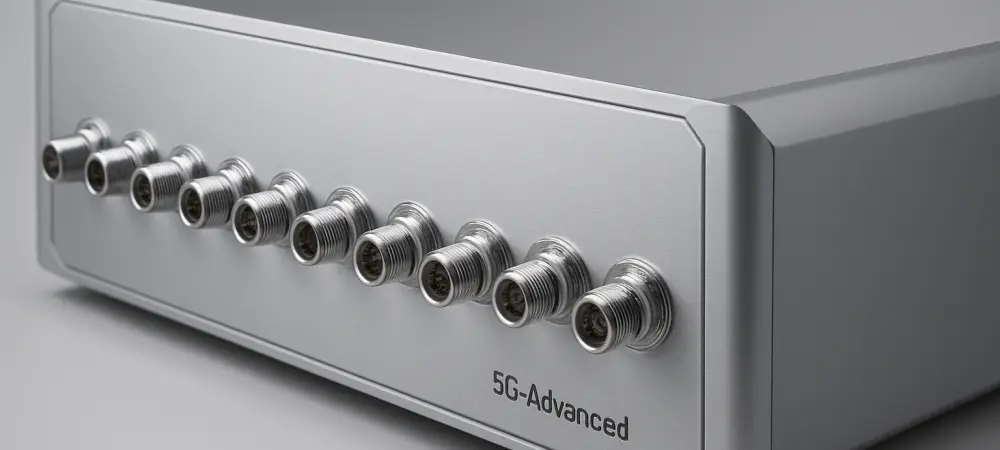
As operators add more frequency bands to their portfolios, the traditional approach of adding a new antenna for each band has become unsustainable due to wind-load limits, weight restrictions, and aesthetic regulations. The industry has responded by moving toward high-port-count arrays that integrate multiple frequency bands into a single, compact housing. These designs often feature 10 to 16 ports or more, allowing a single antenna to do the work that previously required three or four separate units.
Engineers are also utilizing advanced materials and aerodynamic shapes to reduce the physical impact of these systems. Compact radomes are designed to minimize the surface area exposed to the wind, which helps operators avoid the need for expensive structural reinforcements on aging towers. Moreover, the move toward integrated designs reduces the complexity of cabling and the number of connection points, which are common sources of signal loss and mechanical failure. By streamlining the physical footprint, telecommunications companies can deploy new capacity faster and with lower installation costs.
What Specific Technological Innovations Are Driving the Surge in Energy-Efficient Green Antennas?
Energy consumption has moved to the forefront of network planning as operators face rising electricity costs and increasingly strict environmental mandates. While the radio units themselves consume the most power, the passive antenna plays a crucial role in determining how much of that energy is successfully converted into a usable signal. Historically, a significant portion of radio frequency energy was lost as heat within the antenna structure due to internal resistance and inefficient feeding networks. To combat this, manufacturers are introducing green antennas that utilize high-efficiency designs and new manufacturing processes. Key innovations include the use of solderless joints and Signal Direct Injection Feeding (SDIF) technologies, which minimize the internal losses between the input port and the radiating elements. These improvements allow the same coverage to be achieved with lower power output from the radio, or conversely, a stronger signal for the same power input. Beyond internal electronics, the industry is also shifting toward the use of recyclable materials and environmentally friendly manufacturing techniques. These sustainable designs are becoming a baseline requirement in procurement, with shipments of high-efficiency antennas expected to grow significantly from 2026 through the end of the decade.
How Does the Integration of AI-Driven Automation Change the Functional Requirements of Cellular Antennas?
The move toward autonomous networks requires the physical layer to be measurable and controllable through software. In the past, a passive antenna was a dark asset, meaning the network management system had no real-time visibility into its physical orientation or performance parameters. To support AI-assisted Radio Access Networks (RAN), modern antennas are being equipped with digital sensing capabilities. These sensors allow the network to automatically detect and report engineering parameters such as tilt, azimuth, and precise geographic positioning, which are essential for optimizing network performance.
AI algorithms rely on accurate data to make decisions about interference management and traffic steering. If an antenna is physically misaligned due to wind or vibration, a digital antenna can alert the system immediately, allowing the AI to adjust the signal beam through software or signaling the need for maintenance. Some advanced systems now feature remote three-dimensional beam adjustment, which allows for precise tuning of the coverage area without requiring a technician to climb the tower. This level of digitalization bridges the gap between static hardware and dynamic software, creating a more responsive and resilient network.
Why Is the Vendor Market Consolidating Toward Companies That Prioritize Integrated Site Solutions?
The technical complexity of 5G-Advanced and the need for high-efficiency components have raised the barrier to entry for antenna manufacturers. Operators are moving away from treating antennas as commodities and are instead seeking long-term partners who can provide integrated solutions that solve site-level problems. This shift favors vendors with significant Research and Development (R&D) budgets who can innovate across the entire radio frequency chain. As a result, the market share is increasingly concentrated among a few global leaders who can demonstrate tangible improvements in energy savings and signal purity.
Competitive dynamics are now defined by proprietary technologies that offer a clear performance advantage. For instance, innovations that allow for better side-lobe suppression or higher front-to-back ratios directly impact a network operator’s bottom line by reducing the number of sites needed to cover a given area. Furthermore, vendors who can integrate passive elements with active components or provide sophisticated digital twins for network planning are gaining a significant edge. This trend toward high-value, specialized infrastructure is reshaping the vendor landscape, making technical excellence and site-level integration the primary drivers of commercial success.
Summary or Recap
The evolution of passive antennas represents a fundamental shift in how mobile networks are built and managed. These components have transitioned from simple hardware to strategic assets that enable high-capacity 5G-Advanced services and energy-efficient operations. Key takeaways include the importance of high-port-count arrays in overcoming site constraints and the critical role of digital sensors in facilitating AI-driven automation. Additionally, the focus on sustainable design and low-loss feeding networks highlights a broader industry commitment to reducing the environmental footprint of telecommunications. As network complexity continues to grow, the ability to integrate hardware performance with software intelligence remains the defining factor for success.
Conclusion or Final Thoughts
The transformation of antenna technology provided a clear roadmap for the future of mobile infrastructure, where physical assets and digital intelligence converged. Operators recognized that the path toward 2030 required a departure from traditional deployment models in favor of more precise and sustainable engineering. This shift encouraged the industry to treat the antenna not as a static end-point but as a dynamic participant in the network ecosystem. By adopting these advanced systems, telecommunications providers strengthened their ability to handle the next wave of data-intensive applications while managing the realities of tower space and energy consumption. The strategic modernization of the physical layer proved that even the most mature hardware can remain at the cutting edge of innovation.