

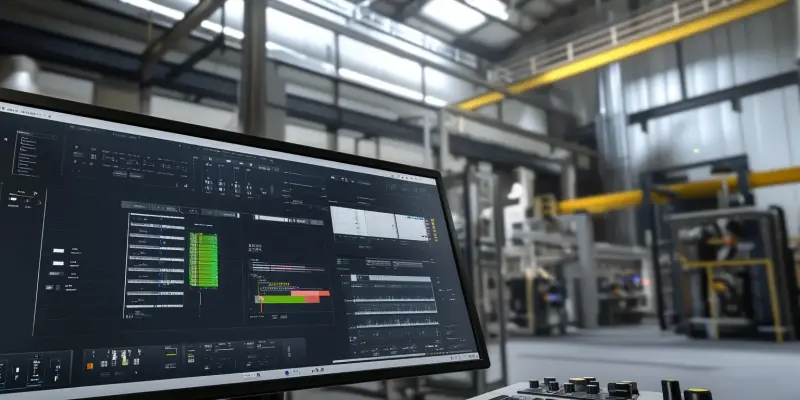
For a family-owned, employee-owned batch manufacturing company that specializes in producing architectural concrete products, managing production across multiple facilities presented significant challenges. Operating out of Springfield, Illinois, and Los Angeles, California, the company found that their Microsoft Dynamics 365 ERP system was inadequate for handling the complex demands of multi-facility batch production. This highlighted the need for a more sophisticated solution to streamline operations and improve efficiency across the board.
Challenges of Multi-Facility Operations
Production Cost Variations
A major obstacle the company faced was the varying production costs between their two locations. California’s higher labor rates, coupled with different packaging and overhead costs, created significant discrepancies in production expenses. This disparity in costs was difficult to manage, as the ERP system in use, Dynamics 365, did not support facility-specific configurations. One of the solutions considered was creating separate item codes for each facility, but this led to customer service difficulties and inconsistency in managing inventory.
As the company needed to account for these cost variations accurately, another approach involved using a single item code while manually adjusting production orders for each facility. This method, however, was prone to errors and consumed a significant amount of time, further complicating the production management process. Manual adjustments not only led to mistakes but also hindered the overall efficiency of production planning and resource allocation.
Coordination of Production and Distribution
Another pressing challenge was coordinating production and distribution across multiple facilities. Dynamics 365’s material requirements planning (MRP) module lacked the capability to handle facility-specific configurations, making it difficult to optimize production and inventory levels based on location-specific demand. Without the ability to tailor production plans to each facility’s unique requirements, the company experienced inefficiencies in logistics and distribution.
This coordination issue was exacerbated by the need for optimized inventory transfers and accurate sales forecasting. The inability to effectively synchronize production with sales demand and inventory levels at each facility led to delays and increased operational costs. These complications underscored the necessity for a more integrated solution that could seamlessly manage the complexities of multi-facility operations.
The Vicinity Software Solution
Customized Multi-Facility Production Configurations
Vicinity Software offered a comprehensive solution tailored specifically for batch manufacturers with multi-facility operations. By allowing for facility-specific production configurations, it addressed the core issues the company faced with Dynamics 365. This eliminated the need for duplicate item codes or manual adjustments, ensuring that production orders were accurate and efficiently managed. The software enabled the integration of sales locations with production facilities, allowing MRP functionalities to recommend production and packaging based on real-time sales demand.
The customized solution also provided enhanced capabilities for optimized inventory transfers, improving the synchronization of production and distribution processes. With Vicinity Software, the company could better align inventory levels with production schedules, reducing delays and improving overall efficiency. This level of integration facilitated more accurate sales forecasting, enabling the company to better plan and schedule production activities.
Scalability and Improved Cost Tracking
In addition to solving immediate operational challenges, Vicinity Software’s capabilities also offered long-term benefits for scalability and cost management. The software’s enhanced MRP planning suggested optimal production locations and inventory transfer times, enabling the company to make informed decisions based on precise data. By improving cost tracking for labor, packaging, and overhead, the company could conduct accurate cost comparisons between facilities, guiding strategic decision-making for resource allocation and expansion.
The improved forecasting and inventory management provided by Vicinity Software ensured that the company could scale its operations effectively without encountering the hurdles previously experienced. This adaptability was crucial for future growth, allowing the company to expand its production capabilities while maintaining cost efficiency and operational effectiveness.
Lessons and Implications for Batch Manufacturers
Importance of Robust Production Planning Systems
The company’s experience underscores the critical importance of having a robust, flexible production planning system for batch manufacturers. Systems that require constant manual intervention and lack advanced configuration capabilities lead to inefficiencies, errors, and operational headaches, particularly when scaling up operations. Early investment in scalable solutions like Vicinity Software can prevent these issues and ensure a smoother transition as the company grows.
Vicinity Software’s integration with Dynamics 365 enabled the company to streamline multi-facility production planning, optimize costs, and prepare for scalable growth. Collaboration on refining processes allowed the company to unlock further efficiencies and improve overall productivity. This case illustrates the significant advantages that advanced production planning solutions can offer to batch manufacturers.
Transforming Challenges into Operational Success
A family-owned, employee-owned batch manufacturing company that specializes in architectural concrete products faced substantial challenges in managing production across multiple facilities. With operations based in Springfield, Illinois, and Los Angeles, California, the company quickly discovered that their current Microsoft Dynamics 365 ERP system was inadequate for the complicated needs of multi-facility batch production. The limitations of their existing system made it clear that they required a more advanced solution to streamline their operations, ensure efficiency, and enhance overall productivity. This realization highlighted the urgency for an upgraded system capable of meeting their unique production demands while accommodating the complexities of their business. By addressing these challenges head-on, the company aims to optimize workflow, improve coordination between multiple locations, and maintain a competitive edge in the market. Adopting a more sophisticated ERP solution will be crucial in achieving these goals and sustaining growth in the fast-paced manufacturing industry.