

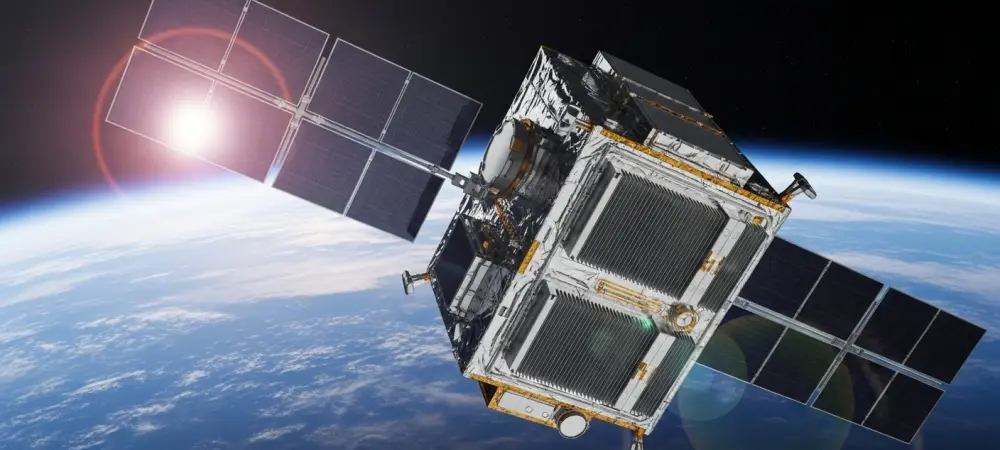
The global thirst for computational power has traditionally been quenched by sprawling land-based facilities, yet a new frontier is emerging far above the clouds to challenge this terrestrial dominance. While traditional data centers rely on stable ground and massive power grids, “Project Sunrise” by Blue Origin signals a pivot toward space-based processing. This shift seeks to leverage sun-synchronous orbits to provide a constant stream of energy and high-speed connectivity that bypasses geographical and political boundaries.
Evolution of Global Digital Infrastructure
Traditional terrestrial computing has long been the backbone of the digital age, characterized by massive warehouses filled with servers that demand immense cooling and stable electricity. These facilities are often limited by local regulations, land availability, and the environmental impact of their water consumption. However, the constraints of Earth-bound infrastructure are driving a move toward orbital solutions that promise a more liberated operational environment. Key industry players are now racing to colonize the vacuum of space with silicon. Blue Origin is leading with its Project Sunrise, utilizing TeraWave optical links to create a mesh of orbiting processors. Meanwhile, SpaceX is integrating data centers directly into its Starlink constellation, and Nvidia has developed space-optimized modules for its Vera Rubin platform. Startups like Axiom Space and Starcloud have already begun testing hardware like the Nvidia #00 in orbit, proving that the vacuum is no longer just for communication, but for high-intensity compute.
Technical and Operational Performance Metrics
Communication Bandwidth and Connectivity Solutions
Connectivity in orbit relies on cutting-edge photonics rather than traditional subsea cables. Blue Origin’s TeraWave technology aims for a staggering 6Tbps capacity, facilitating rapid data transfer between satellite nodes. In contrast, SpaceX utilizes high-capacity laser links to ensure its Starlink-integrated centers maintain low latency across the globe. These optical solutions provide a level of independence from terrestrial fiber networks, allowing for high-speed access even in the most remote corners of the planet.
Energy Efficiency and Scalability
The primary advantage of orbital facilities is the abundance of solar energy. Satellites in sun-synchronous orbits can harvest sunlight almost continuously, avoiding the grid dependency and carbon footprint associated with Earth-based power. Furthermore, the vacuum of space provides a natural heat sink, potentially simplifying the complex cooling systems that plague terrestrial hyperscale facilities. Scaling also becomes a matter of launch frequency; Project Sunrise alone plans for 51,600 satellites to create a massive, distributed network.
Cost Structures and Economic Feasibility
Economic viability remains a point of intense debate between the two environments. Blue Origin suggests that by eliminating land acquisition costs and navigating around terrestrial regulatory hurdles, the long-term marginal cost of compute will drop. Nevertheless, the initial capital expenditure for launching tens of thousands of satellites is astronomical compared to building a ground-based facility. Terrestrial centers benefit from established supply chains and easier access to physical maintenance, which keeps upfront risks lower for most enterprises.
Strategic Challenges and Technical Obstacles
The harshness of the space environment presents significant hurdles for sensitive hardware. Radiation and extreme temperature swings can degrade chips like the Nvidia Vera Rubin modules much faster than they would wear out on Earth. Maintenance is virtually impossible once a unit is in orbit, making hardware cycles a permanent commitment rather than a simple upgrade. This “launch and forget” reality contrasts sharply with the modular, repairable nature of land-based server racks. Skepticism from industry titans like Sam Altman highlights the perceived “insanity” of these costs, with some analysts labeling the trend as “AI snake oil.” Beyond the economics, the physical management of orbital traffic is a growing concern. Navigating FCC filings and avoiding the creation of orbital debris requires a level of diplomatic and technical coordination that terrestrial builders rarely have to consider.
Final Assessment: Choosing the Ideal Computing Environment
Organizations had to weigh the reliability of established ground-based systems against the borderless potential of the stars. Terrestrial data centers remained the standard for latency-sensitive AI training where physical security and low-cost maintenance were paramount. Conversely, orbital platforms like those proposed by SpaceX and Blue Origin offered a unique solution for global edge processing and bypassing regional power grid limitations.
The transition toward a hybrid infrastructure model suggested that the future of data would not be confined to a single environment. Decisions shifted toward a balanced approach, utilizing the stability of the Earth for bulk storage and the agility of orbit for distributed connectivity. Stakeholders focused on developing robust radiation-shielding and autonomous repair technologies to ensure that the leap into space-based computing resulted in a sustainable digital ecosystem.