

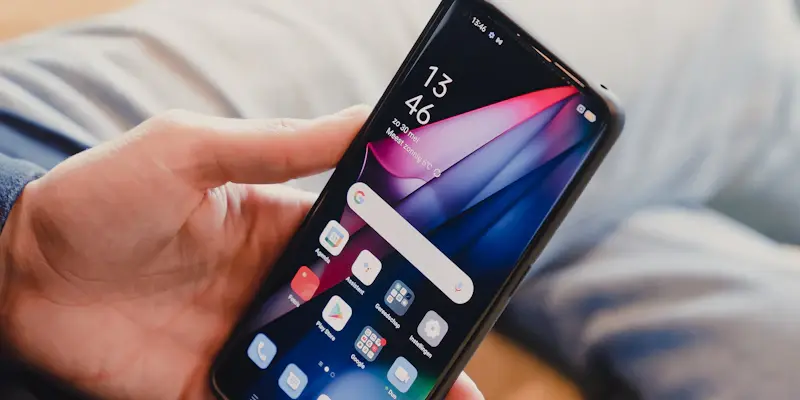
As the highly anticipated launch of the Oppo Find X8 Ultra approaches in China next month, early details are generating significant buzz among tech enthusiasts. Oppo executive Zhou Yibao has revealed that the Find X8 Ultra is poised to surpass both its predecessor, the Find X8 Pro, and major competitors like the Xiaomi 15 Ultra, particularly in terms of battery capacity and camera capabilities. This new handset promises features that could establish it as a frontrunner in the competitive smartphone market.
Unprecedented Battery Life and Charging Capabilities
One of the standout features of the Oppo Find X8 Ultra is its impressive battery capacity. While the Xiaomi 15 Ultra houses a formidable 6,000 mAh battery, the Find X8 Ultra ups the ante with a battery larger than 6,000 mAh, significantly exceeding the Find X8 Pro’s 5,910 mAh battery. This enhancement ensures prolonged device usage, catering to users who demand longer-lasting battery life for both everyday tasks and intensive applications.
In addition to its substantial battery, the Find X8 Ultra boasts remarkable charging capabilities. The device supports 100 W wired charging, a feature that promises rapid recharging times, minimizing downtime for users. Furthermore, the phone supports 80 W wireless charging, far surpassing the Galaxy S25 Ultra’s 15 W wireless charging. This comprehensive suite of charging options ensures that users can quickly and conveniently power up their devices regardless of their charging preferences.
Cutting-Edge Camera Specifications
The Oppo Find X8 Ultra is not only making waves with its battery features but also with its advanced camera functionalities. Foremost among these is the inclusion of 3x and 6x optical telephoto lenses, providing users with the ability to capture high-quality images from considerable distances without sacrificing clarity. Additionally, the device’s camera system incorporates telephoto macro capabilities, allowing for detailed close-up shots that are typically challenging for standard smartphone cameras.
These camera enhancements highlight Oppo’s commitment to delivering professional-grade photography tools within a smartphone framework. With the addition of a 2K display to amplify visual experiences and a 3D ultrasonic fingerprint scanner to enhance security, the Find X8 Ultra’s array of features underscores its potential to redefine user expectations and elevate the overall smartphone experience.
Impact on the Smartphone Market
As the eagerly awaited launch of the Oppo Find X8 Ultra in China draws near next month, initial details are stirring a lot of excitement among tech aficionados. Oppo’s executive, Zhou Yibao, has disclosed that the Find X8 Ultra is set to outdo not only its predecessor, the Find X8 Pro, but also major rivals like the Xiaomi 15 Ultra. Especially noteworthy are its advancements in battery capacity and camera technology, which are expected to be key selling points. With these features, the new smartphone could firmly position itself as a leader in the fiercely competitive smartphone industry. Tech industry observers and consumers alike are watching closely, anticipating that the Oppo Find X8 Ultra will bring innovative advancements that could shake up the market. The combination of superior battery life and cutting-edge camera capabilities, along with likely improvements in design, performance, and user experience, promises to make this handset a frontrunner in the next generation of smartphones.