

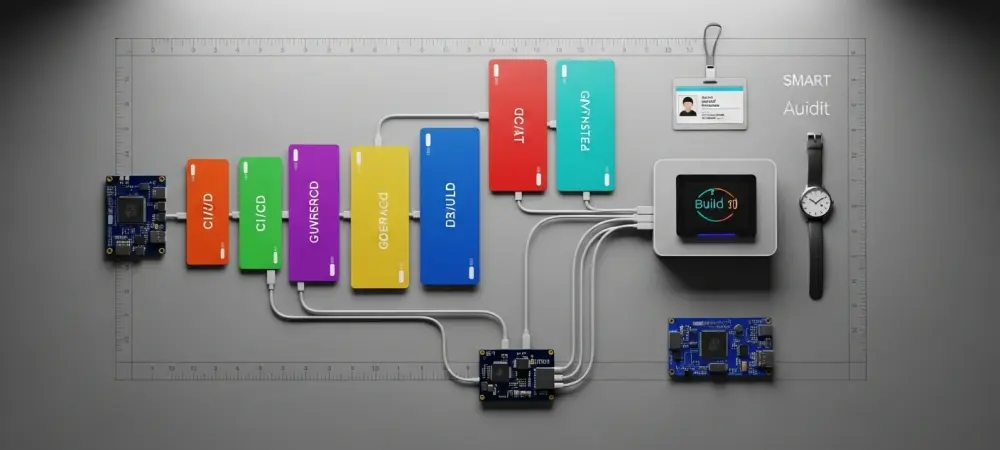
Setting the Stage: Why Orchestrated Agents Matter
Backlogs swelled, pull requests piled up, and developers maxed out at a handful of concurrent AI chat sessions while still babysitting builds and rebases, exposing a ceiling that brute-force coding speed alone could not break. The friction was not in typing faster but in shepherding work through the messy middle—triage, branching, CI failures, retries, and reviews.Symphony, an open specification from OpenAI, squarely targets that gap by turning the issue tracker into a control plane for autonomous and semi-autonomous coding agents.Rather than treating AI as a companion in an editor, it treats agents as first-class actors in delivery pipelines, scheduled and governed by tickets, policies, and CI signals. This reframing matters because throughput in modern engineering hinges on coordination overhead more than on raw code generation.By binding agents to tracker artifacts and CI/CD states, Symphony aims to cut context switching and shorten feedback loops. Early claims of up to 500% more shipped pull requests were eye-catching, but the deeper story is the operating model: tickets as units of work and policy, agents as continuous services, and governance woven through the same tools humans already use.
Deep Dive: How Symphony Works
Control Plane From Issue Trackers
Symphony treats issues as the canonical contract for work.A ticket declares scope, acceptance criteria, and priority; the orchestration layer translates those into agent tasks, runtime permissions, and state transitions.Intake flows map to queueing and scheduling logic, letting policy determine which agent acts, what repositories it can touch, and when handoffs to humans occur. This design externalizes “session memory” into durable tracker state, so progress survives restarts and ownership changes.
Crucially, binding work to tickets creates a natural audit spine.Comments, labels, and status changes become machine-readable signals that guide retries and stop conditions. Compared with assistant-centric tools, this flips authority: the tracker, not the chat, is the source of truth.
Workspace Isolation and Branch Hygiene
Per-issue workspaces give each change a contained blast radius.Symphony prescribes ephemeral branches, automatic creation from a clean base, and frequent rebases to reduce drift. When conflicts arise, agents attempt structured merges and surface diffs back to the ticket with rationale, enabling reviewers to see not only what changed but why a particular resolution was chosen.
This approach reduces the “merge Friday” crunch that plagues teams using ad hoc automation. Isolation also improves reproducibility, allowing failed attempts to be replayed with fixed seeds or updated dependencies, which is indispensable for debugging agent behavior.
CI/CD Stewardship and PR Progression
Agents observe pipeline events—builds, tests, linters—and react.A failed test triggers targeted edits or dependency pins; a flaky step yields a retry with backoff; a green run promotes the pull request to the next gate.Status reconciliation keeps the truth synchronized across the tracker, VCS, and CI, so humans do not chase stale states.
The impact goes beyond convenience. By automating the “boring but brittle” glue work, Symphony compresses the time from code creation to a reviewable PR.However, it also changes the failure profile: systemic misconfiguration can create fast, wrong loops. Guardrails around max retries, risk tags, and required reviewers therefore become non-negotiable.
Resilience, Session Governance, and Scale
Traditional interactive sessions stall when attention fragments. Symphony codifies keepalives, health checks, and restart policies so an agent that hangs gets recycled without losing context.Work-in-progress, references to failing checks, and planned next steps are persisted in the ticket, allowing another agent—or a human—to resume cleanly. This is the differentiator versus editor-bound copilots or one-off agent runners.Symphony scales supervision by moving it from a person’s head to the system’s rules, which is how throughput lifts without hiring a fleet of babysitters.
Policy, Identity, and Auditability
The specification foregrounds identity and policy: service accounts map to roles; secrets and repository scopes are least-privilege; approvals are staged by risk class.Every action—branch creation, file edits, CI reconfigurations—lands an audit event.These hooks integrate with existing compliance programs rather than inventing a parallel universe. Compared with agent frameworks that emphasize planning or tool-use graphs, Symphony’s advantage is governance-in-place.It meets enterprises where they already manage change, which lowers adoption cost and reduces the chance of a shadow SDLC.
Market Fit, Differentiation, and Limits
Where Symphony fits today is work with crisp acceptance criteria and deterministic validation.Refactors, dependency upgrades, license headers, new tests for known gaps, and documentation edits benefit from isolated branches and CI-aware retries.Platform teams can point it at repo hygiene and boilerplate propagation, treating it like a programmable janitor that never tires. Against alternatives, Symphony’s uniqueness is not model prowess but orchestration discipline.Many tools can propose code; fewer can persist intent, arbitrate retries, and prove who did what, when, and under which policy.Without strong ticket hygiene and CI rigor, the system merely accelerates rework.
Performance Signals and Their Meaning
The reported 5x rise in shipped PRs signals reduced waiting, not necessarily better outcomes.For users, this translates to more, smaller changes ready for review, which tends to lower risk per deploy. For leaders, it shifts the bottleneck to reviewers and release managers; throughput then depends on how quickly teams can validate intent and absorb change.
The more instructive metrics are post-merge.Defect escape rates and rollback frequency indicate whether agents optimize for test suites rather than real behavior.Reviewer queue times expose human-in-the-loop friction.Developer sentiment around cognitive load shows whether orchestration actually frees attention or simply moves work to a different inbox.
Risks, Trade-Offs, and Governance Realities
Security and compliance remain the make-or-break.Autonomy without identity integration courts policy drift; coarse permissions expand blast radius; thin audit trails invite incident ambiguity. There is also a cultural cost: if agents overtake entry-level implementation, organizations must retool mentorship so junior engineers still learn by shipping.
Another trade-off is economic. Lower perceived cost per change encourages finer granularity, which improves safety but adds operational overhead if environments and pipelines are not elastic.Symphony works best where environments spin cheaply, CI scales horizontally, and change advisory processes adapt to risk-based gates rather than fixed schedules.
Verdict and Next Steps
Symphony evaluated as a technology and as an operating model looked credible, distinct, and timely. It turned AI from a chat companion into governed infrastructure by anchoring agency in issue trackers, CI events, and auditable policies.The gains implied a shift in bottlenecks—from coding to review and release—which suggested that success depended on ticket quality, modern CI/CD, and explicit autonomy boundaries. For teams willing to harden identity maps, write measurable acceptance criteria, and adopt outcome-centric metrics, Symphony offered a pragmatic route to faster, safer iteration.The near-term move would have been piloting high-signal use cases, instrumenting post-merge quality, and templating policies per risk class, with the longer arc aimed at a standardized control plane that treated agents as accountable coworkers rather than clever tabs in an editor.