

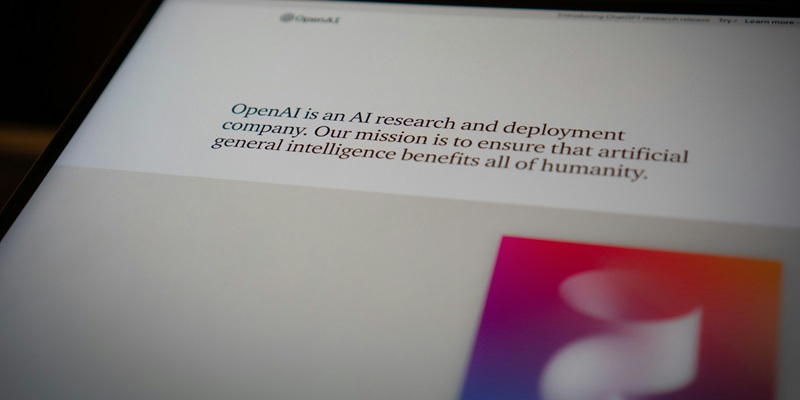
OpenAI, a leading AI research and deployment company, recently announced a series of updates designed to empower developers with advanced AI capabilities while prioritizing affordability and content moderation. From upgraded text-embedding models to a revamped GPT-3.5 Turbo and improved content moderation capabilities, OpenAI is dedicated to pushing the boundaries of AI innovation while ensuring responsible and safe AI services.
Upgraded Text-Embedding Models: Achieving New Heights of Performance
OpenAI introduces two powerful text-embedding models: text-embedding-3-small and text-embedding-3-large. These models offer substantially improved performance compared to their predecessors. Notably, the text-embedding-3-large model has achieved remarkable benchmark scores, showcasing OpenAI’s dedication to delivering cutting-edge language models to developers.
Lower Prices and Cost Reduction with text-embedding-3-small
In an effort to make AI more accessible, OpenAI has reduced the price per 1,000 tokens for the text-embedding-3-small model by 5 times compared to the previous iteration. This substantial price drop enables developers to take advantage of the potential of text-embedding models at a more affordable rate. Additionally, developers can now shorten the length of embeddings to further lower costs without compromising accuracy, offering flexibility and cost-effectiveness for AI projects.
Upcoming Release: GPT-3.5 Turbo with Enhanced Affordability
OpenAI plans to roll out an updated version of the highly popular GPT-3.5 Turbo model. With this release, OpenAI aims to further drive adoption by reducing the pricing by 50% for input tokens and 25% for output tokens. By making advanced language models more accessible and cost-efficient, OpenAI encourages developers to explore the full potential of AI in their projects.
A Sneak Peek: GPT-4 Turbo Preview (Version gpt-4-0125-preview)
Already garnering considerable attention, the GPT-4 Turbo preview has seen over 70% of requests transitioning to the model. With notable improvements in code generation and other essential tasks, developers can expect enhanced performance and reliability from this cutting-edge model. OpenAI continues to refine and innovate with each iteration, ensuring that developers can harness the power of AI effectively.
Advanced Content Moderation with text-moderation-007
OpenAI recognizes the importance of responsible content moderation and introduces text-moderation-007, a more advanced content moderation model. This new model significantly enhances the accuracy in identifying potentially harmful text compared to previous iterations. OpenAI’s commitment to safety measures ensures developers can integrate AI into their platforms responsibly, safeguarding their users.
Improved Control and Visibility with API Keys and Usage Metrics
OpenAI addresses the needs of developers by providing increased control and visibility into API keys and usage metrics. Developers now have the ability to assign permissions on a per-key level, granting them greater flexibility and security. Additionally, the availability of usage metrics allows for better tracking and management of resource consumption, making it easier for developers to optimize their AI applications.
Future Platform Improvements: Catering to Larger Development Teams
OpenAI has ambitious plans to further improve its platform, catering to the needs of larger development teams. With a focus on scalability and collaboration, OpenAI aims to provide robust solutions that empower teams of various sizes to effectively leverage advanced AI capabilities. By fostering collaboration and accommodating diverse development requirements, OpenAI strives to become the go-to platform for AI innovation.
In conclusion, OpenAI’s latest updates bring forth a range of enhancements for developers. From upgraded text-embedding models to more affordable pricing, improved content moderation capabilities, and better control over API keys, OpenAI is committed to empowering developers with advanced AI capabilities, improved performance, and responsible usage. As OpenAI continues to innovate and refine its offerings, developers can expect a brighter future for AI development, where transformative applications become more accessible and secure than ever before.