

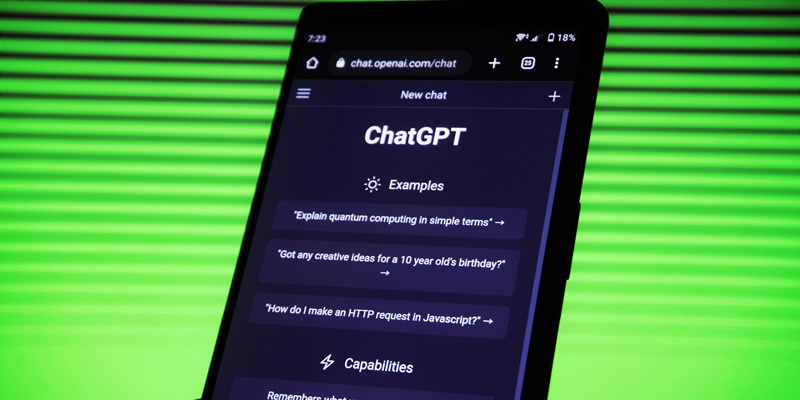
OpenAI continues to push the boundaries of artificial intelligence and text generation, offering developers and businesses new and improved features. In this article, we will explore the latest updates from OpenAI, including enhanced API key management, improved language models, the introduction of text embedding models, and reduced pricing for GPT-3.5 Turbo. These advancements hold immense potential for various industries, revolutionizing the way we interact with language-based AI systems.
Improved API Key Management and Permissions
OpenAI understands the importance of security and control over API usage. To address this, they have introduced improved API key management. Developers can now assign specific permissions to API keys, providing enhanced control over access and usage. This feature empowers developers to manage their API keys more efficiently and ensures the security of their AI systems.
Enhanced API Usage Dashboard and Export Function
To provide developers with deeper insights into API key utilization, OpenAI has introduced an API usage dashboard and export function. With this feature, developers can now monitor and analyze key metrics associated with their API keys, including usage patterns, request volume, and response times. The availability of such comprehensive data equips developers with the means to optimize their applications and make informed decisions based on accurate usage statistics.
Introduction of Two New Text Embedding Models
OpenAI has unveiled two new text embedding models designed to enhance machine learning tasks. The first model is smaller and more efficient, suitable for scenarios where computational resources are limited. The second model is larger and more powerful, offering superior performance in tasks that demand extensive language understanding. These text embedding models enable machine learning models to comprehend the relationship between content and perform tasks such as information retrieval and clustering with remarkable accuracy.
The Significance of Embeddings in Machine Learning Tasks
Embeddings play a vital role in machine learning, bridging the gap between raw data and meaningful representations. By transforming textual data into numerical vectors, embeddings allow AI models to understand the semantic relationships between words, sentences, or entire documents. OpenAI’s text embedding models expand the possibilities of natural language processing by enhancing the quality of language representations and enabling more sophisticated language-based AI applications.
Introduction of GPT-4 Turbo Preview Model
OpenAI’s highly anticipated GPT-4 Turbo preview model, gpt-4-0125-preview, brings forth significant advancements in language generation. This model demonstrates improved code generation capabilities, generating code that is more accurate and contextually appropriate. Furthermore, OpenAI has actively reduced instances of “laziness” in task completion, enhancing the model’s responsiveness and accuracy. The GPT-4 Turbo preview model promises to revolutionize code generation with its enhanced capabilities.
Introduction of GPT-4 Turbo Preview Model Alias
To streamline the transition to new GPT-4 Turbo preview versions, OpenAI has introduced the gpt-4-turbo-preview model alias. This alias allows users to automatically upgrade to the latest GPT-4 Turbo preview versions, ensuring they benefit from the most up-to-date and optimized AI models without any manual intervention. This seamless upgrade process enhances user experience and ensures access to the latest advancements in natural language processing.
Release of GPT-3.5 Turbo Model and Reduced Pricing
OpenAI has also released the GPT-3.5 Turbo model, gpt-3.5-turbo-0125, along with reduced pricing for its usage. This model offers an exceptional balance between cost-effectiveness and performance, making it an ideal choice for a wide range of language-based AI applications. The reduced pricing for GPT-3.5 Turbo broadens accessibility and encourages more developers and businesses to leverage the power of OpenAI’s language models.
OpenAI continues to innovate and refine its AI offerings, providing developers and businesses with enhanced tools to explore the potential of language-based AI applications. The improved API key management and usage dashboard offer better control and insight, while the introduction of new text embedding models allows for more sophisticated language-based tasks. With the GPT-4 Turbo preview model and GPT-3.5 Turbo model, OpenAI raises the bar in language generation and reduces costs, making AI more accessible and impactful. These updates signify OpenAI’s commitment to advancing the field of artificial intelligence and empowering developers to build intelligent and language-aware applications.