

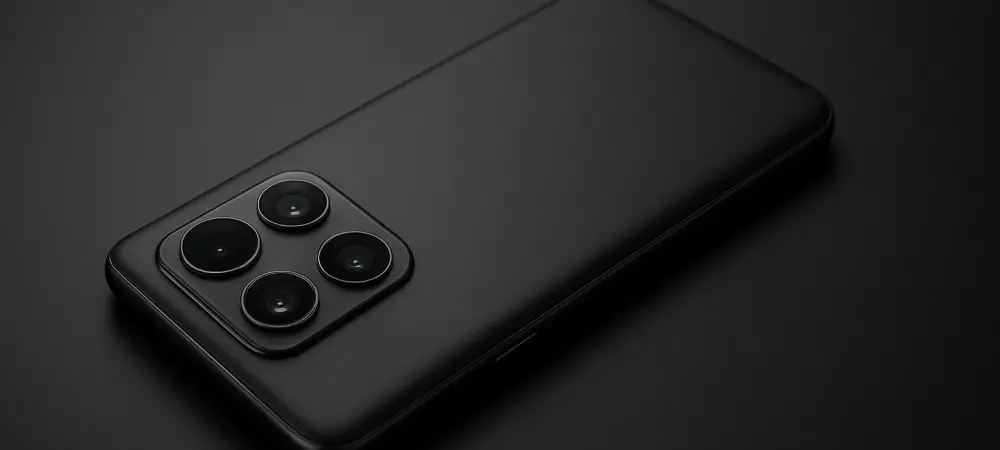
The relentless cycle of nightly smartphone charging has finally met its match as the latest mobile engineering breakthrough redefines what users can expect from a single battery cycle. The unveiling of this new flagship in China suggests that the days of constant tethering are numbered. With a staggering 9,000mAh battery capacity, the device does not just iterate on previous models; it effectively doubles the industry standard for power density in a premium chassis. This massive cell, paired with a dedicated hardware AI key, marks a pivot toward a hardware-first philosophy that prioritizes raw endurance and immediate accessibility.
Breaking the One-Day Battery Barrier
Engineering this massive power source required a departure from traditional lithium-ion structures toward high-density silicon-carbon technology. By maximizing energy volume without significantly increasing the weight, the device provides a three-day lifespan for moderate users. This shift ensures that the hardware sustains the heavy processing loads required by modern applications without thermal throttling.
Most smartphone owners have grown accustomed to the anxiety of a dying device during intensive tasks. This flagship addresses that pain point by pairing the massive battery with a highly efficient power management system. This combination allows for extended periods of high-refresh-rate use and background processing, effectively eliminating the need for mid-day top-ups.
The Evolution of the AI-Integrated Flagship
The smartphone market is currently navigating a transition from mobile-first to AI-first design. As consumers demand more local processing power for generative tasks, the industry has responded with specialized silicon and physical interface changes. The customizable AI key serves as a programmable gateway, allowing users to trigger specific workflows or voice assistants without unlocking the screen.
This launch reflects a broader trend where hardware must be engineered to sustain the energy demands of 2nm processing architectures. Instead of relying solely on cloud-based computation, the device emphasizes edge computing. This integration represents a move toward a more autonomous handheld experience that functions reliably regardless of network connectivity.
Engineering a Performance Powerhouse: Next-Gen Internals
The device distinguishes itself through hardware leaps that cater to both gamers and professional creators. Central to its performance is the 165Hz BOE X4 display, which features a specialized gaming mode capable of pushing the refresh rate to 185Hz. Under the hood, the device utilizes the Snapdragon 8 Elite Gen 6 Pro, ensuring that the Adreno 850 GPU can handle the most demanding mobile titles.
To support these capabilities, the device offers flexible storage tiers ranging from 256GB to a flagship 1TB model, paired with up to 16GB of high-speed RAM. This combination allows for seamless multitasking and provides enough bandwidth for high-resolution video editing. The thermal management system was also overhauled to dissipate heat from the massive battery and the high-frequency processor during peak performance.
Aesthetics and Imaging Excellence: The Official Reveal
While the internal specifications represent a radical shift, the design language maintains a refined version of the chunky camera aesthetic popularized by its predecessor. The flagship features a triple-lens system anchored by a 200-megapixel main sensor and a 50-megapixel periscope telephoto lens. This arrangement enables high-fidelity optical zoom that maintains clarity even in low-light environments.
The color options—Martian Masterpiece, Dark Forest, and Tomorrow’s Star—demonstrate a commitment to unique visual identities. The “Tomorrow’s Star” variant uses light-integrated panels to create a reactive rear surface that reveals specific coordinates. These aesthetics ensure the device stands out as a premium lifestyle product rather than just a utilitarian tool.
Navigating the Future: Mobile Interaction Through Physical Hardware
The true utility of this handset lies in its ability to bridge the gap between complex software and user-friendly physical controls. For those moving between home and office from 2026 to 2028, the charging framework is equally practical, utilizing a dual-cell 100W wired system. By combining these physical tools with rapid 50W wireless charging, the device provided a framework for constant uptime. The official release established a new standard for how manufacturers approached the intersection of energy and intelligence. Companies pivoted toward sustainable performance, recognizing that software intelligence meant little without the physical power to back it up. This shift represented a departure from slim, low-capacity designs, proving that consumers favored utility and endurance. The move signaled an era where the “all-day battery” was no longer the peak of achievement, but rather the baseline for the modern professional. Future iterations will likely focus on further miniaturizing these massive cells to maintain this endurance in even thinner profiles.