

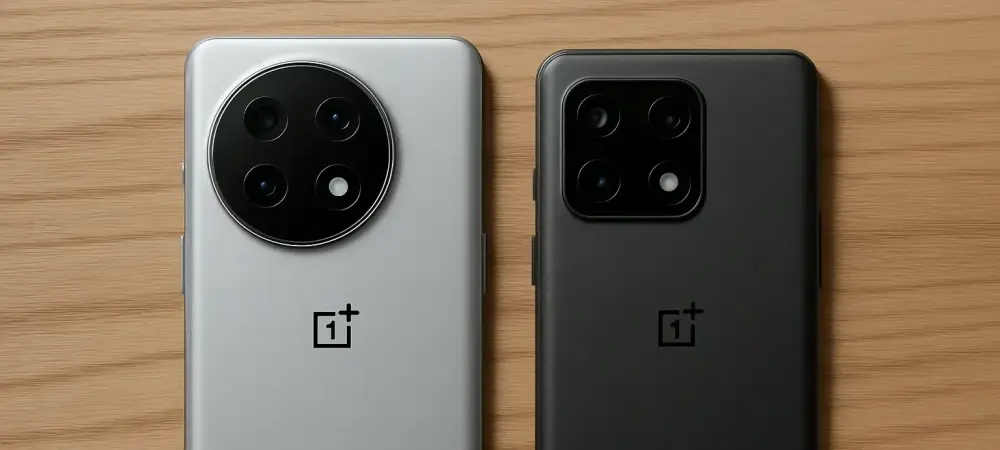
The relentless forward march of smartphone technology often presents consumers with a clear path of progression, yet the latest flagship offerings from OnePlus have created a fascinating and complex crossroads for potential buyers. The evolution from one generation to the next typically involves unambiguous upgrades across the board, but the transition from the OnePlus 13 to the OnePlus 15 is a study in strategic compromises. This review explores this generational leap, analyzing the key features, performance metrics, and the calculated trade-offs made between these two distinct models. The purpose is to provide a thorough understanding of each device’s capabilities, helping consumers decide if the newer model’s specific enhancements justify its significant price premium and surprising hardware concessions.
A Clash of Generations Setting the Stage
The choice between these two flagships introduces a complex decision for any consumer. While both devices occupy the premium tier, the OnePlus 15 presents a generational upgrade in certain areas while taking a notable step back in others, all while commanding a considerably higher price. The core conflict is clear: do the substantial enhancements in display fluidity, battery endurance, and raw processing power outweigh the OnePlus 13’s demonstrably superior camera hardware and faster charging capabilities?
This review delves into that central question, dissecting the nuanced differences that define each phone. With a price gap of approximately €200 to €250 in Europe and around INR 10,000 in India, the value proposition is under intense scrutiny. This is not simply a matter of choosing the “newest” model; it is a careful consideration of priorities, weighing future-proof performance against immediate photographic prowess and convenience.
A Head to Head Feature Comparison
Design and Ergonomics Form Meets Function
At a glance, the physical footprints of the OnePlus 15 and OnePlus 13 are remarkably similar, a direct consequence of their nearly identical screen sizes. However, a closer inspection reveals distinct design philosophies. The OnePlus 13 is marginally taller and thicker, contributing to its unique in-hand feel. Its design language favors softer, more organic lines, with a rounded, ovoid shape that feels comfortable and accommodating over long periods of use. This aesthetic is further enhanced by its signature eco-leather back panel, which provides a warm, tactile experience that sets it apart from a sea of glass slabs.
In contrast, the OnePlus 15 aligns itself with a more contemporary design trend, adopting a blockier and flatter construction. This gives the device a sharper, more modern silhouette. Depending on the colorway, its back is finished in either glass or a sophisticated glass-like, fiber-reinforced plastic, both of which offer a cool, premium touch. While the OnePlus 13 weighs in at 210 grams, the choice between its softer ergonomics and the crisp, modern lines of the OnePlus 15 becomes a matter of personal aesthetic and tactile preference.
Display A Battle of Refresh Rate vs Resolution
The display technology in these two phones presents a compelling trade-off that forces users to prioritize what they value most in a screen. For general daily use, the differences are subtle. Both feature vibrant LTPO AMOLED panels with support for HDR10+ and Dolby Vision, and their peak brightness levels are comparable, with the OnePlus 15 reaching a slightly higher 1364 nits versus the 1204 nits of the OnePlus 13. This ensures a fantastic media consumption experience on either device.
However, the specifications reveal a strategic divergence. The OnePlus 13 boasts a slightly larger 6.82-inch screen with a higher 1440×3168 resolution, yielding an impressively sharp pixel density of 510 ppi. The OnePlus 15, on the other hand, opts for a 6.78-inch FHD+ panel with a 1272×2772 resolution and a lower density of 450 ppi. This decision was not made in a vacuum; by reducing the resolution, OnePlus was able to pioneer a 165Hz refresh rate. This makes the OnePlus 15’s display exceptionally fluid for gaming and scrolling in supported applications, offering a tangible smoothness that the OnePlus 13 cannot match, even if most system navigation remains at 120Hz. The choice is between the crisp, detailed canvas of the 13 and the hyper-responsive motion of the 15.
Power and Performance The Next Gen Chipset Advantage
As expected from a newer generation, the OnePlus 15 delivers a significant leap in raw performance. It is powered by the cutting-edge Snapdragon 8 Elite Gen 5 chipset, a direct and powerful successor to the already formidable Snapdragon 8 Elite found inside the OnePlus 13. This new silicon offers more than just higher clock speeds; its improved architecture brings tangible benefits in both processing power and energy efficiency, setting a new standard for flagship performance.
These improvements are not merely theoretical. Benchmark testing quantifies the lead, with the OnePlus 15 outperforming its predecessor by nearly 20% in CPU-intensive tasks, 11% in GPU-bound graphics tests, and a more modest 4% in combined system scores. This performance gap translates to faster app loading times, smoother multitasking, and a greater capacity to handle demanding games and applications for years to come. While the OnePlus 13 remains a very powerful device, the OnePlus 15’s chipset provides a level of future-proofing and raw capability that is undeniably superior.
The Camera Conundrum A Strategic Downgrade
Perhaps the most controversial and widely discussed aspect of this comparison is the camera system. In a move that defies conventional generational upgrades, the OnePlus 15 features a clear and noticeable downgrade in camera hardware compared to its predecessor. The physical sensors for all three of its rear cameras—main, ultrawide, and telephoto—are smaller, and they are paired with lenses that have smaller apertures, which inherently limits their light-gathering capabilities. The most significant regression is found in the telephoto camera. The OnePlus 13 featured a large 1/1.95-inch sensor, which was key to its impressive zoom performance. The OnePlus 15, in stark contrast, employs a much smaller 1/2.76-inch sensor. While it does offer a slightly longer 3.5x optical zoom compared to the 3x on the 13, the hardware foundation is substantially weaker. Compounding this shift is the conspicuous absence of the Hasselblad branding and color science collaboration, a partnership that had become a hallmark of OnePlus flagships. This strategic pivot away from top-tier camera hardware raises serious questions about the OnePlus 15’s positioning as an all-around flagship.
Real World Experience and Daily Use
Photography and Videography Hardware vs Software
In practical, day-to-day use, the hardware differences between the two camera systems manifest in predictable ways. While both phones can capture excellent photos in bright daylight, with the main cameras producing largely comparable results, the OnePlus 13’s superior hardware gives it a distinct advantage as lighting conditions become more challenging. In low-light scenarios, the OnePlus 13 consistently produces images with better noise suppression and finer detail, a direct result of its larger sensor. Its telephoto camera is the standout performer, delivering sharper, more detailed, and higher-contrast photos at its native zoom length, maintaining clarity where the OnePlus 15 begins to struggle.
The story is similar with the ultrawide cameras, where the OnePlus 13 captures more intricate detail with less visible noise. However, the OnePlus 15’s newer image processing pipeline does earn it some points, often producing more pleasing and vibrant color reproduction straight out of the camera. In videography, the contest is closer. The OnePlus 15 captures slightly sharper ultrawide video, but the OnePlus 13’s primary camera records video with better definition. This creates a difficult choice for potential buyers: prioritize the consistent hardware advantage of the 13 or the refined software tuning of the 15.
Battery Life vs Charging Speed An Unconventional Split
The comparison of battery and charging presents a fascinating dichotomy, with each device securing a decisive victory in one category. The OnePlus 15 is the undisputed champion of endurance. This is achieved through a massive increase in battery capacity, moving from the already generous 6,000 mAh cell in the OnePlus 13 to an enormous 7,300 mAh battery. This upgrade is not just a number on a spec sheet; it translates into market-leading longevity, allowing the OnePlus 15 to comfortably outlast its predecessor regardless of usage patterns, easily pushing through two full days for many users.
Conversely, the OnePlus 13 retains a clear advantage in charging speed. Despite the OnePlus 15 being marketed with a higher 120W charging standard versus the 100W of the 13, real-world tests reveal a different outcome. The OnePlus 13 is significantly faster to charge in the crucial initial minutes, pulling ahead at both the 15- and 30-minute marks. While the OnePlus 15 eventually catches up, it takes a full 41 minutes for a complete charge, which is a noticeable six minutes slower than the OnePlus 13. This forces users to choose between all-day (and all-night) endurance and the convenience of a much quicker top-up.
Audio and Multimedia Immersion
When it comes to multimedia consumption, the audio experience is a critical component, and here the newer OnePlus 15 takes the lead. Although its stereo speakers are calibrated to be slightly quieter than those on the OnePlus 13, their overall tuning and quality are markedly superior. The sound profile of the OnePlus 15 is noticeably warmer, more balanced, and delivers more pronounced bass, creating a richer and more immersive listening experience for music, movies, and games.
In contrast, the audio output from the OnePlus 13, while louder, can sometimes sound harsh at higher volumes. Its tuning can overemphasize vocals and high-frequency sounds, causing them to “ring” in a way that can be fatiguing during extended listening sessions. For users who frequently rely on their phone’s speakers for entertainment, the more refined and pleasant audio signature of the OnePlus 15 provides a clear and definite upgrade.
Challenges and Key Compromises
Every device presents a unique set of compromises, and understanding them is key to making an informed decision. For the OnePlus 15, the primary challenges are its substantially higher price tag and the aforementioned, and undeniable, camera system downgrade. Potential buyers must be willing to pay a premium for its specific strengths while accepting that they are not getting the best photographic hardware that OnePlus can offer. This trade-off positions the phone for a specific type of power user who values performance and battery above all else. For the OnePlus 13, the limitations are tied to its age and future relevance. Its slightly older chipset, while still highly capable, will inevitably show its age sooner than the next-generation silicon in the 15. Furthermore, its software support window is shorter, concluding its major OS updates one year earlier. This forces prospective buyers to weigh the immediate benefits of its superior camera and lower price against the long-term advantages of the newer model’s performance and software longevity.
Future Outlook and Long Term Value
Looking toward the future, the long-term value of each device is shaped by its hardware and software trajectory. Both phones come with a generous commitment of four major OS updates and six years of security patches, which is excellent for longevity. However, their starting points differ. The OnePlus 13 will conclude its support cycle at Android 19, whereas the OnePlus 15, shipping with Android 16, is set to receive updates through Android 20.
Beyond the software version number, the more powerful Snapdragon 8 Elite Gen 5 chipset in the OnePlus 15 is better equipped to handle the increasingly demanding applications and OS features of the coming years. This raw performance headroom suggests that the OnePlus 15 will maintain a smoother, more responsive user experience for a longer period. While the OnePlus 13 offers better value today, the OnePlus 15 represents a slightly better long-term investment for those who plan to keep their device for many years.
Final Verdict Which OnePlus Flagship Reigns Supreme
Ultimately, neither phone emerges as the undisputed champion; instead, they cater to different priorities, making the final decision a personal one. The OnePlus 15 stands as the ideal choice for users who prioritize peak performance, a supremely fluid high-refresh-rate display, and, above all, class-leading battery life. Its newer chipset ensures it will remain fast and capable for years, and its well-tuned speakers enhance the multimedia experience. It is the phone for the power user and the mobile gamer who can look past its camera hardware concessions. In contrast, the OnePlus 13 remains an incredibly compelling and logical choice, particularly for those who value photography and fiscal prudence. Its superior camera hardware, especially in telephoto and low-light situations, offers a tangible advantage for shutterbugs. When combined with its faster charging speeds and significantly lower price point, it presents an outstanding value proposition. It is the pragmatic flagship for the user who wants a top-tier camera experience and exceptional all-around performance without paying the premium for the latest processor and battery innovations.