

Is the Global Redmi Note 15 Pro+ the New Mid-Range Champion?
The competitive mid-range smartphone market has become a battleground where flagship features are increasingly expected at a fraction of the cost, and the global release of the Redmi Note 15 Pro+ enters this arena with a bold and somewhat controversial strategy. This review critically examines the international variant, a device that diverges significantly from its Chinese counterpart to cater to a different set of priorities. The core mission is to determine if its impressive upgrades to the main camera and charging technology, paired with a premium build, are compelling enough to overlook its compromises and crown it the new segment leader.
At the heart of the evaluation is a simple question: do these carefully chosen enhancements justify the price tag and make the Redmi Note 15 Pro+ a smart investment? The analysis will move beyond specifications to explore how this unique combination of features performs in the real world. For consumers navigating a sea of options, understanding this phone’s specific strengths and intentional trade-offs is crucial to deciding whether it truly offers a flagship experience on a budget or if its concessions are too significant to ignore.
Unpacking the Specifications: A Tale of Two Versions
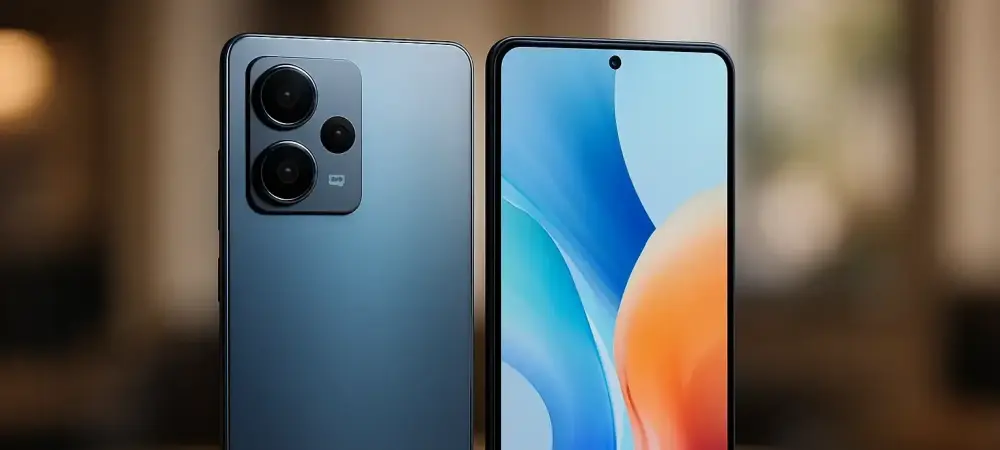
At its core, the global Redmi Note 15 Pro+ is powered by the capable Snapdragon 7s Gen 4 chipset and runs on Xiaomi’s streamlined HyperOS, ensuring a modern and efficient software experience. However, the true story begins with its display, a stunning 6.83-inch AMOLED panel that immediately commands attention. With a fluid 120Hz refresh rate, a sharp 2,772×1,280 resolution, and an astonishing 3,200-nit peak brightness for unparalleled outdoor visibility, it is a screen built for premium media consumption. Further elevating its flagship credentials is the inclusion of Gorilla Glass Victus 2, offering top-tier protection against drops and scratches.
The most significant divergence between the global and Chinese models lies in the camera and battery systems. The international version boasts a cutting-edge 200MP HPE primary camera designed to deliver exceptional detail and color, complete with 2x and 4x in-sensor zoom. This ambitious setup comes at the cost of the 50MP dedicated telephoto lens found on the Chinese model. A similar trade-off is seen in its power configuration; the global variant packs a slightly smaller 6,500 mAh battery but compensates with faster 100W wired charging and the added versatility of 22.5W reverse wired charging, allowing it to power other devices.
Beyond these core differences, the Redmi Note 15 Pro+ is packed with features typically reserved for more expensive devices. Its exceptional durability is underscored by extensive IP66/68/69/69K ratings, offering protection against dust, water, and even high-pressure jets. The audio experience is enhanced by Dolby Atmos-tuned dual speakers, while modern connectivity is covered with eSIM support. Finally, the inclusion of the Xiaomi Surge T1S Tuner promises improved signal stability, rounding out a remarkably well-equipped package.
Real-World Performance: Beyond the Spec Sheet
In day-to-day use, the Snapdragon 7s Gen 4 chipset proves to be a reliable engine, handling multitasking, social media, and streaming with ease. While not a top-tier gaming powerhouse, it delivers smooth performance in most popular titles, making for a dependable and responsive user experience. The camera system, however, is the main event. The 200MP sensor captures photos with impressive clarity and vibrant, accurate colors in good lighting. The in-sensor zoom is surprisingly effective at 2x, retaining a high degree of detail, though the 4x digital crop shows a more noticeable loss in quality, highlighting the absence of true optical zoom.
The 6,500 mAh battery confidently provides all-day power for typical users, easily lasting from morning to night. When it does need a boost, the 100W fast charging is a game-changer, replenishing the battery in a remarkably short time. The display is just as impressive in practice as it is on paper; its incredible brightness makes it perfectly usable even in direct sunlight, and the 120Hz refresh rate ensures that every scroll and animation is buttery smooth. Complementing the visual experience, the HyperOS interface feels clean and intuitive, the dual speakers produce rich and loud audio, and the Surge T1S Tuner helps maintain a stable connection in areas with weaker signal strength.
Strengths and Weaknesses: A Balanced View
The Redmi Note 15 Pro+ presents a compelling list of advantages that set it apart in its class. Its primary camera, a 200MP sensor, is an exceptional performer capable of capturing stunningly detailed images that rival more expensive phones. Furthermore, its 100W charging speed offers a level of convenience that is still rare in the mid-range market. The display is another clear highlight—its brightness, sharpness, and durability are undeniably top-tier. Finally, the extensive IP ratings for ruggedness provide a degree of peace of mind that few competitors can match.
However, the device is not without its significant drawbacks. The most glaring omission is the lack of a dedicated telephoto lens, a decision that severely limits its versatility for zoom photography and is a major compromise compared to its Chinese counterpart and other rivals. While the 6,500 mAh battery is large, it is a step down from the Chinese variant, which may disappoint users prioritizing maximum endurance. These trade-offs place the phone in a fiercely competitive price segment where discerning buyers will have to weigh its unique strengths against its very specific weaknesses.
The Final Verdict: An Impressive but Compromised Contender
This review’s findings concluded that the Redmi Note 15 Pro+ was a formidable upper-mid-range smartphone that excelled in several key areas. Its performance in primary photography, display quality, and charging speed established it as a premium contender. The device delivered a polished and powerful user experience, successfully blurring the lines between mid-range and flagship categories. Ultimately, the purchasing decision centered on a single, crucial trade-off: the high-resolution main sensor versus a dedicated telephoto lens. This choice defined the phone’s character, making it a specialized tool rather than an all-around champion. For users whose priorities aligned with its strengths, the phone was a clear and compelling “buy,” offering an outstanding package for its price. However, its primary compromise remained a significant factor that could not be overlooked.
Who Should Buy the Redmi Note 15 Pro+?
This phone is ideally suited for content creators and tech enthusiasts who value a versatile and high-quality primary camera for capturing stunning, detail-rich photos. Its brilliant display and fast-charging capabilities also make it a perfect companion for those who consume a lot of media on the go and appreciate the convenience of rapid power-ups. These users will find that the device’s strengths align perfectly with their daily needs, offering a near-flagship experience in the areas that matter most to them. In contrast, potential buyers who rely heavily on optical zoom for their photography—whether for capturing distant subjects, wildlife, or creating tightly framed portraits—should consider alternatives. The in-sensor zoom, while competent, is not a true substitute for a dedicated telephoto lens. Similarly, those seeking the absolute longest battery life might be better served by the Chinese variant or other competitors known for their endurance.
Prospective customers should carefully weigh the starting price of €499/£429 against this specific and somewhat polarizing feature set. Before committing, it is essential to compare the Redmi Note 15 Pro+ directly with its rivals, paying close attention to the camera capabilities. The decision to purchase this otherwise excellent phone rests almost entirely on whether you can live without true optical zoom.