

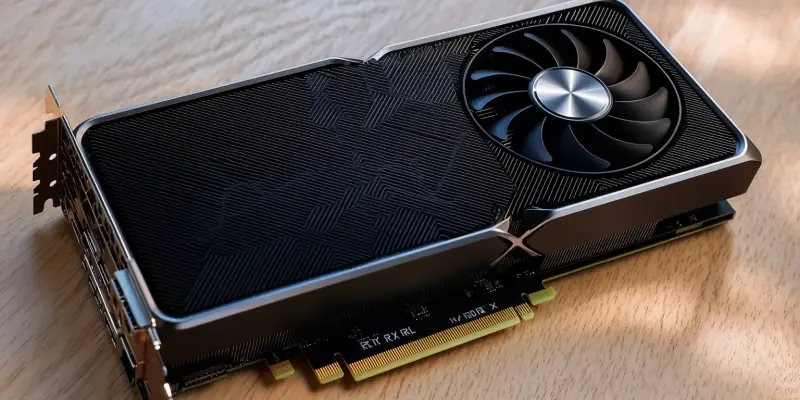
In an intriguing development for technology enthusiasts, NVIDIA’s GeForce RTX 50 “Blackwell” series laptop GPUs have surfaced in the PCI ID repository, hinting at the future of gaming and performance laptops. This new lineup includes the RTX 5090, 5080, 5070 Ti, 5060, and 5050 models, anticipated to push boundaries with advanced capabilities. Despite the appearance of new names, the precise specifications and full potential of these GPUs remain shrouded in a mix of confirmed details and speculative insights.
Integration of Ada Architecture
A Noteworthy Shift in Architecture
The PCI ID repository has revealed an interesting facet surrounding the new NVIDIA GPUs, most notably, the possible integration of the Ada architecture within these models. Although this shift has not been officially confirmed, the repository references the “AD108M” die for various Max-Q GPUs in the RTX 50 series. Historically designed for thin, energy-efficient gaming laptops, Max-Q GPUs balance performance with portability, contrary to full-spec GPUs that cater to high-performance gaming needs.
One peculiar observation is that the AD108M die does not have a counterpart in the existing Ada lineup, which only extends to the AD107 in the RTX 40 series. This unusual development indicates that the new AD108M might serve as a low-tier GPU for the RTX 5070 and other entry-level models. However, its exact standings and specifications remain ambiguous at this stage. This die has been listed alongside several high-performance models in both the Techpowerup database and the PCI ID repository, suggesting a strategic shift by NVIDIA in balancing performance across their product spectrum.
Delineation of Max-Q GPUs
Role of the AD108M Die in Max-Q Series
The table outlined in the article delineates four Max-Q RTX 50 series GPUs anticipated to utilize the AD108M die. These include the RTX 5090 Max-Q, RTX 5080 Max-Q, RTX 5070 Ti Max-Q, RTX 5070 Max-Q, RTX 5060 Max-Q, and RTX 5050 Max-Q models. Interestingly, the more powerful Max-Q versions like the RTX 5090 Max-Q and RTX 5080 Max-Q appear set to use the GB203M die, indicating they are modified, toned-down variants of their higher-end desktop counterparts.
This differentiation suggests NVIDIA’s aim to offer a diverse range of performance options tailored to the various segments of the laptop market. By repurposing higher-tier dies for less powerful laptops, NVIDIA can optimize production costs and boost product efficiency. Nevertheless, the rationale behind specifically employing the mysterious AD108M die for certain models is an aspect that raises questions. This choice underscores the tentative nature of the information and the strategic nuances that NVIDIA employs in the evolution of its GPU technology. Moreover, the specific role and capacity of the AD108M die require further elucidation from NVIDIA to provide a clearer picture of its positioning within the broader RTX 50 series.
Blackwell 2.0 and Further Speculations
Techpowerup’s database adds another layer of depth and intrigue by mentioning architecture labels like “Blackwell 2.0” for specific dies, including the GB206M, GB203M, and GB202. Additionally, it introduces new elements such as the GB102 and GB102GL, discreetly designated just as “Blackwell.” Despite the limited details, the distinction indicates potential advancements that the new version may offer, hinting at evolutions or optimizations in performance, efficiency, or both. However, the exact differences between Blackwell and Blackwell 2.0 remain speculative at best, pending further clarification from NVIDIA.
The intricate architecture labeling suggests strides in refining GPU technology to meet and exceed previous generations’ capabilities. While the technical community eagerly awaits concrete details, the anticipated enhancements indicate a shifting landscape in laptop GPU performance. As these new elements emerge, they promise a step forward in graphics processing, mirroring, or even surpassing the impact seen in previous transitions from one architecture to another. Furthermore, the forthcoming details will play a critical role in determining the specific technological direction that NVIDIA will lead within the competitive GPU domain.
Insights from Recent Data
Key Findings and Speculated Strategic Decisions
Summarizing the key findings, the article identifies an unexpected usage of the older Ada architecture in certain RTX 50 series GPUs. The potential for entry-level and lower-end Max-Q models to integrate the enigmatic AD108M die raises strategic questions about NVIDIA’s decision-making processes. This combination of confirmed and speculative details paints a picture of an evolving, adaptable technology landscape. It underscores a blend of innovation and practicality within NVIDIA’s development strategies.
Furthermore, the narrative’s reflective tone highlights the tentative nature of the current information. It also underscores the industry’s current state of flux, driven by continuous advancements and innovations. The need for more specific details about the differentiation between Blackwell versions and the precise function of the AD108M die remains paramount. As the tech community continues to analyze these updates, it is clear that NVIDIA’s new offering holds significant potential to redefine laptop GPU performance.
Conclusion and Future Expectations
In an exciting development for technology enthusiasts, NVIDIA’s GeForce RTX 50 “Blackwell” series laptop GPUs have emerged in the PCI ID database, indicating a significant leap for gaming and performance laptops. This upcoming lineup boasts models such as the RTX 5090, 5080, 5070 Ti, 5060, and 5050, all expected to push the boundaries of what we can expect in terms of advanced capabilities. While these new names have appeared, the exact specifications and full potential of these GPUs remain somewhat of a mystery, blending concrete facts with speculative information. Enthusiasts are eagerly anticipating these GPUs to possibly offer groundbreaking performance improvements in gaming and other high-demand applications. As the tech community hunts for more information, we can only imagine the possibilities that these new GPUs will bring. The details available so far suggest a promising future for laptop technology, moving toward even more powerful and efficient devices that cater to both gamers and performance-focused professionals.