

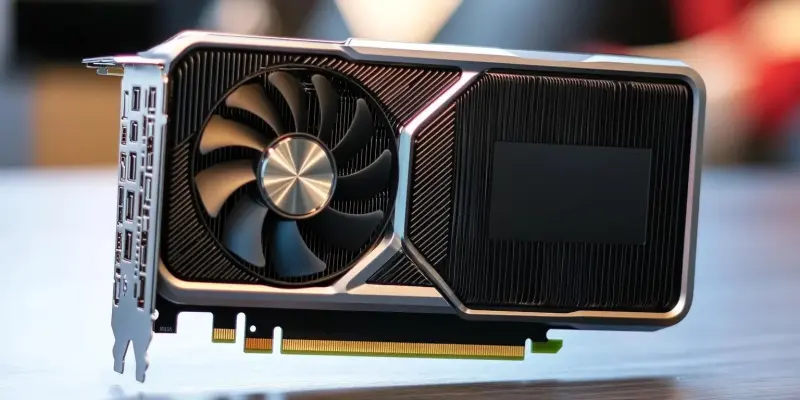
The recent buzz in the tech community revolves around Nvidia’s anticipated release of its RTX 5070 Ti graphics card, with a Finnish retailer, Proshop, listing a sale date of February 20. This announcement has ignited curiosity and excitement among technology enthusiasts and PC gamers who are hoping for an early upgrade in the new year. Proshop, known for sharing purported details about Nvidia’s graphics cards, has featured this date for various third-party RTX 5070 Ti models that it intends to sell. Unlike the RTX 5070 Ti, the standard RTX 5070 has not been associated with a specific launch date, leading to mounting speculation regarding its release timing and potential delay.
Observers are now considering the possibility of a staggered rollout of Nvidia’s mid-range graphics cards, following the upcoming release of the higher-end RTX 5090 and 5080 models, which are scheduled for a January 30 debut. This staggered approach may come as a surprise to some analysts and enthusiasts who had hoped for a shorter gap between the releases, particularly for those looking forward to an affordable yet powerful upgrade for their PCs. The anticipation is palpable, but in the absence of official confirmation from Nvidia, the exact timeline remains shrouded in uncertainty.
Speculations and Skepticism
Despite the excitement surrounding the potential February 20 release date for the RTX 5070 Ti, there is considerable skepticism about the retailer’s leak. Many believe this information may be based on outdated, inaccurate, or placeholder data, which is not uncommon in the industry. Retailers occasionally speculate or disclose partial dates without official confirmation from manufacturers, adding to the complexity of discerning fact from fiction. However, Nvidia has officially stated that the RTX 5070 Ti will arrive in February, adding a layer of credibility to the February 20 date. Yet, the lack of concrete evidence leaves room for doubt and further speculation.
Additionally, the absence of a specific launch date for the RTX 5070 has led to various interpretations, with some suggesting a later release date in February or even a potential push to early March. This aligns with rumors indicating a mid-to-late February debut for the RTX 5070 Ti and possibly an early March launch for the RTX 5070. It seems Nvidia might still be fine-tuning their release schedule, leading to an atmosphere of cautious optimism among enthusiasts and analysts who eagerly await official confirmation. The company’s final decisions will ultimately set the stage for how these mid-range graphics cards will enter the market.
Strategic Positioning Against Competitors
The timing of the RTX 5070 and RTX 5070 Ti releases is crucial for Nvidia as it strategically positions itself against AMD’s RX 9070 GPUs. A late February release for the RTX 5070, for example, is seen as beneficial in avoiding direct competition with AMD’s launch, thereby maximizing Nvidia’s market advantage. The tech giant’s maneuvers will be closely watched, as they aim to solidify their standing in the competitive landscape of high-performance graphics cards. The broader market context indicates that Nvidia is deeply aware of the implications of their timing choices and is likely planning their launches with strategic precision.
The industry is no stranger to rumors and tentative information, and Nvidia’s approach reflects a cautious optimism regarding the rumored February 20 launch. Analysts and enthusiasts must balance their hopes with the reality of Nvidia’s pending final decisions. The leaks and partial information available thus far paint a picture of a well-thought-out strategy that may prioritize market dynamics and competitive positioning over a rapid-fire release schedule. Should these speculations hold any merit, the tech community could witness a finely tuned rollout that not only aims to meet consumer expectations but also seeks to outmaneuver AMD’s offerings in the market.
Conclusion: Anticipation and Skepticism
The tech world is abuzz with talk about Nvidia’s upcoming RTX 5070 Ti graphics card. Proshop, a Finnish retailer, has listed a sale date of February 20, sparking interest and excitement among tech enthusiasts and gamers alike. Proshop, which has a history of leaking details about Nvidia’s products, has this date posted for various third-party RTX 5070 Ti models. Meanwhile, the standard RTX 5070 does not yet have a specified launch date, leading to speculation about its release and potential delays.
Observers are now considering the possibility of a staggered release strategy for Nvidia’s mid-range graphics cards. This could follow the anticipated January 30 debut of the higher-end RTX 5090 and 5080 models. The idea of a staggered schedule might surprise some analysts and fans, as they had hoped for a shorter gap between releases. Many are looking forward to an affordable yet powerful option to upgrade their PCs. The excitement is evident, but without official confirmation from Nvidia, the exact timeline remains uncertain, keeping everyone eagerly waiting for more news.