

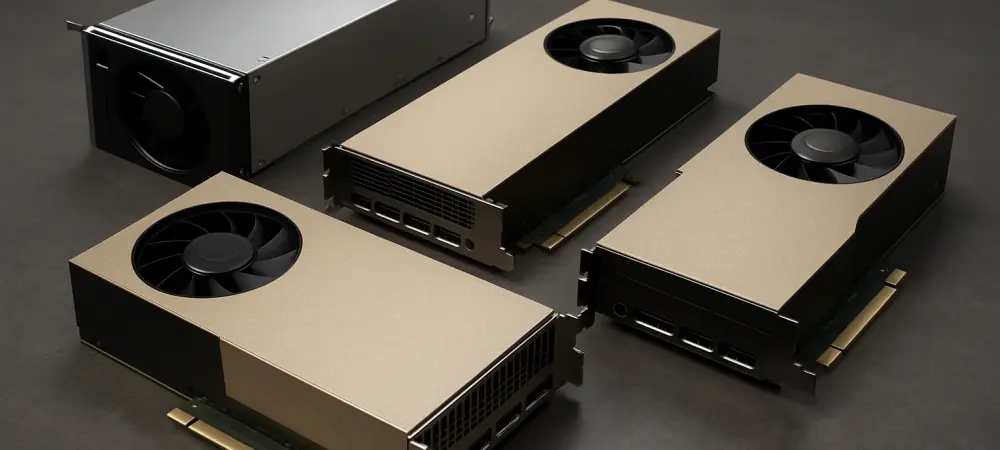
In a transformative leap for enterprise technology, Nvidia has introduced its RTX Pro 6000 Blackwell Server Edition GPUs, tailor-made for standard data centers, marking a significant shift in how businesses access cutting-edge AI capabilities. This strategic announcement underscores Nvidia’s commitment to democratizing high-performance computing, ensuring that organizations beyond the realm of tech giants can harness the power of advanced AI and accelerated workloads. By embedding these powerful GPUs into mainstream server solutions, Nvidia is not just addressing a market need but also redefining the landscape of enterprise infrastructure. The initiative promises to bridge the gap between hyperscale AI environments and the practical constraints of traditional businesses, offering a scalable path to modernization. This development is poised to reshape how companies approach digital transformation, making AI a tangible asset for operational efficiency and innovation across diverse industries.
Breaking Barriers with Scalable Server Integration
Nvidia’s latest move to integrate Blackwell GPUs into 2U form factor servers represents a pivotal step toward accessibility in enterprise environments. These servers are designed to fit seamlessly into standard data center racks, eliminating the need for costly or complex infrastructure overhauls. Such compatibility is a game-changer for businesses wary of disrupting existing setups while seeking to adopt advanced technologies. Collaborations with leading server vendors like Cisco, Dell Technologies, HPE, Lenovo, and Supermicro ensure that these solutions are not only powerful but also widely accessible. This partnership model facilitates a smoother transition for enterprises looking to upgrade, as it aligns with familiar procurement and deployment processes, reducing adoption hurdles significantly.
The focus on scalability further amplifies the impact of this initiative, catering to organizations of varying sizes and technical capacities. By prioritizing a form factor that matches conventional data center specifications, Nvidia addresses the practical limitations many businesses face, such as space and power constraints. This approach allows mid-tier companies to tap into AI-driven capabilities without the prohibitive costs associated with hyperscale setups. The result is a broader reach for cutting-edge technology, enabling a diverse range of enterprises to modernize their operations and compete in an increasingly digital marketplace. Nvidia’s strategy here signals a shift toward inclusivity in tech advancements.
Unmatched Performance for Enterprise Workloads
At the heart of Nvidia’s RTX Pro Servers lies a remarkable performance boost, engineered to handle an extensive range of enterprise tasks with unprecedented efficiency. From AI training and inferencing to virtual desktop infrastructure and graphics rendering, these servers are built to manage complex workloads that are critical to modern business operations. Nvidia asserts that these systems deliver up to 45 times the performance of traditional CPU-based setups, a claim that highlights the transformative potential for productivity. This leap in capability means tasks that once took hours can now be completed in minutes, driving faster decision-making and innovation across sectors.
Beyond raw speed, the energy efficiency of these Blackwell-powered servers stands out as a key advantage for cost-conscious enterprises. With a reported 18 times better energy efficiency compared to conventional systems, businesses can significantly cut operational expenses while reducing their environmental footprint. This efficiency also translates into a reduced need for extensive server infrastructure, allowing companies to consolidate hundreds of CPU-only units into just a handful of GPU-driven machines. Such consolidation not only saves on space but also simplifies maintenance and management, offering a practical solution for organizations aiming to optimize their IT resources without sacrificing performance.
Capturing the Mid-Sized Enterprise Market
Nvidia’s strategic focus on mid-sized enterprises—those with around 5,000 employees and 1,000 servers—demonstrates a keen understanding of an underserved market segment hungry for AI solutions. These businesses, often operating in industries like manufacturing and supply chains, stand to gain immensely from AI-driven operational improvements but have historically been priced out of high-end infrastructure. Analyst Matt Kimball from Moor Insights & Strategy aptly describes this initiative as “Blackwell for the masses,” capturing Nvidia’s intent to make powerful technology accessible to a wider audience. This targeted approach positions Nvidia to meet a growing demand for practical AI tools in everyday business contexts.
What sets Nvidia apart in this space is the relative lack of direct competition, particularly from rivals like AMD, who are more focused on high-end GPU markets. This gap allows Nvidia to establish a dominant presence among mid-tier enterprises seeking to integrate AI without the complexities of hyperscale systems. By addressing the specific needs of this demographic, such as cost-effective scalability and ease of integration, Nvidia secures a first-mover advantage in a segment poised for rapid growth. The result is a strengthened foothold in the enterprise market, where AI adoption is becoming a cornerstone of competitive strategy and long-term success.
Driving Sustainability and Cost Efficiency
A standout feature of the Blackwell GPU servers is their alignment with industry priorities around sustainability and cost reduction, critical concerns for modern enterprises. The impressive energy efficiency—18 times greater than traditional CPU systems—offers a compelling case for businesses looking to minimize power consumption while maintaining high performance. As Rev Lebaredian, Nvidia’s vice president of omniverse and simulation technologies, emphasizes, the transition to AI-driven infrastructure can occur without the need for a complete data center redesign. This practicality resonates with companies operating under tight budgets or physical space limitations, making modernization a feasible goal.
Moreover, the cost savings associated with these servers extend beyond energy bills to encompass broader infrastructure investments. By enabling enterprises to achieve more with fewer machines, Nvidia’s solution reduces the capital expenditure required for large-scale server farms. This financial relief is particularly beneficial for organizations aiming to allocate resources toward innovation rather than maintenance. The emphasis on sustainable computing also aligns with global trends toward greener technology practices, positioning Nvidia as a leader in delivering solutions that balance performance with environmental responsibility, thus appealing to a broad spectrum of enterprise values.
Expanding Horizons with Broader AI Innovations
Nvidia’s vision for the future of technology extends well beyond hardware, as evidenced by a series of complementary announcements at the SIGGRAPH conference in Vancouver, Canada. Updates to the Nemotron model family aim to enhance AI agents with smarter reasoning capabilities, while new Omniverse SDKs target industrial robotics and simulation applications. These software advancements are designed to work in tandem with Blackwell GPUs, creating a robust ecosystem that supports diverse use cases. Such integration ensures that enterprises can leverage both cutting-edge hardware and sophisticated tools to address complex challenges in their operations.
Additionally, innovations like the Cosmos World Foundation Models for synthetic world generation and Blackwell desktop GPUs for workstations illustrate Nvidia’s comprehensive approach to advancing technology across multiple domains. These developments cater to industries ranging from design to robotics, amplifying the utility of Blackwell GPUs in varied contexts. By fostering a synergy between hardware and software, Nvidia not only enhances the value of its enterprise servers but also positions itself as a holistic provider of AI and simulation solutions. This broad innovation strategy underscores a commitment to driving progress in ways that benefit a wide array of business applications.
Reflecting on a Game-Changing Milestone
Looking back, Nvidia’s introduction of the RTX Pro 6000 Blackwell Server Edition GPUs marked a defining moment in making AI accessible to traditional enterprise environments. The collaboration with top server vendors ensured that these high-performance solutions reached a diverse audience, while the focus on energy efficiency and cost savings addressed pressing industry needs. As the initiative unfolded, it became clear that targeting mid-sized businesses filled a crucial market gap, setting a precedent for inclusive technology adoption. The broader innovations showcased alongside this launch further highlighted Nvidia’s role as a pioneer in both hardware and software realms. Moving forward, enterprises were encouraged to explore how such scalable AI tools could transform their operations, with Nvidia providing a clear path to integrate these advancements into existing systems for sustained growth and competitiveness.