

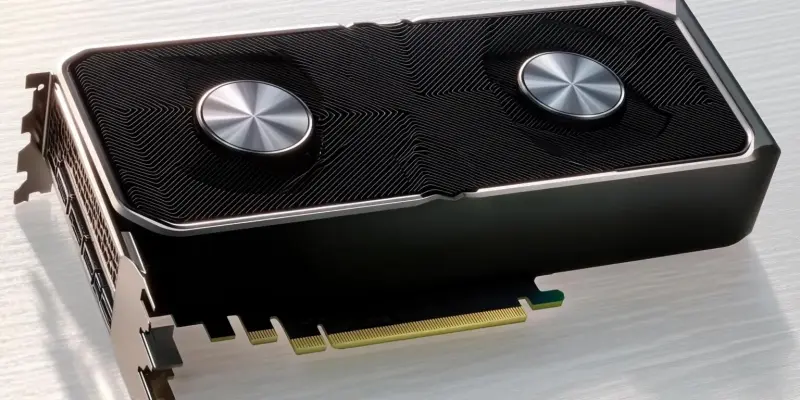
The tech community is buzzing with anticipation as Nvidia prepares to unveil the highly anticipated GeForce RTX 5090 graphics card at the upcoming Consumer Electronics Show (CES) in Las Vegas. This reveal is expected to be a significant milestone in the realm of graphics technology, propelling Nvidia’s RTX 5000-series to new heights. Early leaks and images of the RTX 5090, particularly those from board partner Inno3D, have prompted excitement and speculation among enthusiasts. Marking a stark departure from previous models, the RTX 5090’s massive form factor stands out with its 3.5-slot cooler, making even the largest RTX 4090 models appear less imposing by comparison. This significant size increase suggests that users with limited space in their PC cases, particularly those utilizing mini-ITX or small form-factor builds, may face compatibility challenges.
Key Specifications and Features
One of the most notable upgrades in the RTX 5090 is its inclusion of 32GB of VRAM, likely GDDR7. This marks a significant leap from the 24GB of GDDR6X in the RTX 4090, underscoring Nvidia’s commitment to pushing the boundaries of memory capacity in consumer graphics cards. The increase in VRAM capacity is expected to deliver substantial performance enhancements, especially in memory-intensive tasks such as gaming at higher resolutions and complex computational workloads. Analysts suggest this improvement can potentially elevate the overall gaming experience, bringing unprecedented levels of detail and smoothness to cutting-edge games.
Despite these exciting advancements, there are still significant uncertainties surrounding the RTX 5090’s power requirements. Leaked images have conspicuously not revealed the specifics of the power connector, leaving room for speculation about whether the RTX 5090 will employ twin 16-pin 12VPWR connectors or another configuration entirely. This ambiguity has fueled discussions about the potential power draw and cooling requirements of the new GPU, with some experts positing that supporting such a high-performance card might necessitate a robust and high-wattage power supply unit (PSU).
Pricing and Market Impact
Nvidia has yet to officially confirm the pricing of the RTX 5090, but industry buzz suggests it might be priced between $2,000 and $2,500. This speculation points to a significant increase from the RTX 4090’s $1,600 launch price. This potential hike has sparked discussions among enthusiasts about whether the value justifies the cost. Such a high price tag might limit its accessibility, reserving the RTX 5090 for serious enthusiasts and professional content creators who need top-tier graphics performance.
Despite concerns around its size and cost, the RTX 5090 represents a major advance in graphics card technology. It’s anticipated to set new performance benchmarks, challenging competitors and revolutionizing competitive gaming and professional graphics work. The RTX 5080 is also rumored to be on the horizon, possibly even launching before the RTX 5090 on January 21, hinting that the RTX 5000-series could make a big splash in the market.
As CES approaches, the tech community eagerly awaits more details about the RTX 5090. Nvidia’s expected unveiling should clarify the GPU’s specs, power requirements, and final pricing. Despite uncertainties, excitement about the RTX 5090 underscores its potential to transform the graphics card industry, promising groundbreaking performance and memory capacity. All eyes are on Nvidia to deliver innovations that will shape the future of gaming and graphic computing.