
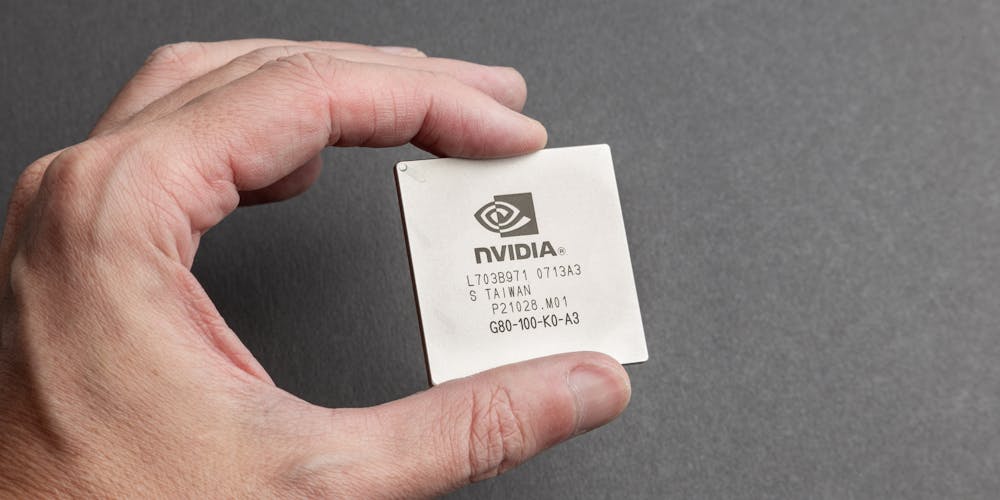
Nvidia Set to Unleash Blackwell AI Powerhouses in 2025

In an industry where the demand for AI computation is soaring, Nvidia is set to redefine the landscape once again with its cutting-edge Blackwell architecture. Tailored to begin production in the latter half of 2024, Nvidia’s Blackwell systems are slated to make an aggressive entrance into the market by 2025, with intentions to roll out a whopping 40,000 units. This launch embodies Nvidia’s strategic pivot towards selling comprehensive systems instead of individual chips—a move indicating a potential decline in volume when juxtaposed with the sales of its predecessor, Hopper. Yet, this tactic underscores the company’s commitment to delivering high-performance, specialized AI computing solutions.

Despite a shift in market approach, Nvidia has prepared an extensive product lineup to cater to diverse computing needs. The portfolio encompasses three core configuration models: NVL72, NVL36, and HGX B200. The NVL72 stands as the flagship, a liquid-cooled cabinet that boasts an extraordinary amalgamation of 36 dual-GPU Grace Hopper superchips. This powerhouse is constructed to achieve unparalleled compute parallelism, ensuring each of its 72 GPUs operates at peak efficiency, reinforced by an impressive 10 TB/s interconnect.

Engineering Synergy in AI Computing

Nvidia is gearing up to transform the AI computation industry with its advanced Blackwell architecture, eyeing production in late 2024 and aiming to deploy an ambitious 40,000 units by 2025. This marks a strategic shift for Nvidia, which is moving from selling individual chips to full systems, possibly reflecting a dip in sales volume as opposed to its Hopper series. Nevertheless, Nvidia’s commitment to top-tier, specialized AI compute solutions remains steadfast.

The company’s Blackwell lineup features three primary configurations: NVL72, NVL36, and HGX B200. The NVL72 is the premier model, a liquid-cooled behemoth equipped with 36 dual-GPU Grace Blackwell chips. It’s designed for maximum parallel computing, with each of the 72 GPUs optimized for top performance, all connected by a swift 10 TB/s interconnect. Through this, Nvidia is poised to meet the varied demands of the AI computation sphere.

Explore more

Is Fairer Car Insurance Worth Triple The Cost?

A High-Stakes Overhaul: The Push for Social Justice in Auto Insurance In Kazakhstan, a bold legislative proposal is forcing a nationwide conversation about the true cost of fairness. Lawmakers are advocating to double the financial compensation for victims of traffic accidents, a move praised as a long-overdue step toward social justice. However, this push for greater protection comes with a

Insurance Is the Key to Unlocking Climate Finance

While the global community celebrated a milestone as climate-aligned investments reached $1.9 trillion in 2023, this figure starkly contrasts with the immense financial requirements needed to address the climate crisis, particularly in the world’s most vulnerable regions. Emerging markets and developing economies (EMDEs) are on the front lines, facing the harshest impacts of climate change with the fewest financial resources

The Future of Content Is a Battle for Trust, Not Attention

In a digital landscape overflowing with algorithmically generated answers, the paradox of our time is the proliferation of information coinciding with the erosion of certainty. The foundational challenge for creators, publishers, and consumers is rapidly evolving from the frantic scramble to capture fleeting attention to the more profound and sustainable pursuit of earning and maintaining trust. As artificial intelligence becomes

Use Analytics to Prove Your Content’s ROI

In a world saturated with content, the pressure on marketers to prove their value has never been higher. It’s no longer enough to create beautiful things; you have to demonstrate their impact on the bottom line. This is where Aisha Amaira thrives. As a MarTech expert who has built a career at the intersection of customer data platforms and marketing

What Really Makes a Senior Data Scientist?

In a world where AI can write code, the true mark of a senior data scientist is no longer about syntax, but strategy. Dominic Jainy has spent his career observing the patterns that separate junior practitioners from senior architects of data-driven solutions. He argues that the most impactful work happens long before the first line of code is written and