

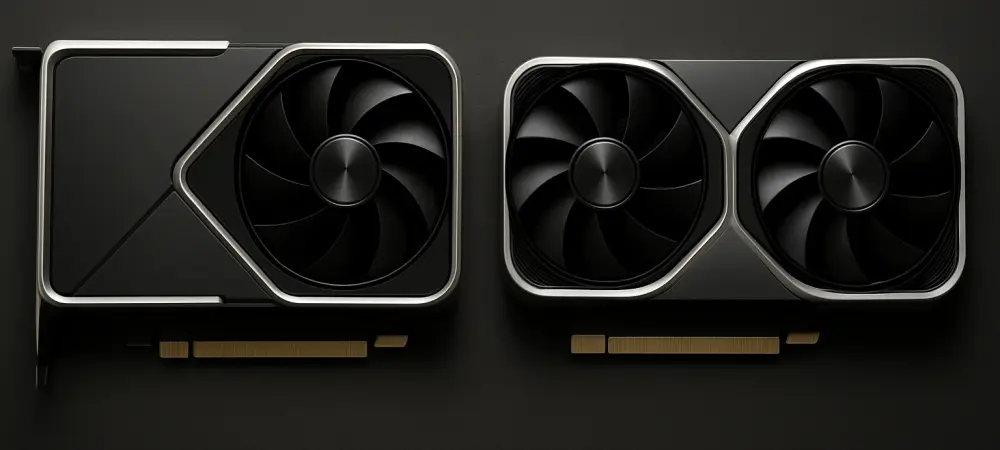
Setting the Stage for Cutting-Edge Graphics
In an era where gaming and creative workloads demand ever-increasing graphical power, NVIDIA’s latest offerings in the GeForce RTX 5060 series and RTX 5080 have emerged as pivotal players in the GPU market, promising to redefine value for diverse users. Imagine a scenario where a budget gamer can achieve high frame rates at 1080p without breaking the bank, or a professional editor renders 4K content with seamless efficiency. These graphics cards aim to make such aspirations a reality by balancing performance with unprecedented price accessibility. This review dives into how these GPUs redefine value across different user segments.
The RTX 5060 series, particularly the Ti variant, targets gamers seeking affordable yet capable hardware for modern titles. Meanwhile, the RTX 5080 caters to enthusiasts and professionals craving top-tier performance. With recent price drops shaking up the market, the appeal of these cards extends beyond raw specs to exceptional deals that challenge competitors. This analysis will unpack their capabilities and assess whether they deliver on their promises.
Detailed Analysis of Features and Performance
RTX 5060 Ti 8GB: Affordable Gaming Prowess
The RTX 5060 Ti 8GB stands out as a budget-friendly option with specs tailored for 1080p and moderate 1440p gaming. Boasting a notable 15% performance edge over the base RTX 5060 and AMD’s RX 9060 XT 8GB at comparable price points, it delivers impressive frame rates in popular titles. Its architecture ensures smooth gameplay in most current games, making it a solid pick for cost-conscious buyers.
However, the limitation of 8GB VRAM raises concerns about longevity as games become more demanding. While this capacity suffices for many titles today, it may struggle with future releases or heavy texture loads at higher resolutions. Despite this drawback, the card’s performance at its price bracket mitigates some of these worries, especially for gamers prioritizing immediate value over long-term proofing.
RTX 5080 OC Triple Fan: Premium Powerhouse
On the high-end spectrum, the PNY NVIDIA GeForce RTX 5080 OC Triple Fan edition offers exceptional capabilities for 4K gaming and intensive applications like video editing or 3D rendering. Its robust specifications, including enhanced cooling and overclocked performance, position it as a top contender for users who demand the best. Benchmark results showcase its ability to handle even the most resource-heavy tasks with ease. The discounted price of this model further elevates its attractiveness, bringing premium performance within reach of a broader audience. For enthusiasts who previously found such high-end hardware prohibitive, this deal represents a rare opportunity. The triple fan design also ensures thermal efficiency, addressing overheating concerns during extended usage.
Market Trends and Pricing Insights
Shifting Dynamics in GPU Costs
Recent trends in the GPU market reveal significant price reductions on newly released models like the RTX 5060 Ti and RTX 5080. These drops are unusual for cards so early in their lifecycle and suggest underlying factors such as surplus inventory or strategic moves to capture market share. Competitive pressure from AMD’s offerings, particularly those with higher VRAM, may also play a role in this pricing shift.
Such strategies impact consumer behavior across various budget levels, making high-performance hardware more accessible. Budget gamers now have access to cards that punch above their weight, while enthusiasts can snag premium options without the typical hefty price tag. This democratization of technology could reshape purchasing patterns in the coming months.
Impact of Competitive Offerings
Competition remains a driving force behind NVIDIA’s pricing adjustments. With AMD providing alternatives that often boast greater VRAM at similar costs, NVIDIA counters with aggressive discounts to maintain its edge. This rivalry benefits consumers by fostering a market where performance and affordability intersect more frequently than in previous years.
The effect of these price wars extends beyond immediate sales, influencing how buyers perceive value. For instance, a card with limited VRAM but superior performance at a lower cost might outweigh alternatives with more memory but weaker output. This dynamic creates a nuanced decision-making landscape for potential buyers.
Exceptional Deals and Their Value
MSI Ventus 2X RTX 5060 Ti 8GB: Bargain at $309
One of the most compelling deals currently available is the MSI Ventus 2X RTX 5060 Ti 8GB, priced at just $309 on Newegg after discounts and rebates. This figure, only marginally higher than competing base models, offers unmatched performance for 1080p gaming. The deal stands out as a prime choice for gamers on a strict budget seeking reliable hardware.
The value proposition here lies in balancing cost with capability. While it lacks the VRAM for future-proofing, its current output justifies the investment for those focused on immediate gaming needs. This card exemplifies how strategic pricing can make mid-range hardware feel like a steal.
MSI Gaming RTX 5060 Ti 8GB OC: Value at $349
Slightly higher on the price scale, the MSI Gaming RTX 5060 Ti 8GB OC edition is available for $349 on Newegg after promotions. This variant offers a minor performance boost over the standard model but faces stiffer competition from AMD’s RX 9060 XT 16GB at a similar cost. The trade-off between VRAM and raw power becomes a critical consideration at this price point.
Despite the VRAM constraint, the overclocked performance provides an edge in specific scenarios, appealing to gamers willing to pay a small premium. This deal highlights the diversity of options within the same series, catering to slightly different priorities among budget-conscious buyers.
PNY RTX 5080 OC Triple Fan: High-End Steal at $929
For those targeting elite performance, the PNY RTX 5080 OC Triple Fan edition at $929 on Walmart represents a remarkable discount. Compared to the MSRP of base models at $999 and overclocked variants at $1,099, this price reflects savings of up to $170. Such a reduction makes high-end gaming and professional workloads more attainable.
This offer underscores the potential for premium hardware to reach a wider audience during specific market windows. Enthusiasts and professionals who require cutting-edge technology can capitalize on this deal to upgrade their setups without the usual financial strain associated with top-tier GPUs.
Practical Applications and Ideal Users
Budget Gaming with RTX 5060 Ti 8GB
The RTX 5060 Ti 8GB serves as an ideal solution for gamers focused on 1080p and light 1440p experiences. Titles like esports favorites or less demanding single-player games run flawlessly on this hardware, making it a go-to for casual and competitive players alike. Its affordability enhances its appeal for students or those building entry-level rigs.
Beyond gaming, this card handles everyday tasks and moderate content creation with ease. Users looking to stream gameplay or edit basic videos will find it adequate for their needs, especially at the current discounted rates. This versatility adds to its attractiveness for a diverse audience.
High-End Performance with RTX 5080
In contrast, the RTX 5080 targets users with intensive demands, such as 4K gaming or professional-grade rendering. Gamers tackling the latest AAA titles at ultra settings or creators working on complex 3D models will appreciate its raw power. The overclocked variant ensures consistent performance under heavy loads.
This GPU also excels in niche applications like machine learning tasks or virtual reality setups, where graphical fidelity and speed are paramount. For professionals and hardcore enthusiasts, the discounted price offers a chance to invest in hardware that meets their exacting standards without compromise.
Addressing Challenges and Shortcomings
VRAM Limitations in Budget Models
A significant concern with the RTX 5060 Ti 8GB is its limited VRAM, which may hinder performance as games evolve. Modern titles increasingly require more memory for textures and assets, potentially rendering 8GB insufficient within a few years. This issue prompts hesitation among buyers prioritizing long-term viability.
However, the steep price cuts partially offset these concerns by aligning the card with immediate, cost-effective needs. For gamers not planning to upgrade soon, the performance delivered at this cost remains a strong selling point. The challenge lies in balancing current utility against future demands.
Competitive Pressure and Market Perception
AMD’s alternatives with higher VRAM at similar price points pose a persistent challenge to NVIDIA’s budget offerings. Many consumers view memory capacity as a key indicator of a card’s worth, often overlooking performance advantages. This perception shapes market hesitations around 8GB models, even when priced competitively.
NVIDIA’s response through aggressive discounting helps counter this narrative by emphasizing performance-per-dollar. While not fully addressing VRAM concerns, this approach appeals to pragmatic buyers focused on tangible benefits in today’s gaming landscape rather than speculative future needs.
Predicting Future Pricing Trends for RTX 5000 Series
Sustainability of Current Discounts
The current wave of discounts on the RTX 5000 series raises questions about whether such pricing will persist. Market dynamics, including inventory levels and consumer demand, suggest that these reductions might be temporary strategies to clear stock or boost adoption. A return to standard pricing could occur if demand stabilizes.
Alternatively, sustained competition might force NVIDIA to maintain lower prices as a long-term tactic. If upcoming releases from competitors intensify pressure, these deals could become a new norm, reshaping expectations for GPU affordability over the next couple of years.
Broader Implications for Market Accessibility
Looking ahead, NVIDIA’s pricing strategy could influence how accessible high-performance hardware becomes. Should discounts continue, they might lower entry barriers for new gamers and creators, expanding the market. This shift would also compel competitors to adjust their own pricing or feature offerings to stay relevant.
The interplay between inventory, new releases, and consumer trends will likely dictate the trajectory of these prices. Monitoring these factors will be crucial for anticipating whether budget and high-end GPUs remain within reach for diverse user bases in the evolving tech landscape.
Reflecting on the Value of These GPU Deals
Looking back, the evaluation of the MSI RTX 5060 Ti 8GB at $309 and the PNY RTX 5080 OC Triple Fan at $929 revealed standout opportunities for their respective audiences. These deals captured a unique moment in the market where performance and affordability aligned, offering budget gamers and high-end enthusiasts significant value. The analysis highlighted how pricing strategies mitigated certain limitations, making these cards compelling despite VRAM constraints in the budget model. Moving forward, potential buyers should act swiftly to capitalize on these limited-time offers before market conditions shift. For those considering an upgrade, comparing specific needs—whether for casual gaming or professional workloads—against these price points will guide the best choice. Keeping an eye on competitor responses and upcoming releases will also ensure informed decisions in a rapidly changing GPU landscape.