

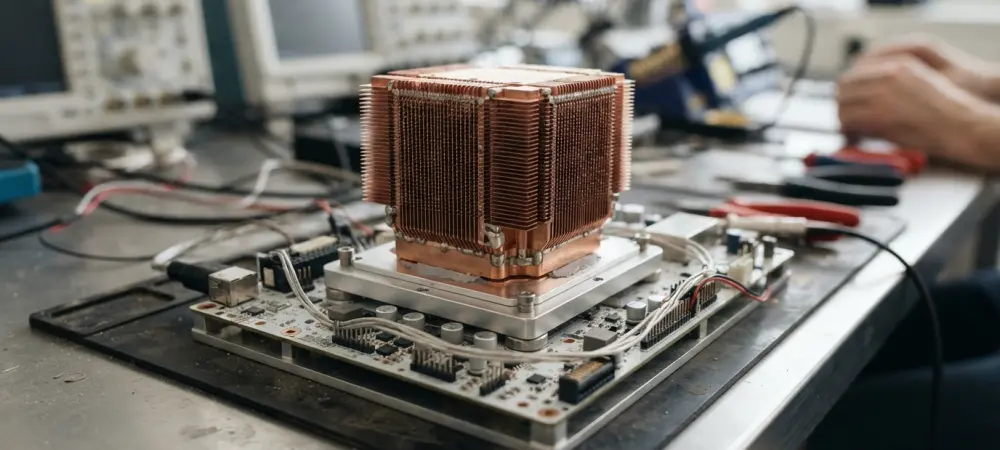
The convergence of custom silicon and hyper-scale cloud orchestration has reached a tipping point where the mere possession of processing power no longer guarantees a competitive advantage in the global intelligence race. As the market transitions into 2026, the focus has shifted from the frantic procurement of silicon toward the strategic deployment of integrated ecosystems that can handle the complexity of the next generation of autonomous systems. The collaboration between Nvidia and Oracle Cloud Infrastructure (OCI) serves as a primary example of this evolution, moving the industry away from monolithic, rigid compute clusters toward a modular architecture designed for the era of agentic artificial intelligence. This review examines how this specific infrastructure addresses the critical inefficiencies that have historically hindered large-scale enterprise adoption.
By integrating Nvidia’s Vera Rubin architecture into OCI’s bare-metal framework, the partnership has created a environment where hardware and software are no longer distinct silos but a unified engine for data processing. This integration is particularly relevant in a landscape where architectural efficiency has become the primary metric for success, replacing the previous obsession with raw floating-point operations. The ability of OCI to provide high-bandwidth, low-latency networking alongside Nvidia’s latest hardware allows for the creation of virtual supercomputers that can be scaled up or down with unprecedented precision.
Strategic Integration of Nvidia and Oracle Cloud Infrastructure
The technology under review is built upon the principle of hardware-software co-design, where the physical layout of the data center is optimized for the specific data flows of modern neural networks. OCI’s unique approach to cloud networking, which utilizes non-blocking Clos topologies, provides the necessary backbone for Nvidia’s NVLink Switch Fabric to operate at peak performance across thousands of nodes. This synergy allows for the seamless movement of parameters and gradients during the training process, reducing the communication overhead that often limits the scalability of traditional cloud environments.
This collaboration is significant because it represents a move away from “one-size-fits-all” cloud instances toward a more specialized infrastructure stack. In the broader technological landscape, the shift toward architectural efficiency is driven by the rising energy costs and the physical limits of semiconductor scaling. By optimizing the path between storage, memory, and compute, the Nvidia-Oracle ecosystem enables organizations to achieve higher performance per watt, a metric that has become as important as speed in the current economic climate.
Core Architectural Components and Hardware Innovations
Vera Rubin NVL72 and Supercluster Scaling
The Vera Rubin NVL72 represents the pinnacle of multi-node integration, functioning essentially as a single, massive GPU at a multi-gigawatt scale. This architecture utilizes a liquid-cooled rack design that houses 72 GPUs interconnected via the fifth-generation NVLink, providing a staggering 130 TB/s of aggregate bandwidth. For foundation-model training, this level of density is critical because it allows for the processing of trillion-parameter models with significantly fewer bottlenecks than previous architectures. The NVL72 effectively treats the entire rack as a unified compute unit, which simplifies the software orchestration required for massive parallelization.
Furthermore, the scaling capabilities of the OCI Superclusters allow these racks to be interconnected into larger configurations that can encompass tens of thousands of GPUs. This significance cannot be overstated for organizations attempting to push the boundaries of frontier models. The Vera Rubin architecture also introduces enhanced support for lower-precision data types, which increases throughput for inference and training without sacrificing the accuracy required for complex reasoning tasks. This hardware innovation ensures that the infrastructure can keep pace with the increasingly sophisticated requirements of modern AI research labs.
Standalone Vera CPU and Resource Decoupling
A major technical breakthrough in this infrastructure review is the introduction of the Vera CPU as a standalone offering, which facilitates the decoupling of compute resources. Historically, cloud providers forced customers into rigid configurations where a specific number of GPUs were paired with a fixed amount of CPU power and memory. This often led to “idle capacity,” where expensive GPUs sat waiting for a slower CPU to finish pre-processing data or managing system tasks. By offering the Vera CPU independently, OCI allows customers to scale their processing power to match the specific needs of their non-GPU workloads.
The Vera CPU is designed specifically to handle the “sandbox” environments where AI agents operate, executing the code and tool-calling functions that surround the core model inference. This decoupling reduces the bottleneck effect, ensuring that the high-speed GPU remains fully utilized throughout the lifecycle of a task. The technical significance of this resource flexibility lies in its ability to lower the total cost of ownership by allowing enterprises to pay only for the specific resources required for their unique application architecture.
Emerging Trends in AI Infrastructure and Enterprise Demand
The industry is currently witnessing a rapid shift toward “agentic AI,” where models are not just generating text but are actively performing complex business tasks across multiple software tools. This trend demands a move away from static, pre-configured instances toward modular configurations that can support the high-intensity, short-duration bursts of compute required for agent reasoning. As organizations move toward autonomous workflows, the requirements for low-latency feedback loops between the model and the environment have become paramount.
Moreover, the metrics for evaluating performance are shifting from simple chip speed to total task completion time. In 2026, a faster GPU is useless if the surrounding infrastructure cannot feed it data or execute its commands quickly enough. The Nvidia-Oracle infrastructure addresses this by focusing on the entire system’s latency, from the storage layer to the interconnects. This holistic view of performance reflects a maturing market that prioritizes the economic outcomes of AI deployments over theoretical peak benchmarks.
Real-World Applications and Sector Deployments
Foundation-Model Development and Large-Scale Labs
Organizations like OpenAI have utilized OCI Superclusters to manage the massive inference loads generated by millions of concurrent users. These labs require an infrastructure that can handle not only the training of the next frontier model but also the intensive agent sandbox workloads where models are tested in simulated environments. The ability to deploy Vera Rubin systems at scale provides these organizations with the necessary headroom to experiment with new architectures, such as mixture-of-experts or long-context reasoning models, which demand extreme memory bandwidth and low-latency communication.
Enterprise-Level Retrieval-Augmented Generation and Analytics
In the corporate sector, the focus has turned toward the implementation of Retrieval-Augmented Generation (RAG) and the coordination of autonomous business agents. The Rubin NVL8 configuration, which maintains x86 compatibility while offering high-performance GPU acceleration, has become the standard for fine-tuning enterprise models on private data. These use cases often involve the real-time analysis of massive datasets, where the Vera CPU manages the data retrieval and pre-processing while the GPUs handle the embedding and generation tasks. This allows businesses to create highly specialized AI assistants that are grounded in their specific operational reality.
Technical Hurdles and Market Implementation Challenges
Despite the advancements, the technology faces a persistent “utilization paradox” where a significant portion of GPU resources remains underused. Research indicates that 79% of GPUs in the enterprise sector are operating at or below 50% capacity, often due to bottlenecks in the data pipeline or poor application design. This suggests that hardware alone is not a panacea; organizations must also invest in optimizing their software stacks to ensure that the infrastructure is being used effectively. The complexity of managing multi-node liquid-cooled systems also presents a logistical challenge for regional data centers.
Furthermore, there is an ongoing need for independent verification of vendor-supplied performance benchmarks. While Nvidia and Oracle report significant speedups, actual real-world performance can vary based on the specific network topology and the nature of the workload. Regional availability limitations also remain a hurdle, as the initial rollout of the Vera Rubin architecture is concentrated in a few high-capacity data centers. Overcoming these challenges will require a continued focus on transparency and the development of more automated tools for resource optimization and monitoring.
Future Outlook and the Path to Architectural Maturity
The trajectory of AI infrastructure is moving toward a state of total system optimization, where the scarcity of GPUs is no longer the primary constraint. Future developments are likely to focus on breakthroughs in fluid shifting, allowing a single cluster to transition seamlessly between training and inference workloads as demand fluctuates. This flexibility will be essential for service providers who need to maximize the ROI of their massive capital investments. We can also expect to see deeper integration of optical interconnects, which will further reduce the latency and power consumption of large-scale clusters.
As the technology matures, the focus will likely shift toward the edge of the network, bringing high-performance inference capabilities closer to the end-user. The lessons learned from the large-scale deployments of the Vera Rubin architecture will inform the design of smaller, more efficient systems that can run in regional data centers or even on-premises. This democratization of high-performance compute will be a key driver of the next wave of AI innovation, enabling a broader range of industries to develop and deploy autonomous systems.
Assessment of the Nvidia-Oracle Ecosystem
The evaluation of the Nvidia-Oracle infrastructure revealed a significant shift in how cloud providers and chip manufacturers addressed the demands of modern artificial intelligence. By moving beyond the provision of raw compute and focusing on the decoupling of resources, the partnership effectively tackled the enterprise utilization crisis that defined the previous years. The integration of the Vera CPU and the Vera Rubin NVL72 architecture provided a technical foundation that supported both massive foundation-model labs and more granular enterprise-level agentic applications.
The implementation of this ecosystem demonstrated that the path to widespread AI adoption required a departure from traditional, rigid cloud instances in favor of modular, high-bandwidth architectures. This approach lowered the economic barriers to entry by reducing waste and allowing for more precise alignment between hardware costs and business value. Ultimately, the Nvidia-Oracle collaboration set a new standard for the cloud infrastructure industry, emphasizing that the future of computing lied in the seamless orchestration of the entire hardware and software stack. Enterprise leaders were encouraged to prioritize architectural flexibility over raw chip counts to ensure the long-term viability of their AI strategies.